Squint Surgery in Hyderabad — Strabismus Correction for Children & Adults
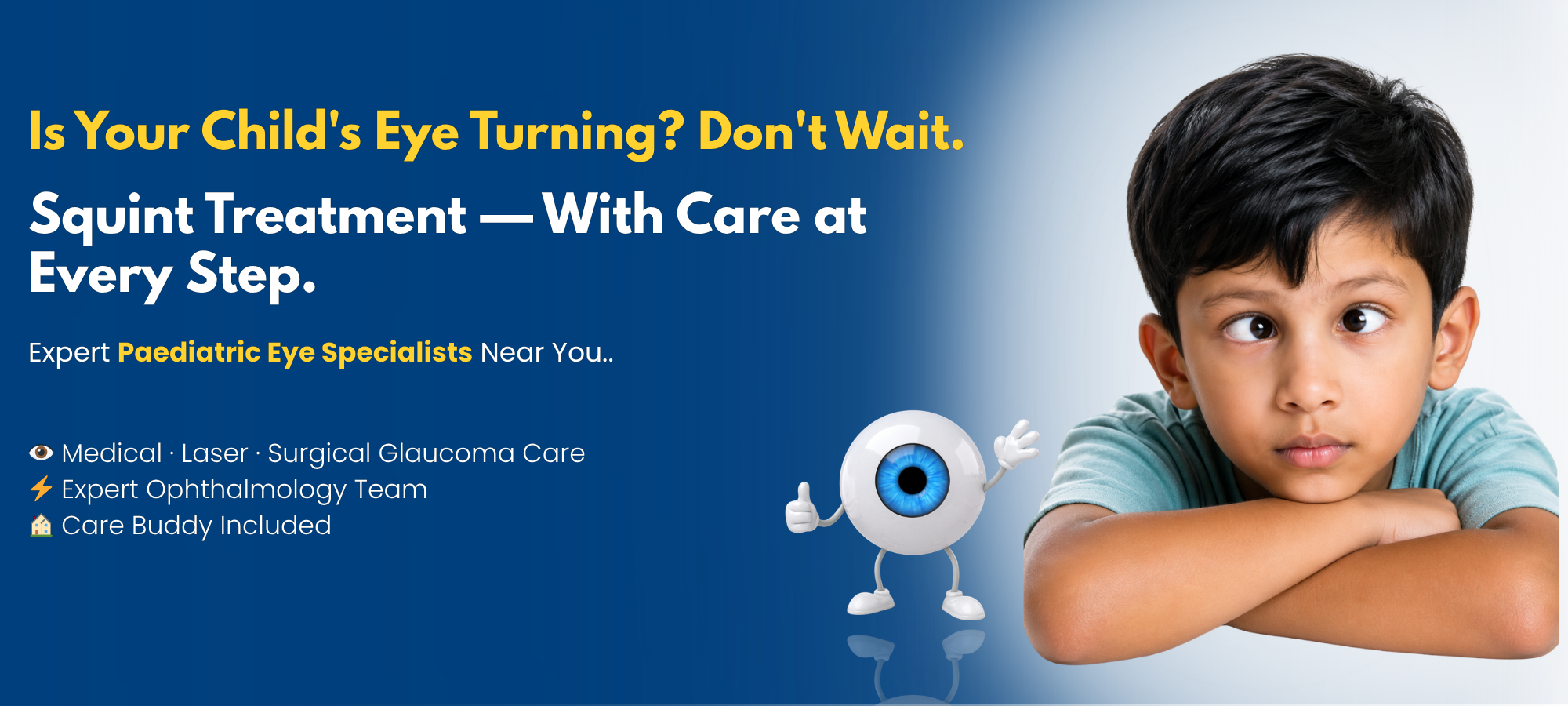
Squint, medically known as strabismus, is a condition where the eyes do not align correctly — one eye may turn inward, outward, upward, or downward while the other looks straight ahead. SurgiPartner connects patients of all ages — from infants to adults — with experienced squint specialists in Hyderabad for comprehensive evaluation and surgical correction. Early treatment in children is especially important to prevent amblyopia (lazy eye) and preserve binocular vision.


What Is Squint (Strabismus)?
Strabismus occurs when the six extraocular muscles controlling each eye fail to work together in coordination. Normally, both eyes focus on the same object simultaneously, and the brain fuses the two images into one clear, three-dimensional image. When the eyes are misaligned, each eye sends a different image to the brain. In children, the brain typically suppresses (ignores) the image from the misaligned eye to avoid double vision — this suppression leads to amblyopia, or lazy eye. In adults with new-onset strabismus, double vision (diplopia) is the dominant symptom.
Squint affects approximately 3–4% of children globally and is one of the most common conditions treated by paediatric ophthalmologists. It can also develop in adults following neurological events, trauma, thyroid eye disease, or as a decompensation of a previously controlled childhood squint.
Types of Squint — Classification and Direction of Deviation
| Type | Direction of Turn | Common Cause | Age Group |
|---|---|---|---|
| Esotropia | Eye turns inward (crossed eyes) | Hyperopia, neurological, accommodative | Most common in children |
| Exotropia | Eye turns outward (wall-eye) | Intermittent divergence, neurological | Children and adults |
| Hypertropia | Eye turns upward | Superior oblique palsy, thyroid eye disease | Children and adults |
| Hypotropia | Eye turns downward | Orbital fracture, inferior rectus fibrosis | Adults (post-trauma) |
| Cyclotropia | Rotational misalignment | Oblique muscle palsies | Adults |
Squint may be constant (present all the time) or intermittent (appearing only when tired, during illness, or under specific conditions). It may involve the same eye consistently (unilateral) or alternate between eyes (alternating strabismus).
Causes of Squint in Children and Adults
In Children
- 1. Accommodative esotropia — the most common cause; uncorrected far-sightedness causes excessive focusing effort, triggering inward eye turning
- 2. Premature birth and low birth weight — significantly higher squint risk
- 3. Neurological conditions — cerebral palsy, Down syndrome, hydrocephalus
- 4. Family history — first-degree relatives with strabismus
- 5. High refractive errors — especially significant hyperopia or large anisometropia (unequal prescriptions)
- 6. Reduced vision in one eye — due to cataract, ptosis, or other conditions impairing normal visual development
In Adults
- 1. Thyroid eye disease (Graves’ orbitopathy) — causes restrictive strabismus due to inflamed, fibrotic extraocular muscles
- 2. Neurological events — stroke, brain tumour, aneurysm causing cranial nerve palsies (III, IV, VI)
- 3. Orbital trauma — blowout fractures, direct muscle damage
- 4. Decompensated childhood squint — previously controlled deviation that breaks down in adulthood
- 5. Myasthenia gravis — neuromuscular disorder affecting eye muscle function
How Is Squint Diagnosed?
Comprehensive squint evaluation at SurgiPartner includes:
- 1. Cover-uncover test and alternate cover test — gold standard for detecting and measuring deviation
- 2. Prism and cover test — precisely quantifies the angle of strabismus in prism dioptres
- 3. Hirschberg and Krimsky tests — corneal light reflex tests used for young or uncooperative children
- 4. Refraction under cycloplegia — glasses prescription under pupil dilation to eliminate accommodation
- 5. Binocular single vision (BSV) assessment — evaluates the quality of binocular function and stereopsis (3D vision)
- 6. Ocular motility assessment — tests the range and coordination of all extraocular muscles
- 7. Fundus examination — rules out posterior eye conditions contributing to strabismus
Squint Treatment — Non-Surgical and Surgical Options
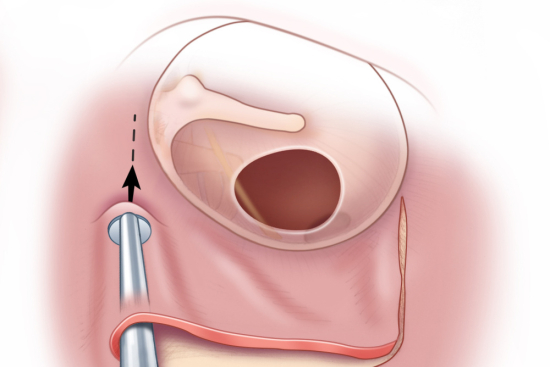
- 1. Adjustable suture surgery — used in adults; sutures are temporarily tied and the eye position can be fine-tuned 4–24 hours after surgery while the patient is awake, maximising alignment accuracy
- 2. Intraoperative forced duction testing — assesses muscle restriction to guide surgical planning
- 3. Combined muscle procedures — operating on multiple muscles simultaneously for complex or large-angle deviations
What to Expect After Squint Surgery
- 1. Day 1: Eye red, some discomfort or foreign body sensation, mild swelling. Antibiotic and anti-inflammatory drops commenced
- 2. Days 2–5: Redness and swelling improve significantly. Children typically return to normal activities within 1–2 days
- 3. Week 1–2: Eyes may be slightly overcorrected initially — this is expected and typically settles as healing progresses
- 4. Month 1: Final alignment assessment performed. Prismatic glasses or further surgery occasionally needed for fine-tuning
- 5. Long-term: Continued patching for amblyopia if required. Annual follow-up to monitor alignment stability
Frequently Asked Questions About Squint Surgery in Hyderabad
At what age should squint surgery be done in children?
There is no single age that is right for every child. The timing depends on the type of squint, how often the eyes are misaligned, the child’s vision and whether other eye conditions are present. Early assessment by a paediatric ophthalmologist is important because some childhood vision problems benefit from timely treatment. The specialist will advise whether glasses, patching, other treatment or surgery may be appropriate.
Can squint surgery be done in adults?
Yes. Squint surgery, also called strabismus surgery, can be considered for adults as well as children. It may help improve eye alignment, although the expected benefits vary by individual. An ophthalmologist will assess the cause of the misalignment, previous treatment, eye movements and visual symptoms before discussing suitable options.
Will my child need glasses after squint surgery?
Possibly. Squint surgery changes the position of the eye muscles, but it does not necessarily correct the refractive error that requires glasses. Some children continue to need glasses or other treatment after surgery. Follow-up examinations help the ophthalmologist monitor eye alignment and visual development.
Is squint surgery performed under general anaesthesia?
General anaesthesia is commonly used for children undergoing squint surgery. The anaesthesia plan for adults depends on the procedure, medical history and ability to cooperate. The surgeon and anaesthesia team will explain the recommended approach, preparation and relevant risks before surgery.
Is squint surgery safe?
Squint surgery is an established procedure, but no surgery is entirely risk-free. Potential complications include infection, bleeding, changes in eye alignment, double vision and the possibility of needing further treatment or another operation. The risks depend on the individual case. Your ophthalmologist should explain the expected benefits, limitations and alternatives before you decide.
What is squint, and why does it happen?
Squint, medically known as strabismus, occurs when the eyes do not align in the same direction. One eye may turn inward, outward, upward or downward. Causes can include problems with eye-muscle control, refractive errors and certain eye or neurological conditions. The cause varies, so an eye examination is important to determine the appropriate management.
Can squint be treated without surgery?
Squint surgery primarily aims to improve eye alignment. It does not automatically correct reduced vision caused by amblyopia, commonly called lazy eye, or eliminate the need for glasses. A child may need additional treatment and continued monitoring to support visual development. The treatment plan depends on the child’s individual assessment.
How long does recovery take after squint surgery?
Recovery varies by patient and procedure. Temporary redness, soreness, irritation or blurred vision may occur after surgery. Your surgeon will explain when normal activities can resume, how to use prescribed medicines and when to attend follow-up visits. Contact your treating team if symptoms worsen or you experience severe pain or sudden changes in vision.
Will squint surgery permanently correct eye alignment?
The result varies according to the type of squint, its cause, previous treatment and individual healing. Eye alignment may improve after surgery, but some patients may have residual misalignment or develop changes over time. Further treatment or another operation may sometimes be needed. Your ophthalmologist can discuss realistic expectations based on your examination.
How can I explore squint surgery options in Hyderabad through SurgiPartner?
You can contact SurgiPartner to explain your requirements and enquire about relevant eye-care providers and available care-coordination support. Our team can clarify the assistance available and help you explore options. Diagnosis, treatment recommendations and decisions about surgery must be made with a qualified ophthalmologist after an individual assessment.
Medical information notice: This page is for general educational purposes only. It does not replace an eye examination, diagnosis or personalised medical advice. Treatment decisions and outcomes vary between patients.
Why Choose SurgiPartner?
Choosing SurgiPartner means trusting experts in advanced squint surgery in Hyderabad.
01.
Expert Ophthalmic Surgeons
Our specialists have extensive experience in pediatric and adult squint correction surgeries.
02.
Surgical Techniques
We use modern, minimally invasive methods for precise eye muscle correction.
03.
Personalized Treatment Plans
Each patient receives a tailored approach based on age, squint type, and severity.
04.
Child-Friendly & Compassionate Care
We ensure comfort, safety, and emotional support - especially for children and families.
Request a Consultation
Restore proper eye alignment and confidence with SurgiPartner’s advanced squint surgery in Hyderabad.
Aligned eyes. Clear vision. Renewed confidence – with SurgiPartner.
View SurgiPartner on Google

Posted on Google
 saikiran challa
Trustindex verifies that the original source of the review is Google.
I am thoroughly impressed with the SurgiPartner model, which delivers integrated, end-to-end patient support across the healthcare continuum—from initial consultations to treatment and surgical interventions, where necessary. I recently availed their Care Buddy service for a consultation, and the experience was highly seamless, efficient, and professionally managed. The structured Care Buddy support, combined with well-aligned financial assistance processes, significantly enhances the overall patient journey. This holistic and patient-centric approach effectively streamlines access to quality healthcare, making it more efficient and convenient in today’s dynamic environment.Posted on Google vasantha kumari buggalaI’m really impressed with the SurgiPartner concept. They provide end-to-end patient support—from doctor consultations to treatment and even surgery when required. I personally used their Care Buddy service for a consultation, and it was a smooth and positive experience. The Care Buddy assistance, along with support in financial processes, makes healthcare much more convenient, especially in today’s fast-paced lifestyle.Posted on Google
 krishna nayakMy Brother Arun Kumar and krishna from Bangalore. We are travelled to Hyderabad for LASIK surgery, and today we successfully underwent the procedure at American Laser Eye Hospital. The surgery went very smoothly and I am feeling very good after the procedure. The hospital environment is very clean and well maintained. All the staff and doctors are very polite, supportive, and professional. A special thanks to SurgiPartner CareBuddy for guiding and helping me throughout the entire process. From the beginning till the end of the day, they were with us at every step and provided excellent support. Overall, I had a very good experience and I highly recommend American Laser Eye Hospital for LASIK surgery with SurgiPartner support.Posted on Google
 ManaswiReally impressed with the concept of SurgiPartner. They offer complete patient support from doctor consultation to treatment and surgery if needed. I personally took a consultation through their Care buddy, and it was a great experience. The care buddy system and help with financial processes make healthcare much easier, especially in today’s busy world.Posted on Google
 Arun NayakMy name is Arun Kumar and I am from Bangalore. I traveled to Hyderabad for LASIK surgery, and today I successfully underwent the procedure at American Laser Eye Hospital. The surgery went very smoothly and I am feeling very good after the procedure. The hospital environment is very clean and well maintained. All the staff and doctors are very polite, supportive, and professional. A special thanks to SurgiPartner CareBuddy for guiding and helping me throughout the entire process. From the beginning till the end of the day, they were with us at every step and provided excellent support. Overall, I had a very good experience and I highly recommend American Laser Eye Hospital for LASIK surgery with SurgiPartner supportPosted on Google
 Shankar S ShankruThank you for the support and service provided by SurgiPartner. The overall experience was smooth and the team was very helpful.Posted on Google
 Thejasree KStaff is very good and nice receiving. They are very humble and their response is very good. Thank youPosted on Google
 Srihari ReddyI want to thank Surgipartner for all the help and support during my LASIK surgery. From the beginning till the end, the team was very proactive with follow-ups and guided me clearly through every step, which made the whole experience easy and stress-free. I would especially like to appreciate CareBuddy Raju and Coordinator Anusha for their outstanding support. They were always in touch with both the hospital staff and me, helped reduce waiting time, and made sure everything went smoothly. Their care, quick responses, and constant guidance really made a big difference. Overall, I had a very positive experience and truly appreciate the support provided by Surgipartner.Verified by TrustindexTrustindex verified badge is the Universal Symbol of Trust. Only the greatest companies can get the verified badge who has a review score above 4.5, based on customer reviews over the past 12 months. Read more
How SurgiPartner Supports You — From First Call to Full Recovery
Follow your step-by-step guide to a successful surgery and recovery, with our expert team supporting you all the way.
Find Doctor & Hospital Support
Fill in your details and we'll call you back to confirm your slot.