Hip Pain & Other Musculoskeletal Conditions
Hip Pain & Musculoskeletal Pain Treatment in Hyderabad — Injections, Nerve Blocks
Hip pain and musculoskeletal pain conditions affect tens of millions of Indians — significantly impairing mobility, independence, and quality of life. The hip joint, the sacroiliac joints, the pelvic girdle musculature, and the surrounding bursae and tendons are all potential sources of pain that can be difficult to precisely diagnose and treat. SurgiPartner’s interventional pain specialists in Hyderabad use a comprehensive diagnostic and therapeutic approach — combining precise clinical assessment, imaging-guided injections, and targeted nerve interventions — to provide effective relief for hip pain and musculoskeletal conditions.
Understanding Hip Pain — A Complex Differential Diagnosis
Hip pain and musculoskeletal pain conditions affect tens of millions of Indians — significantly impairing mobility, independence, and quality of life. The hip joint, the sacroiliac joints, the pelvic girdle musculature, and the surrounding bursae and tendons are all potential sources of pain that can be difficult to precisely diagnose and treat. SurgiPartner’s interventional pain specialists in Hyderabad use a comprehensive diagnostic and therapeutic approach — combining precise clinical assessment, imaging-guided injections, and targeted nerve interventions — to provide effective relief for hip pain and musculoskeletal conditions.
Conditions Treated — Complete Overview
Hip Osteoarthritis
Hip OA causes progressive loss of articular cartilage in the femoroacetabular joint — producing groin pain, reduced hip range of motion (particularly internal rotation and abduction), limping, and difficulty with stairs. It affects approximately 10–15% of adults over 60 in India. Treatment pathway: exercise, weight loss, walking aids → intra-articular hip injections (corticosteroid, hyaluronic acid, PRP) → hip arthroplasty when all conservative and interventional options are exhausted.
Greater Trochanteric Pain Syndrome (GTPS) / Trochanteric Bursitis
GTPS is the most common cause of lateral hip pain — affecting 10–25% of adults, with a higher prevalence in women. It was traditionally attributed to inflammation of the trochanteric bursa (bursitis) but modern research identifies gluteal tendinopathy (degeneration of the gluteus medius and minimus tendons inserting on the greater trochanter) as the primary pathology in most cases. Clinical features: lateral hip pain exacerbated by lying on the affected side, sitting cross-legged, standing on one leg, and rising from a low chair; tenderness directly over the greater trochanter; positive FABER test.
Sacroiliac Joint (SIJ) Dysfunction
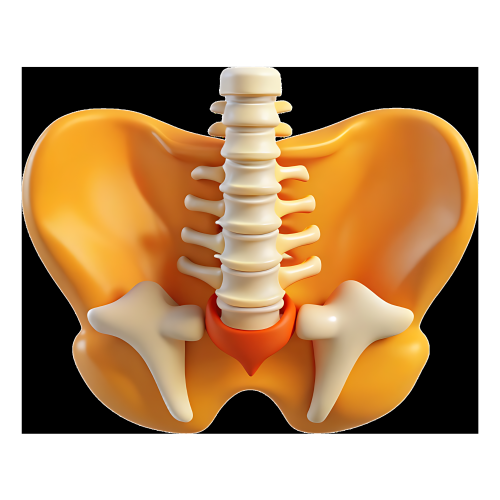
The sacroiliac joints — the articulations between the sacrum and the iliac bones of the pelvis — are responsible for an estimated 15–30% of all cases of chronic low back and buttock pain. SIJ pain presents as low back/buttock pain (below L5, lateral to the midline), often with thigh pain; worsened by prolonged standing, transitions between sitting and standing, and climbing stairs; positive on multiple provocation tests (FABER, FADIR, Gaenslen’s, thigh thrust). Diagnosis is confirmed by a positive response to image-guided SIJ injection with local anaesthetic (≥75% pain relief confirms SIJ origin).
Piriformis Syndrome
Piriformis syndrome occurs when the piriformis muscle (in the deep gluteal region) irritates or compresses the sciatic nerve — causing buttock pain with radiation down the leg that mimics lumbar disc sciatica. Key distinguishing features from lumbar disc disease: pain primarily in the buttock deep to the gluteus maximus; pain exacerbated by prolonged sitting; tenderness directly over the piriformis muscle; positive FAIR test (flexion, adduction, internal rotation of the hip compresses the nerve against the piriformis); MRI spine typically normal. Treatment: physiotherapy (piriformis stretching), ultrasound-guided piriformis injection (local anaesthetic + corticosteroid or BTX-A), and pulsed radiofrequency of the piriformis.
Meralgia Paraesthetica
Lateral femoral cutaneous nerve (LFCN) entrapment causing burning, tingling, and numbness on the lateral thigh — the LFCN passes medial to or through the inguinal ligament near the anterior superior iliac spine (ASIS), where it can be compressed by tight clothing, obesity, pregnancy, or direct trauma. Diagnosis confirmed by ultrasound-guided LFCN block. Treatment: weight loss; loose clothing; ultrasound-guided corticosteroid injection around the LFCN at the inguinal ligament; pulsed RF for refractory cases.
Hip Flexor Tendinopathy / Iliopsoas Tendinitis
Tendinopathy of the iliopsoas tendon at its insertion on the lesser trochanter — causing anterior hip/groin pain with hip flexion activities (climbing stairs, getting in and out of a car, kicking). Ultrasound confirms the diagnosis; ultrasound-guided iliopsoas bursa injection provides both diagnostic and therapeutic benefit.
Interventional Procedures for Hip and Musculoskeletal Pain
Intra-Articular Hip Joint Injection
Fluoroscopic or ultrasound-guided injection of corticosteroid, hyaluronic acid, or PRP directly into the hip joint capsule. Confirms intra-articular pathology as the pain source (if significant relief follows the injection, the joint is the origin); provides therapeutic anti-inflammatory and lubricating benefit. Technically more challenging than knee injection due to the deep location of the hip joint — image guidance is mandatory for accurate placement. PRP hip injection has emerging evidence for early hip OA; hyaluronic acid provides lubrication for mild–moderate OA.
Greater Trochanteric Bursa Injection
Ultrasound-guided injection of corticosteroid and local anaesthetic into the trochanteric bursa provides rapid pain relief for acute trochanteric bursitis. For gluteal tendinopathy (the more common underlying pathology), PRP injection is superior to corticosteroid — promoting tendon healing rather than temporarily suppressing inflammation. Exercise rehabilitation targeting gluteal strengthening (single-leg squats, hip abduction exercises) is the cornerstone of long-term GTPS management.
Sacroiliac Joint Injection
Fluoroscopy-guided SIJ injection — the gold standard for diagnosis and initial treatment of SIJ pain. Under fluoroscopic guidance, a needle is placed through the posterior joint, contrast confirms intra-articular position, and local anaesthetic + corticosteroid are injected. Diagnostic criterion: ≥75% pain relief within 30 minutes confirming SIJ origin. For sustained relief, SIJ radiofrequency ablation (cooled or conventional RF of the lateral branch nerves supplying the SIJ — L4–S3 lateral branches) provides 6–12 months of pain relief in 60–75% of patients with confirmed SIJ dysfunction.
Piriformis Muscle Injection
Ultrasound or fluoroscopy-guided injection into the belly of the piriformis muscle — local anaesthetic + corticosteroid for diagnosis and initial relief; botulinum toxin A for sustained muscle relaxation (3–6 months per injection); pulsed RF for neurogenic component.
💡 SurgiPartner musculoskeletal pain approach: Precise diagnosis using clinical assessment + ultrasound/MRI → image-guided diagnostic injection to confirm pain source → targeted therapeutic injection or nerve procedure → physiotherapy and exercise rehabilitation to maintain benefit. Call +91 9030053009 for a comprehensive hip and musculoskeletal assessment in Hyderabad.
Frequently Asked Questions — Hip & Musculoskeletal Pain Hyderabad
Why Choose SurgiPartner?
Choosing SurgiPartner means choosing expert care, advanced technology, and a commitment to restoring full mobility. Our approach to ACL Reconstruction Surgery helps athletes and active individuals regain knee stability, confidence, and performance.
01.
Experienced Sports Orthopedic Surgeons
Our skilled surgeons specialize in ACL reconstruction, ligament repair, and sports injury management, ensuring precision and faster return to activity.
02.
Advanced Arthroscopic & Minimally Invasive Techniques
We use keyhole surgical methods that reduce scarring, pain, and recovery time promoting faster joint healing
03.
Personalized Rehabilitation Programs
Each recovery plan is custom-designed with physiotherapists to restore flexibility, strength, and confidence step by step.
04.
Fast, Pain-Free Recovery
Most patients start walking within days and return to sports or active routines within a few months supported by guided rehab care.
Request a Consultation
Take the first step toward stronger, more stable knees with SurgiPartner advanced ACL Reconstruction Surgery. Our specialists are here to guide you through a safe and effective recovery journey.
Get back in the game – that’s the SurgiPartner promise
View SurgiPartner on Google

Posted on Google
 saikiran challa
Trustindex verifies that the original source of the review is Google.
I am thoroughly impressed with the SurgiPartner model, which delivers integrated, end-to-end patient support across the healthcare continuum—from initial consultations to treatment and surgical interventions, where necessary. I recently availed their Care Buddy service for a consultation, and the experience was highly seamless, efficient, and professionally managed. The structured Care Buddy support, combined with well-aligned financial assistance processes, significantly enhances the overall patient journey. This holistic and patient-centric approach effectively streamlines access to quality healthcare, making it more efficient and convenient in today’s dynamic environment.Posted on Google vasantha kumari buggalaI’m really impressed with the SurgiPartner concept. They provide end-to-end patient support—from doctor consultations to treatment and even surgery when required. I personally used their Care Buddy service for a consultation, and it was a smooth and positive experience. The Care Buddy assistance, along with support in financial processes, makes healthcare much more convenient, especially in today’s fast-paced lifestyle.Posted on Google
 krishna nayakMy Brother Arun Kumar and krishna from Bangalore. We are travelled to Hyderabad for LASIK surgery, and today we successfully underwent the procedure at American Laser Eye Hospital. The surgery went very smoothly and I am feeling very good after the procedure. The hospital environment is very clean and well maintained. All the staff and doctors are very polite, supportive, and professional. A special thanks to SurgiPartner CareBuddy for guiding and helping me throughout the entire process. From the beginning till the end of the day, they were with us at every step and provided excellent support. Overall, I had a very good experience and I highly recommend American Laser Eye Hospital for LASIK surgery with SurgiPartner support.Posted on Google
 ManaswiReally impressed with the concept of SurgiPartner. They offer complete patient support from doctor consultation to treatment and surgery if needed. I personally took a consultation through their Care buddy, and it was a great experience. The care buddy system and help with financial processes make healthcare much easier, especially in today’s busy world.Posted on Google
 Arun NayakMy name is Arun Kumar and I am from Bangalore. I traveled to Hyderabad for LASIK surgery, and today I successfully underwent the procedure at American Laser Eye Hospital. The surgery went very smoothly and I am feeling very good after the procedure. The hospital environment is very clean and well maintained. All the staff and doctors are very polite, supportive, and professional. A special thanks to SurgiPartner CareBuddy for guiding and helping me throughout the entire process. From the beginning till the end of the day, they were with us at every step and provided excellent support. Overall, I had a very good experience and I highly recommend American Laser Eye Hospital for LASIK surgery with SurgiPartner supportPosted on Google
 Shankar S ShankruThank you for the support and service provided by SurgiPartner. The overall experience was smooth and the team was very helpful.Posted on Google
 Thejasree KStaff is very good and nice receiving. They are very humble and their response is very good. Thank youPosted on Google
 Srihari ReddyI want to thank Surgipartner for all the help and support during my LASIK surgery. From the beginning till the end, the team was very proactive with follow-ups and guided me clearly through every step, which made the whole experience easy and stress-free. I would especially like to appreciate CareBuddy Raju and Coordinator Anusha for their outstanding support. They were always in touch with both the hospital staff and me, helped reduce waiting time, and made sure everything went smoothly. Their care, quick responses, and constant guidance really made a big difference. Overall, I had a very positive experience and truly appreciate the support provided by Surgipartner.Verified by TrustindexTrustindex verified badge is the Universal Symbol of Trust. Only the greatest companies can get the verified badge who has a review score above 4.5, based on customer reviews over the past 12 months. Read more
How SurgiPartner Supports You — From First Call to Full Recovery
Follow your step-by-step guide to a successful surgery and recovery, with our expert team supporting you all the way.
Find Doctor & Hospital Support
Fill in your details and we'll call you back to confirm your slot.