Post Herpetic Neuralgia (PHN)
Post-Herpetic Neuralgia (PHN) Treatment in Hyderabad — Shingles Pain Management
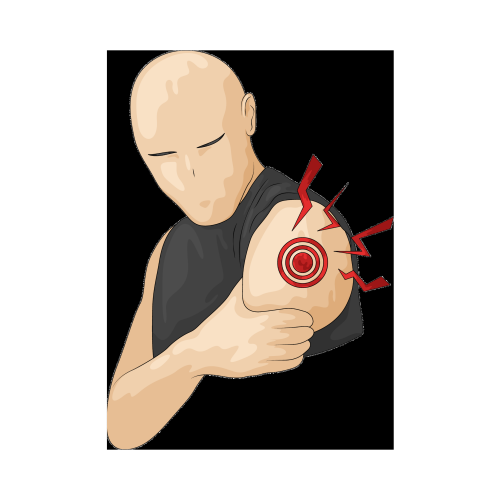
Post-herpetic neuralgia (PHN) is the most common serious complication of herpes zoster (shingles) — the painful reactivation of the varicella-zoster virus (VZV) that has lain dormant in the dorsal root ganglia since a childhood chickenpox infection. PHN is defined as persistent pain lasting more than 3 months after the initial shingles rash has healed. It is one of the most severe neuropathic pain conditions encountered in clinical practice — causing constant burning, electric, and shooting pain that significantly impairs sleep, daily activities, and quality of life. PHN affects approximately 10–15% of all shingles patients — rising to 30–50% in those over 60 years of age. SurgiPartner’s pain management specialists in Hyderabad provide comprehensive PHN assessment and treatment.
Understanding Herpes Zoster and the Development of PHN
Following primary varicella infection (chickenpox), the varicella-zoster virus (VZV) establishes lifelong latency in sensory neurons of the dorsal root ganglia throughout the spinal cord and cranial nerve ganglia. Decades later, when cellular immune function declines — due to ageing, immunosuppression (steroids, chemotherapy, HIV), or physiological stress — the virus reactivates, travelling along the sensory nerve to the skin territory supplied by that nerve root (dermatome), producing the characteristic unilateral, dermatomal vesicular rash of herpes zoster.
The viral reactivation causes intense inflammation and destruction of the peripheral sensory nerve — damaging large A-beta (touch) fibres and small C and A-delta (pain) fibres, disrupting the gate control of pain, and leading to central sensitisation of the dorsal horn. This peripheral and central neurological damage is responsible for the characteristic PHN triad:
- Spontaneous continuous pain — burning, gnawing, or deep aching pain in the affected dermatome; constant; described as “fire burning under the skin”
- Allodynia — severe pain triggered by normally non-painful stimuli — the touch of clothing, a light breeze, or even a bedsheet causes intense pain (dynamic mechanical allodynia); the most distressing PHN symptom for many patients
- Hyperalgesia — exaggerated pain response to normally painful stimuli (e.g. a pinprick causes disproportionate severe pain)
Risk Factors for Developing PHN After Shingles
| Risk Factor | Effect on PHN Risk |
|---|---|
| Age over 60 years | Most significant risk factor — PHN risk rises from ~5% at age 30 to ~30–50% at age 70+; immune senescence reduces VZV-specific T-cell immunity |
| Severe acute pain during shingles | Greater acute nociceptive input = greater sensitisation; high NRS pain during the rash strongly predicts PHN development |
| Severity of rash | Extensive rash = greater viral load and nerve damage = higher PHN risk |
| Trigeminal (ophthalmic) distribution | Ophthalmic herpes zoster has higher PHN risk than thoracic or lumbar; eye involvement (herpes zoster ophthalmicus) requires urgent ophthalmological assessment |
| Immunosuppression | HIV, chemotherapy, steroids, post-transplant immunosuppression all significantly increase PHN risk |
| Delayed antiviral treatment | Starting antiviral therapy (>72 hours after rash onset) allows greater viral replication and nerve damage; early treatment is the key prevention strategy |
Prevention of PHN — The Most Important Strategy
Early Antiviral Treatment of Acute Shingles
Starting antiviral treatment within 72 hours of rash onset is the single most important intervention for reducing PHN risk. Valacyclovir (1g three times daily × 7 days) or famciclovir (500mg three times daily × 7 days) are preferred over acyclovir (which requires 5 doses per day and has lower bioavailability). Antivirals reduce viral replication, limit nerve damage, reduce acute pain severity, and significantly reduce — but do not eliminate — PHN risk. Even after 72 hours, antivirals are beneficial in patients over 50, those with ophthalmic involvement, and immunocompromised patients.
Adequate Acute Pain Control
Aggressive treatment of acute shingles pain with amitriptyline (10–25mg nightly, started during the acute phase) has been shown in RCTs to reduce PHN incidence at 6 months — suggesting that preventing central sensitisation during the acute phase reduces the neurological changes that perpetuate PHN. Corticosteroids (prednisolone) alongside antivirals accelerate rash resolution and reduce acute pain but do not consistently reduce PHN risk.
Shingles Vaccination
Shingrix (recombinant zoster vaccine, RZV) provides 90%+ protection against shingles in adults over 50 and approximately 89% protection against PHN in those who develop shingles. Recommended for all adults over 50, including those with previous shingles. Two-dose schedule 2–6 months apart. Available in India at major vaccination centres. This is the single most cost-effective intervention against PHN and is strongly recommended for all eligible patients. SurgiPartner advises vaccination counselling alongside pain management.
Treatment of Established PHN — Pharmacological Approach
First-Line Medications
Gabapentinoids (gabapentin, pregabalin) — voltage-gated calcium channel alpha-2-delta subunit modulators that reduce neuronal hyperexcitability; gabapentin 1,200–3,600mg/day in divided doses; pregabalin 150–600mg/day in 2–3 divided doses. Side effects: sedation, dizziness, weight gain, peripheral oedema. Most effective for the allodynia and burning components.
Tricyclic antidepressants (amitriptyline, nortriptyline) — sodium and noradrenaline reuptake inhibition reducing central sensitisation; amitriptyline 10–75mg nightly. Low doses are effective and side effects are manageable; effective for sleep disturbance alongside pain control. Caution in the elderly, cardiac disease.
Topical 5% lidocaine patches — applied directly to the painful skin area; provide local anaesthetic effect without systemic absorption; particularly effective for allodynia; can be used in combination with systemic medications; applied for up to 12 hours daily.
Second-Line
Opioids (tramadol, oxycodone, morphine) — effective for severe PHN but are second-line due to long-term risks of dependence, cognitive effects in the elderly, and constipation. Used for breakthrough pain alongside first-line medications.
Capsaicin 8% patch (Qutenza) — high-concentration capsaicin patches applied for 30–60 minutes by a healthcare provider; causes defunctionalisation of TRPV1-expressing C fibres; provides 3 months of pain relief per application; requires topical anaesthetic pre-treatment; available at specialist centres.
SNRIs (duloxetine, venlafaxine) — dual noradrenaline and serotonin reuptake inhibition; evidence for PHN is less robust than for gabapentinoids and TCAs but beneficial in patients with comorbid depression and anxiety.
Interventional Procedures for Refractory PHN
Intercostal Nerve Blocks
For thoracic PHN (the most common distribution — T4–T6), ultrasound or fluoroscopy-guided intercostal nerve blocks targeting the affected dermatome(s) with local anaesthetic and corticosteroid provide diagnostic and therapeutic benefit. A series of 3–6 injections at 2–4 week intervals reduces the inflammatory component and can produce sustained pain reduction.
Epidural Steroid Injections
For thoracic or lumbar PHN, transforaminal or interlaminar epidural injections of corticosteroid (methylprednisolone or triamcinolone) with local anaesthetic deliver high-concentration anti-inflammatory treatment to the dorsal root ganglion level — reducing the neuroinflammation driving PHN. Studies show significant benefit particularly in patients within the first 12 months of PHN onset, before complete neural fibrosis limits the treatment window.
Stellate Ganglion Block — For Cervical and Facial PHN
For herpes zoster ophthalmicus (ophthalmic nerve PHN) and cervicobrachial PHN, stellate ganglion block delivers sympathetic interruption to the head, neck, and upper extremity region — reducing the sympathetically-maintained component of neuropathic pain.
Spinal Cord Stimulation (SCS) — For Refractory Thoracic PHN
Spinal cord stimulation places epidural electrodes at the thoracic spinal cord level — delivering pulsed electrical stimulation to the dorsal column fibres, modulating pain signal transmission through gate control mechanisms. SCS is highly effective for chronic neuropathic pain and has excellent evidence for PHN refractory to medications. Studies report 60–75% significant pain reduction at 12 months with SCS for PHN. A trial stimulation period (7 days with external generator) confirms benefit before permanent implantation. SCS is available at SurgiPartner partner centres in Hyderabad — call +91 9030053009.
Frequently Asked Questions — PHN Treatment Hyderabad
Post-herpetic neuralgia (PHN) is persistent nerve pain lasting more than 3 months after the skin rash of shingles (herpes zoster) has healed. It is caused by damage to the sensory nerve from the varicella-zoster virus reactivation — leaving the nerve in a state of permanent hyperexcitability that generates spontaneous burning pain and extreme sensitivity to touch (allodynia). PHN duration is variable: approximately 50% of patients improve significantly within 12 months; 30% have persistent pain at 2 years; and 10–15% have severe, disabling PHN lasting for many years. Without treatment, PHN often does not resolve spontaneously — and the longer it persists without treatment, the greater the central sensitisation and the more refractory it becomes. Early and aggressive treatment of established PHN with first-line medications (gabapentinoids, TCAs, lidocaine patches) and interventional procedures when indicated gives the best chance of resolution. Call SurgiPartner on +91 9030053009 for specialist PHN assessment in Hyderabad.
Why Choose SurgiPartner?
Choosing SurgiPartner means choosing expert care, advanced technology, and a commitment to restoring full mobility. Our approach to ACL Reconstruction Surgery helps athletes and active individuals regain knee stability, confidence, and performance.
01.
Experienced Sports Orthopedic Surgeons
Our skilled surgeons specialize in ACL reconstruction, ligament repair, and sports injury management, ensuring precision and faster return to activity.
02.
Advanced Arthroscopic & Minimally Invasive Techniques
We use keyhole surgical methods that reduce scarring, pain, and recovery time promoting faster joint healing
03.
Personalized Rehabilitation Programs
Each recovery plan is custom-designed with physiotherapists to restore flexibility, strength, and confidence step by step.
04.
Fast, Pain-Free Recovery
Most patients start walking within days and return to sports or active routines within a few months supported by guided rehab care.
Request a Consultation
Take the first step toward stronger, more stable knees with SurgiPartner advanced ACL Reconstruction Surgery. Our specialists are here to guide you through a safe and effective recovery journey.
Get back in the game – that’s the SurgiPartner promise
View SurgiPartner on Google

Posted on Google
 saikiran challa
Trustindex verifies that the original source of the review is Google.
I am thoroughly impressed with the SurgiPartner model, which delivers integrated, end-to-end patient support across the healthcare continuum—from initial consultations to treatment and surgical interventions, where necessary. I recently availed their Care Buddy service for a consultation, and the experience was highly seamless, efficient, and professionally managed. The structured Care Buddy support, combined with well-aligned financial assistance processes, significantly enhances the overall patient journey. This holistic and patient-centric approach effectively streamlines access to quality healthcare, making it more efficient and convenient in today’s dynamic environment.Posted on Google vasantha kumari buggalaI’m really impressed with the SurgiPartner concept. They provide end-to-end patient support—from doctor consultations to treatment and even surgery when required. I personally used their Care Buddy service for a consultation, and it was a smooth and positive experience. The Care Buddy assistance, along with support in financial processes, makes healthcare much more convenient, especially in today’s fast-paced lifestyle.Posted on Google
 krishna nayakMy Brother Arun Kumar and krishna from Bangalore. We are travelled to Hyderabad for LASIK surgery, and today we successfully underwent the procedure at American Laser Eye Hospital. The surgery went very smoothly and I am feeling very good after the procedure. The hospital environment is very clean and well maintained. All the staff and doctors are very polite, supportive, and professional. A special thanks to SurgiPartner CareBuddy for guiding and helping me throughout the entire process. From the beginning till the end of the day, they were with us at every step and provided excellent support. Overall, I had a very good experience and I highly recommend American Laser Eye Hospital for LASIK surgery with SurgiPartner support.Posted on Google
 ManaswiReally impressed with the concept of SurgiPartner. They offer complete patient support from doctor consultation to treatment and surgery if needed. I personally took a consultation through their Care buddy, and it was a great experience. The care buddy system and help with financial processes make healthcare much easier, especially in today’s busy world.Posted on Google
 Arun NayakMy name is Arun Kumar and I am from Bangalore. I traveled to Hyderabad for LASIK surgery, and today I successfully underwent the procedure at American Laser Eye Hospital. The surgery went very smoothly and I am feeling very good after the procedure. The hospital environment is very clean and well maintained. All the staff and doctors are very polite, supportive, and professional. A special thanks to SurgiPartner CareBuddy for guiding and helping me throughout the entire process. From the beginning till the end of the day, they were with us at every step and provided excellent support. Overall, I had a very good experience and I highly recommend American Laser Eye Hospital for LASIK surgery with SurgiPartner supportPosted on Google
 Shankar S ShankruThank you for the support and service provided by SurgiPartner. The overall experience was smooth and the team was very helpful.Posted on Google
 Thejasree KStaff is very good and nice receiving. They are very humble and their response is very good. Thank youPosted on Google
 Srihari ReddyI want to thank Surgipartner for all the help and support during my LASIK surgery. From the beginning till the end, the team was very proactive with follow-ups and guided me clearly through every step, which made the whole experience easy and stress-free. I would especially like to appreciate CareBuddy Raju and Coordinator Anusha for their outstanding support. They were always in touch with both the hospital staff and me, helped reduce waiting time, and made sure everything went smoothly. Their care, quick responses, and constant guidance really made a big difference. Overall, I had a very positive experience and truly appreciate the support provided by Surgipartner.Verified by TrustindexTrustindex verified badge is the Universal Symbol of Trust. Only the greatest companies can get the verified badge who has a review score above 4.5, based on customer reviews over the past 12 months. Read more
How SurgiPartner Supports You — From First Call to Full Recovery
Follow your step-by-step guide to a successful surgery and recovery, with our expert team supporting you all the way.
Find Doctor & Hospital Support
Fill in your details and we'll call you back to confirm your slot.