Safe ENT Surgery. Better Sleep. Improved Breathing
Breathe Better with SurgiPartner Advanced Adenoidectomy
Adenoidectomy in Hyderabad — Adenoid Removal Surgery for Children & Adults
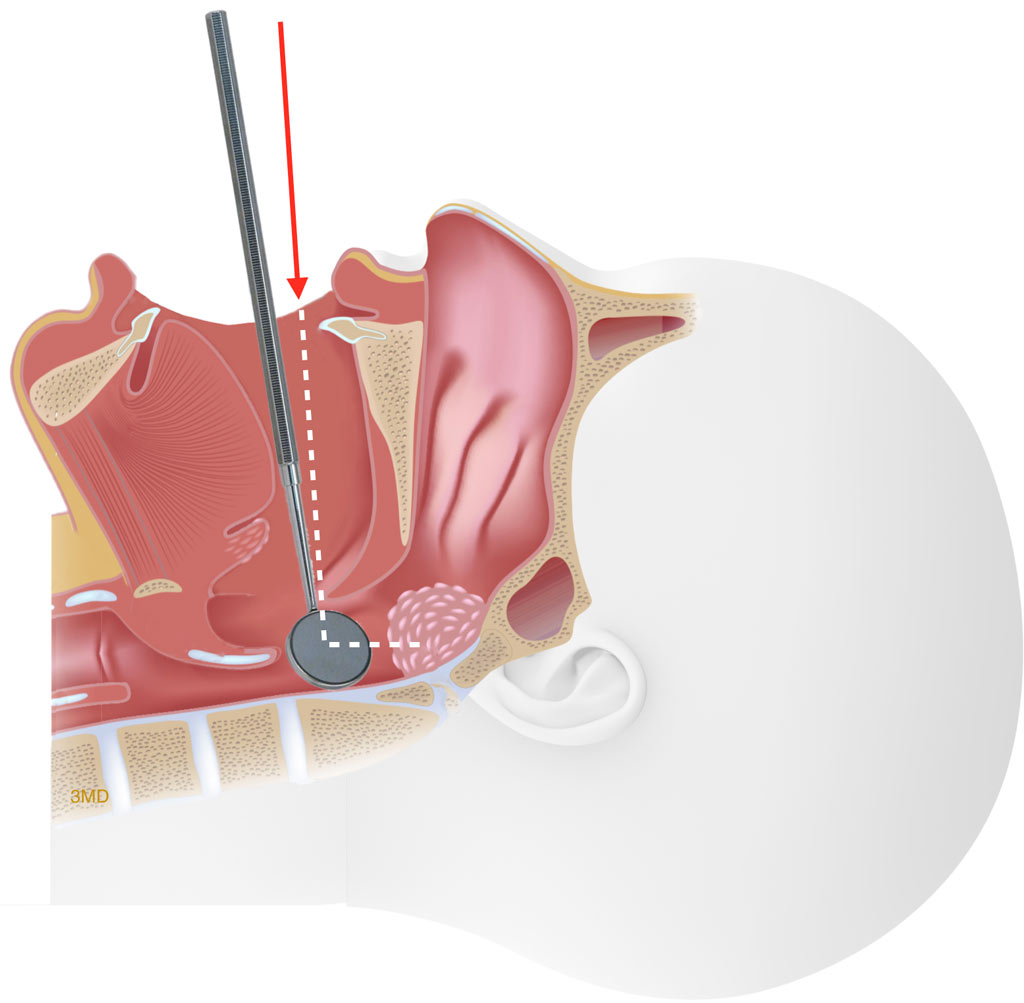
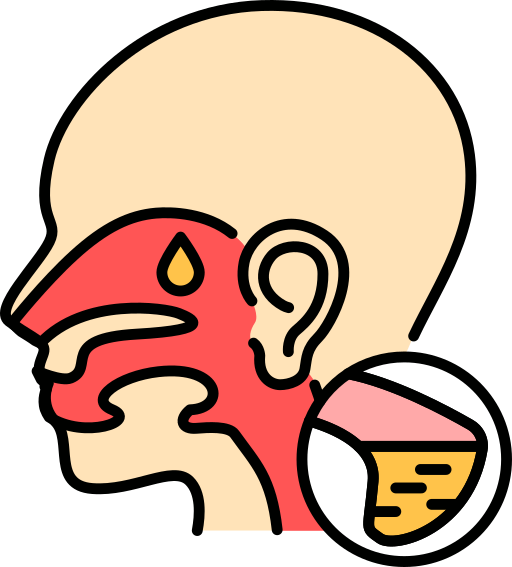
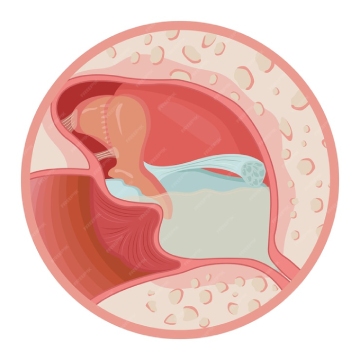
The adenoids are a pad of lymphatic tissue located at the very back of the nasal cavity, above the soft palate and behind the nose. As part of Waldeyer’s ring — a circle of lymphoid tissue guarding the entrance to the throat — the adenoids play a role in early childhood immunity. However, in many children they enlarge persistently, causing nasal obstruction, chronic mouth breathing, recurrent ear infections, and sleep-disordered breathing that significantly impairs development, sleep quality, and school performance. SurgiPartner connects families across Hyderabad with experienced paediatric ENT surgeons for safe, effective adenoidectomy


Understanding Adenoid Hypertrophy — Why Do Adenoids Enlarge?
The adenoids are most active immunologically between ages 2–7 years, responding to repeated exposure to inhaled bacteria, viruses, and allergens. In some children, repeated infections or allergic stimulation prevent the normal involution (shrinkage) of adenoid tissue — leading to persistent enlargement (hypertrophy). Adenoid size is graded endoscopically on a 1–4 scale:
| Grade | Description | Choana Obstruction |
|---|---|---|
| Grade 1 | Adenoid tissue within the nasopharynx, not obstructing | <25% |
| Grade 2 | Adenoids extending to the choana | 25–50% |
| Grade 3 | Adenoids significantly narrowing the choanal passage | 50–75% |
| Grade 4 | Adenoids completely or near-completely blocking the choana | >75% — surgical indication |
Symptoms of Enlarged Adenoids
- Chronic mouth breathing — the most visible sign; the child habitually breathes through the open mouth, leading to dry lips, dental malocclusion, and over time, the characteristic adenoid facies (elongated face, open mouth, retrognathic jaw)
- Snoring and sleep apnoea — adenoid hypertrophy is the most common cause of obstructive sleep apnoea in children; parents report heavy snoring, witnessed apnoeas (pauses in breathing), restless sleep, and bed-wetting secondary to arousal from obstructed breathing
- Recurrent otitis media (ear infections) — enlarged adenoids sit directly beside the Eustachian tube openings; they physically obstruct Eustachian tube function and act as a bacterial reservoir, driving recurrent ear infections and conductive hearing loss (glue ear)
- Nasal voice and hyponasality — large adenoids obstruct the nasopharynx, preventing normal nasal resonance; the child’s voice sounds muffled as if they have a permanent cold
- Chronic nasal discharge and post-nasal drip — persistent coloured nasal discharge that does not clear with treatment; the adenoid acts as a microbial reservoir perpetuating upper respiratory infection
- Poor sleep quality with daytime consequences — sleep-disturbed children present with poor concentration, hyperactivity, irritability, and academic underperformance, sometimes misdiagnosed as ADHD before the sleep and airway problem is identified


Adenoidectomy — The Procedure
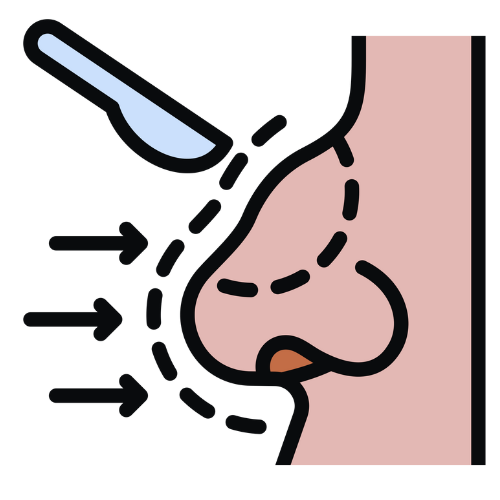
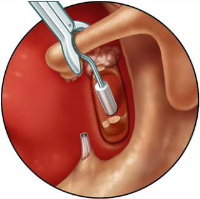
Adenoidectomy is performed under general anaesthesia and takes 15–30 minutes as a day-care procedure. The adenoids are accessed through the mouth — no external incisions are made. Several techniques are used based on surgeon preference and training:
- Curette adenoidectomy — traditional technique; a curved curette is used to scrape adenoid tissue from the nasopharyngeal roof; fast and effective
- Microdebrider adenoidectomy — a powered rotating blade with simultaneous suction precisely removes adenoid tissue under endoscopic vision; excellent visualisation, less bleeding, more complete removal — increasingly preferred by paediatric ENT surgeons
- Coblation adenoidectomy — radiofrequency energy ablates adenoid tissue at low temperatures, minimising thermal injury to surrounding structures; less post-operative pain
A throat pack is placed to prevent blood from being swallowed during surgery. The child recovers from anaesthesia rapidly and is typically ready to go home within 2–4 hours in day-care settings.
💡 Adenoidectomy + Tonsillectomy: When both adenoids and tonsils contribute to obstruction or recurrent infection, adenotonsillectomy (combined removal in a single anaesthetic) is the most common paediatric ENT procedure performed. SurgiPartner’s paediatric ENT team evaluates each child comprehensively — call +91 9030053009.
Frequently Asked Questions — Adenoidectomy Hyderabad
Why Choose SurgiPartner for Adenoidectomy?
Choosing SurgiPartner means safe ENT care with advanced technology and compassionate expertise.
01.
Experienced ENT Specialists
Highly trained surgeons with extensive pediatric and adult ENT experience.
02.
Advanced Surgical Techniques
Endoscopic and minimally invasive methods for faster healing.
03.
Child-Friendly & Safe Anesthesia
Special protocols ensuring comfort and safety for children.
04.
Comprehensive Post-Op Support
Continuous monitoring and long-term follow-up care.
Book Your Consultation
Take the first step toward relief from abdominal pain with SurgiPartner Advanced Appendectomy Surgery.
Live free from pain and discomfort that’s the SurgiPartner promise.
What Our Patients Say

Posted onTrustindex verifies that the original source of the review is Google. I am thoroughly impressed with the SurgiPartner model, which delivers integrated, end-to-end patient support across the healthcare continuum—from initial consultations to treatment and surgical interventions, where necessary. I recently availed their Care Buddy service for a consultation, and the experience was highly seamless, efficient, and professionally managed. The structured Care Buddy support, combined with well-aligned financial assistance processes, significantly enhances the overall patient journey. This holistic and patient-centric approach effectively streamlines access to quality healthcare, making it more efficient and convenient in today’s dynamic environment.Posted onTrustindex verifies that the original source of the review is Google. I’m really impressed with the SurgiPartner concept. They provide end-to-end patient support—from doctor consultations to treatment and even surgery when required. I personally used their Care Buddy service for a consultation, and it was a smooth and positive experience. The Care Buddy assistance, along with support in financial processes, makes healthcare much more convenient, especially in today’s fast-paced lifestyle.Posted onTrustindex verifies that the original source of the review is Google. My Brother Arun Kumar and krishna from Bangalore. We are travelled to Hyderabad for LASIK surgery, and today we successfully underwent the procedure at American Laser Eye Hospital. The surgery went very smoothly and I am feeling very good after the procedure. The hospital environment is very clean and well maintained. All the staff and doctors are very polite, supportive, and professional. A special thanks to SurgiPartner CareBuddy for guiding and helping me throughout the entire process. From the beginning till the end of the day, they were with us at every step and provided excellent support. Overall, I had a very good experience and I highly recommend American Laser Eye Hospital for LASIK surgery with SurgiPartner support.Posted onTrustindex verifies that the original source of the review is Google. Really impressed with the concept of SurgiPartner. They offer complete patient support from doctor consultation to treatment and surgery if needed. I personally took a consultation through their Care buddy, and it was a great experience. The care buddy system and help with financial processes make healthcare much easier, especially in today’s busy world.Posted onTrustindex verifies that the original source of the review is Google. My name is Arun Kumar and I am from Bangalore. I traveled to Hyderabad for LASIK surgery, and today I successfully underwent the procedure at American Laser Eye Hospital. The surgery went very smoothly and I am feeling very good after the procedure. The hospital environment is very clean and well maintained. All the staff and doctors are very polite, supportive, and professional. A special thanks to SurgiPartner CareBuddy for guiding and helping me throughout the entire process. From the beginning till the end of the day, they were with us at every step and provided excellent support. Overall, I had a very good experience and I highly recommend American Laser Eye Hospital for LASIK surgery with SurgiPartner supportPosted onTrustindex verifies that the original source of the review is Google. Thank you for the support and service provided by SurgiPartner. The overall experience was smooth and the team was very helpful.Posted onTrustindex verifies that the original source of the review is Google. Staff is very good and nice receiving. They are very humble and their response is very good. Thank youPosted onTrustindex verifies that the original source of the review is Google. I want to thank Surgipartner for all the help and support during my LASIK surgery. From the beginning till the end, the team was very proactive with follow-ups and guided me clearly through every step, which made the whole experience easy and stress-free. I would especially like to appreciate CareBuddy Raju and Coordinator Anusha for their outstanding support. They were always in touch with both the hospital staff and me, helped reduce waiting time, and made sure everything went smoothly. Their care, quick responses, and constant guidance really made a big difference. Overall, I had a very positive experience and truly appreciate the support provided by Surgipartner.Verified by TrustindexTrustindex verified badge is the Universal Symbol of Trust. Only the greatest companies can get the verified badge who has a review score above 4.5, based on customer reviews over the past 12 months. Read more
How SurgiPartner Supports You — From First Call to Full Recovery
Follow your step-by-step guide to a successful surgery and recovery, with our expert team supporting you all the way.
Book FREE Consultation
Fill in your details and we'll call you back to confirm your slot.