Relieve Chronic Shoulder Pain. Improve Strength. Regain Everyday Function
Restore Shoulder Movement with SurgiPartner Advanced Shoulder Replacement Surgery
Shoulder Replacement Surgery in Hyderabad
Shoulder replacement surgery has undergone a dramatic evolution over the past two decades particularly with the development of the reverse total shoulder arthroplasty (RTSA), which has transformed outcomes for patients with rotator cuff arthropathy and massive rotator cuff tears. SurgiPartner connects patients across Hyderabad with experienced joint replacement surgeons offering all shoulder replacement techniques from hemiarthroplasty for acute fractures to reverse shoulder replacement for complex arthritis with rotator cuff failure.


Conditions That Lead to Shoulder Replacement
1. Primary Glenohumeral Osteoarthritis
Progressive loss of the smooth articular cartilage covering both the humeral head and glenoid, causing the characteristic triad of shoulder arthritis: deep, aching shoulder pain (particularly at night), progressive loss of range of motion especially external rotation and overhead reach and crepitus (grinding, clicking sensation with movement). X-rays show joint space narrowing, osteophyte formation (bone spurs), and subchondral sclerosis. Primary OA accounts for the majority of anatomic total shoulder replacements in patients typically over 60 years.
2. Rotator Cuff Arthropathy
A devastating combination of massive, irreparable rotator cuff tearing and secondary glenohumeral arthritis. Without the rotator cuff to centre the humeral head in the glenoid, the humeral head migrates superiorly, grinding against the undersurface of the acromion and developing secondary degenerative changes. Clinically, the patient cannot actively elevate the arm above shoulder height despite preserved passive motion (pseudoparalysis). This condition is specifically addressed by reverse total shoulder arthroplasty allowing the deltoid muscle to replace rotator cuff function.
3. Rheumatoid Arthritis of the Shoulder
Chronic synovial inflammation in rheumatoid arthritis causes progressive joint destruction both on the humeral and glenoid articular surfaces along with rotator cuff involvement and bone quality issues from long-term corticosteroid use. RA patients often require shoulder replacement at a younger age than OA patients, and the presence of rotator cuff involvement influences whether an anatomic or reverse replacement is most appropriate.
4. Avascular Necrosis (AVN) of the Humeral Head
Loss of blood supply to the humeral head causes progressive bone death and collapse of the articular surface. Causes include corticosteroid use (the most common cause in India), excessive alcohol consumption, sickle cell disease, systemic lupus erythematosus, prior shoulder trauma, and radiation therapy. Early-stage AVN without glenoid involvement may be treated with hemiarthroplasty; advanced AVN with secondary glenoid changes requires total shoulder replacement.
5. Complex Proximal Humerus Fractures
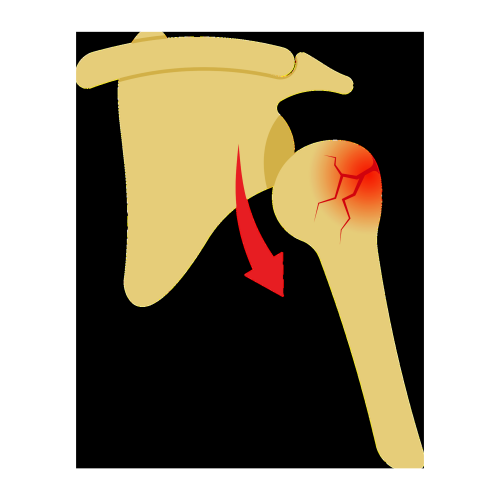
In elderly patients with osteoporotic bone, certain four-part proximal humerus fractures (Neer classification) carry an unacceptably high risk of AVN and failed internal fixation if treated with plates and screws. In these patients particularly those over 70 years hemiarthroplasty or reverse total shoulder arthroplasty (when the rotator cuff is also compromised) provides more reliable pain relief and functional outcome than attempting complex fracture fixation.
6. Failed Prior Shoulder Surgery
Revision shoulder replacement is increasingly performed for failed prior procedures including: failed anatomic total shoulder with loosened glenoid component, arthritic sequelae of instability repairs (the “arthritis of dislocation”), and rotator cuff arthropathy developing after prior rotator cuff repair failure. Revision shoulder replacement is technically more complex than primary surgery and requires subspecialty expertise.
Types of Shoulder Replacement Complete Guide
1. Total Shoulder Arthroplasty (Anatomic TSA)
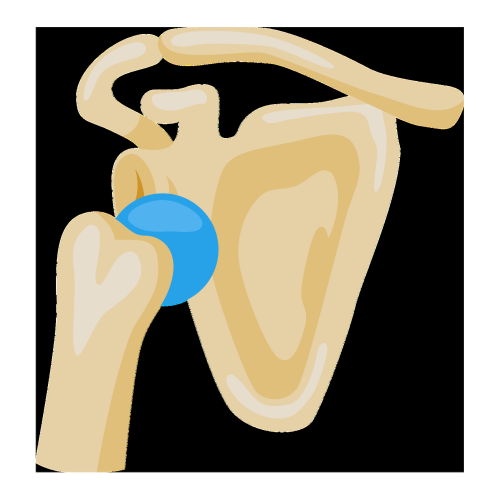
The anatomic total shoulder replacement replicates normal shoulder anatomy: a metal humeral component (stem + ball head) replaces the humeral head, and a polyethylene glenoid component replaces the glenoid socket. The term “anatomic” refers to restoring the normal ball-and-socket geometry. TSA requires an intact, functional rotator cuff without the rotator cuff centring the humeral head on the glenoid implant, the glenoid component experiences eccentric loading (the “rocking horse” phenomenon) leading to early loosening and implant failure.
Modern TSA uses stemless or short-stem humeral implants, highly cross-linked polyethylene glenoid components, and computer navigation or patient-specific instrumentation for optimal component positioning. TSA provides excellent pain relief (90%+ at 10 years) and functional improvement for patients with preserved rotator cuff integrity.
2. Reverse Total Shoulder Arthroplasty (RTSA)
The reverse shoulder replacement is one of the most significant innovations in modern orthopaedic surgery. It fundamentally reverses the ball-and-socket geometry: a metal hemisphere (glenosphere) is fixed to the glenoid socket, and a polyethylene cup replaces the humeral head. This reversal medialises and lowers the centre of rotation of the shoulder joint, dramatically increasing the mechanical advantage of the deltoid muscle and allowing it to power shoulder elevation even in the complete absence of the rotator cuff.
Why RTSA is transformative: Before its development, patients with rotator cuff arthropathy had no reliable surgical solution. RTSA restores active shoulder elevation from less than 60° to over 120° in the majority of patients, with very high patient satisfaction and implant survival rates exceeding 90% at 10 years.
Indications for RTSA:
- Rotator cuff arthropathy with pseudoparalysis (primary indication)
- Massive irreparable rotator cuff tears without arthritis (cuff-deficient shoulders)
- Acute complex proximal humerus fractures in elderly patients
- Failed anatomic total shoulder with glenoid loosening
- Revision of failed shoulder arthroplasty
- Humeral head tumour reconstruction
- Advanced shoulder OA with poor glenoid bone stock unsuitable for anatomic replacement
3. Hemiarthroplasty (Partial Shoulder Replacement)
Only the humeral head is replaced with a metal implant the native glenoid cartilage (if preserved) is left in place. Hemiarthroplasty is indicated when the glenoid articular surface is reasonably preserved (as in early AVN or certain fractures), when glenoid bone stock is insufficient for a glenoid component, or for acute four-part proximal humerus fractures in elderly patients. Outcomes are good when the glenoid cartilage is healthy; if OA subsequently develops in the native glenoid, conversion to total shoulder replacement can be performed.
4. Shoulder Surface Replacement (Resurfacing Arthroplasty)
A thin metallic cap is placed over the humeral head without removing the humeral neck bone-conserving and particularly suitable for younger patients with AVN or limited OA who want to preserve the option for future conversion to standard shoulder replacement. Requires intact humeral head bone for successful fixation and is not appropriate when the humeral head has significantly collapsed.


Choosing the Right Shoulder Replacement Decision Guide
| Patient Situation | Recommended Replacement | Reason |
|---|---|---|
| OA + intact rotator cuff, under 75 years | Anatomic TSA | Restores normal anatomy, excellent long-term results with functioning cuff |
| Rotator cuff arthropathy + pseudoparalysis | Reverse TSA | Only reliable solution for absent cuff deltoid takes over elevation |
| OA + partial rotator cuff tear, borderline | Reverse TSA | Safer choice avoids glenoid loosening risk if cuff uncertain |
| 4-part fracture, elderly patient | RTSA or Hemiarthroplasty | RTSA if cuff uncertain; hemiarthroplasty if cuff confirmed intact |
| AVN, young patient, early stage | Resurfacing or Hemiarthroplasty | Bone-conserving, preserves conversion options |
| Failed prior shoulder surgery | Revision RTSA | RTSA most versatile for revision handles bone loss and cuff deficiency |
The Shoulder Replacement Procedure Step by Step
Pre–Operative Assessment
Comprehensive pre-operative evaluation at SurgiPartner includes: X-rays (true AP, axillary and scapular-Y views), CT scan (3D reconstruction for glenoid morphology assessment and implant sizing), MRI (rotator cuff integrity and quality evaluation), blood tests, cardiac clearance for anaesthesia, and pre-operative physiotherapy to optimise shoulder range of motion and strength.
Surgical Technique
Shoulder replacement is performed under general anaesthesia combined with an interscalene or superior trunk nerve block for post-operative pain control. The patient is positioned in the beach-chair position upright at 45–60° with the arm free. The standard approach is the deltopectoral interval between the deltoid and pectoralis major muscles which is muscle-sparing and provides excellent access without damaging the deltoid.
The subscapularis tendon (the front rotator cuff tendon) is carefully taken down to access the joint, then meticulously repaired at closure subscapularis healing is critical for post-operative internal rotation and overall stability. The humeral head is resected, the medullary canal prepared, and the humeral component inserted. For TSA, the glenoid is reamed and the polyethylene or metal-backed glenoid component cemented in place. For RTSA, the glenosphere is fixed to the glenoid with a central post and screws, and the polyethylene cup is snapped into the humeral component. The subscapularis is repaired with heavy sutures before wound closure.
Frequently Asked Questions Shoulder Replacement Surgery in Hyderabad
Modern shoulder replacement implants are designed to last 15–25+ years. Registry data shows over 90% of total shoulder replacements functioning well at 10 years and approximately 85% at 15 years. Reverse total shoulder replacements show similar or slightly better survival rates due to the inherent stability of the reversed construct. Implant longevity is influenced by patient activity level, body weight, implant design, and the precision of surgical component positioning. Glenoid component loosening (in anatomic TSA) has historically been the primary cause of long-term failure, which modern implant designs and surgical techniques have significantly reduced.
In a total shoulder replacement (TSA), the anatomy is recreated normally the metal ball replaces the humeral head and a plastic socket replaces the glenoid. This requires an intact rotator cuff to function properly. In a reverse shoulder replacement (RTSA), the ball and socket are switched a metal ball is attached to the glenoid, and a socket is attached to the humerus. This reversal allows the deltoid muscle to power shoulder elevation independently of the rotator cuff, making RTSA the only reliable solution for patients with combined arthritis and massive rotator cuff failure. The choice between TSA and RTSA is primarily determined by the status of the rotator cuff assessed on MRI before surgery.
Shoulder replacement with a modern anaesthesia protocol combining general anaesthesia and an interscalene nerve block results in very well-controlled post-operative pain. The nerve block provides 12–18 hours of complete shoulder numbness post-operatively, during which most patients are very comfortable. The following 48–72 hours involve moderate aching effectively managed with prescribed oral analgesics. Patients consistently report that their pre-operative chronic arthritis pain is far worse than the surgical recovery pain. Most patients experience significant pain reduction within 4–6 weeks and are very satisfied with their overall pain levels by 3 months.
The main restriction after total or reverse shoulder replacement relates to subscapularis healing in the first 6 weeks: avoid forceful internal rotation (reaching behind the back), pushing yourself up from a chair with the operated arm, or lifting objects heavier than a cup of tea. These restrictions protect the subscapularis tendon repair while it heals. After 6 weeks, most restrictions are progressively lifted based on functional recovery. Long-term: most low-impact activities are unrestricted. High-impact activities involving risk of fall or contact (such as cricket, martial arts) are generally discouraged to protect implant longevity, though guidelines are becoming more liberal with modern implant designs. Your SurgiPartner surgeon will provide personalised guidance based on your specific implant and recovery.
Yes shoulder replacement surgery for medical indications (osteoarthritis, rotator cuff arthropathy, rheumatoid arthritis, AVN, or fracture) is covered by all major health insurance plans in India including Star Health, HDFC Ergo, Niva Bupa, United India, New India Assurance, and Ayushman Bharat for eligible patients. The implant cost is typically the largest component. SurgiPartner's dedicated insurance coordination team verifies your specific policy benefits before surgery and manages the entire cashless claim process, including pre-authorisation and final billing. Call +91 9030053009 for a free insurance check.
Bilateral simultaneous shoulder replacement (both shoulders done in one anaesthetic episode) is very rarely performed due to the significant rehabilitation challenge patients need at least one functional arm to assist recovery and daily activities. Staged bilateral replacement one shoulder at a time, typically 3–6 months apart — allows full recovery of the first shoulder before operating on the second. Most patients with bilateral severe shoulder arthritis opt for the most symptomatic side first and decide on the second based on functional improvement and remaining symptom burden. SurgiPartner's team will discuss the most appropriate sequence based on your specific situation.
Driving is generally not permitted for 6–8 weeks after shoulder replacement surgery. The sling is worn for the first 4–6 weeks, during which driving is impossible. After sling removal, driving clearance requires: adequate range of motion to control the steering wheel and gear shift, sufficient strength for emergency braking and steering, no opioid pain medication affecting alertness, and surgical clearance from your SurgiPartner orthopaedic surgeon. Automatic transmission vehicles can typically be driven sooner than manual (stick shift) vehicles. Your specific clearance timing will depend on which shoulder was operated and your individual recovery progress.
Pseudoparalysis is the inability to actively lift the arm above shoulder height despite having full passive range of motion (when someone else lifts your arm, it goes to full elevation). It is caused by massive rotator cuff tearing that removes the dynamic centring force on the glenohumeral joint, allowing the humeral head to migrate superiorly when the deltoid contracts. Pseudoparalysis is the hallmark of rotator cuff arthropathy one of the primary indications for reverse total shoulder arthroplasty. RTSA's reversed geometry lowers and medialises the rotation centre, dramatically increasing the deltoid's mechanical advantage and allowing it to power full active elevation even without any rotator cuff function. Most patients with pseudoparalysis achieve active elevation above 120° after RTSA.
Why Choose SurgiPartner?
Choosing SurgiPartner means choosing trusted shoulder care backed by expertise and innovation.
01.
Experienced Sports Orthopedic Surgeons
Our specialists have extensive experience in performing complex shoulder replacement procedures.
02.
Advanced Arthroscopic & Minimally Invasive Techniques
We use modern implants and precision-guided techniques for accurate joint reconstruction.
03.
Personalized Rehabilitation Programs
Every shoulder condition is unique. We customize surgery and physiotherapy plans for optimal recovery.
04.
Fast, Pain-Free Recovery
Most patients begin gentle shoulder movement early and regain function gradually with guided rehabilitation.
Book Your Consultation
Take the first step toward stronger, more stable knees with SurgiPartner advanced ACL Reconstruction Surgery. Our specialists are here to guide you through a safe and effective recovery journey.
Get back in the game – that’s the SurgiPartner promise
View SurgiPartner on Google

Posted on Google
 saikiran challa
Trustindex verifies that the original source of the review is Google.
I am thoroughly impressed with the SurgiPartner model, which delivers integrated, end-to-end patient support across the healthcare continuum—from initial consultations to treatment and surgical interventions, where necessary. I recently availed their Care Buddy service for a consultation, and the experience was highly seamless, efficient, and professionally managed. The structured Care Buddy support, combined with well-aligned financial assistance processes, significantly enhances the overall patient journey. This holistic and patient-centric approach effectively streamlines access to quality healthcare, making it more efficient and convenient in today’s dynamic environment.Posted on Google vasantha kumari buggalaI’m really impressed with the SurgiPartner concept. They provide end-to-end patient support—from doctor consultations to treatment and even surgery when required. I personally used their Care Buddy service for a consultation, and it was a smooth and positive experience. The Care Buddy assistance, along with support in financial processes, makes healthcare much more convenient, especially in today’s fast-paced lifestyle.Posted on Google
 krishna nayakMy Brother Arun Kumar and krishna from Bangalore. We are travelled to Hyderabad for LASIK surgery, and today we successfully underwent the procedure at American Laser Eye Hospital. The surgery went very smoothly and I am feeling very good after the procedure. The hospital environment is very clean and well maintained. All the staff and doctors are very polite, supportive, and professional. A special thanks to SurgiPartner CareBuddy for guiding and helping me throughout the entire process. From the beginning till the end of the day, they were with us at every step and provided excellent support. Overall, I had a very good experience and I highly recommend American Laser Eye Hospital for LASIK surgery with SurgiPartner support.Posted on Google
 ManaswiReally impressed with the concept of SurgiPartner. They offer complete patient support from doctor consultation to treatment and surgery if needed. I personally took a consultation through their Care buddy, and it was a great experience. The care buddy system and help with financial processes make healthcare much easier, especially in today’s busy world.Posted on Google
 Arun NayakMy name is Arun Kumar and I am from Bangalore. I traveled to Hyderabad for LASIK surgery, and today I successfully underwent the procedure at American Laser Eye Hospital. The surgery went very smoothly and I am feeling very good after the procedure. The hospital environment is very clean and well maintained. All the staff and doctors are very polite, supportive, and professional. A special thanks to SurgiPartner CareBuddy for guiding and helping me throughout the entire process. From the beginning till the end of the day, they were with us at every step and provided excellent support. Overall, I had a very good experience and I highly recommend American Laser Eye Hospital for LASIK surgery with SurgiPartner supportPosted on Google
 Shankar S ShankruThank you for the support and service provided by SurgiPartner. The overall experience was smooth and the team was very helpful.Posted on Google
 Thejasree KStaff is very good and nice receiving. They are very humble and their response is very good. Thank youPosted on Google
 Srihari ReddyI want to thank Surgipartner for all the help and support during my LASIK surgery. From the beginning till the end, the team was very proactive with follow-ups and guided me clearly through every step, which made the whole experience easy and stress-free. I would especially like to appreciate CareBuddy Raju and Coordinator Anusha for their outstanding support. They were always in touch with both the hospital staff and me, helped reduce waiting time, and made sure everything went smoothly. Their care, quick responses, and constant guidance really made a big difference. Overall, I had a very positive experience and truly appreciate the support provided by Surgipartner.Verified by TrustindexTrustindex verified badge is the Universal Symbol of Trust. Only the greatest companies can get the verified badge who has a review score above 4.5, based on customer reviews over the past 12 months. Read more
How SurgiPartner Supports You — From First Call to Full Recovery
Follow your step-by-step guide to a successful surgery and recovery, with our expert team supporting you all the way.
Find Doctor & Hospital Support
Fill in your details and we'll call you back to confirm your slot.