Adenomyosis Treatment in Hyderabad — Medical Therapy, Surgery & Fertility
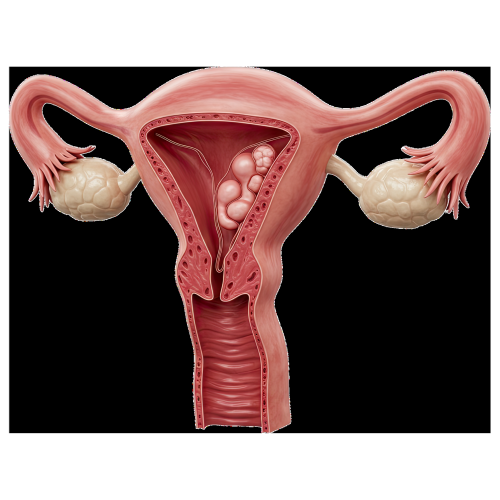
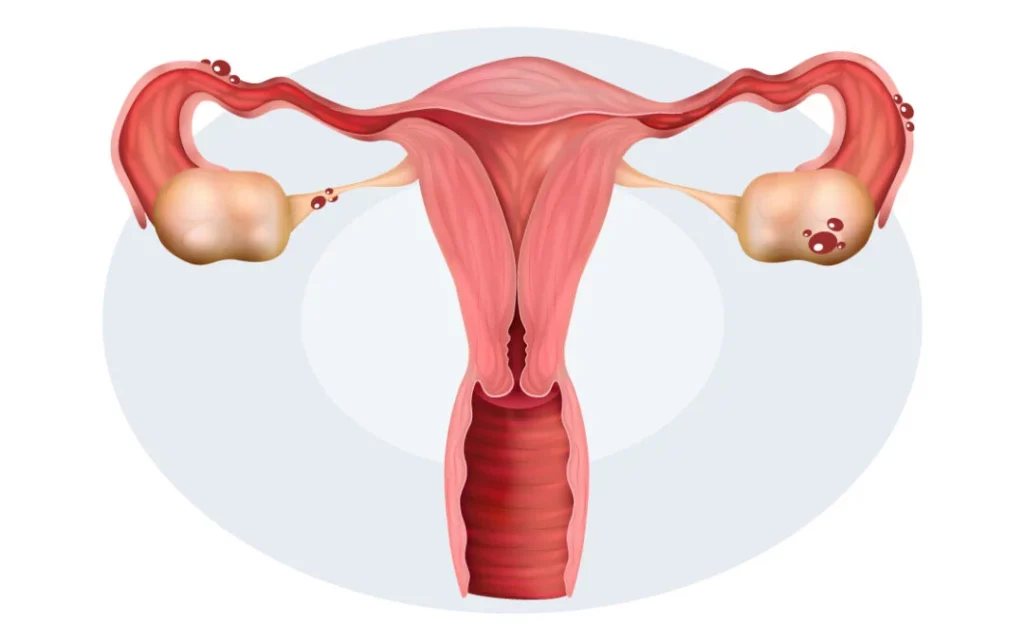
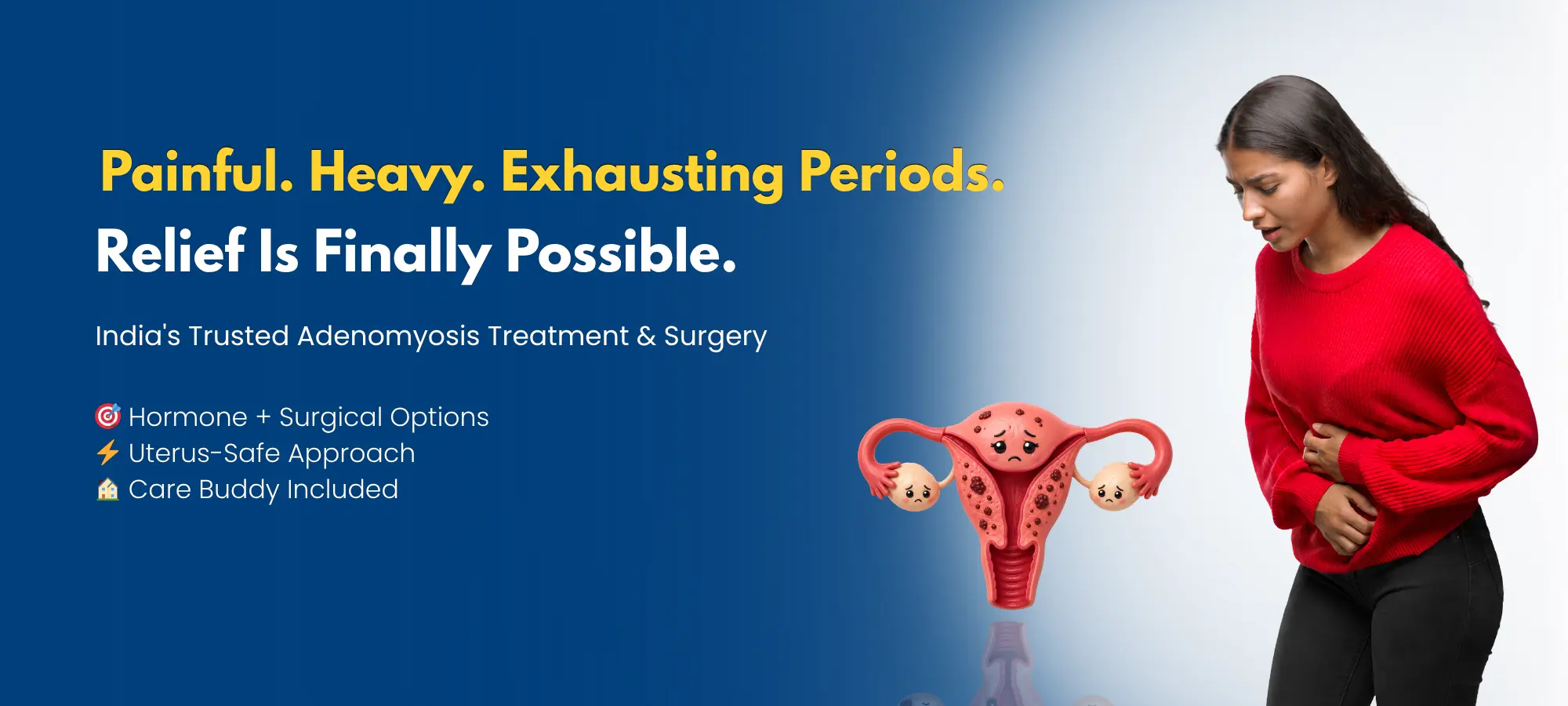
Adenomyosis is a gynaecological condition in which the endometrial glands and stroma (the tissue that normally lines the inside of the uterus) grow into the muscular wall of the uterus — the myometrium. This results in a bulky, tender uterus that causes severe painful periods, heavy menstrual bleeding, and in many women, significant difficulty conceiving. Adenomyosis affects an estimated 10–20% of women of reproductive age — and is significantly underdiagnosed in India, often misattributed to “normal” heavy periods for years before correct identification. SurgiPartner connects women in Hyderabad with female gynaecologists experienced in adenomyosis diagnosis and management


Diffuse vs Focal Adenomyosis
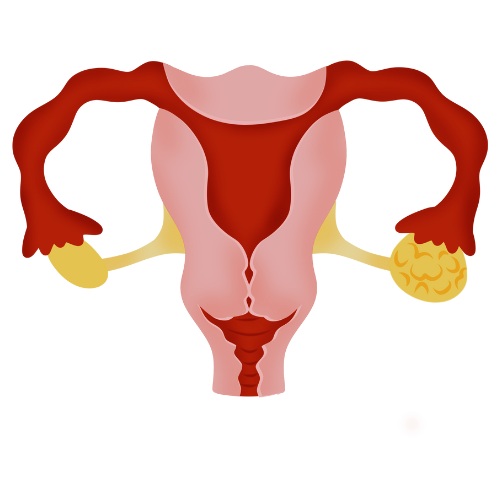
Diffuse adenomyosis — the most common form; endometrial tissue is scattered throughout the entire myometrium, causing global uterine enlargement (bulky uterus) and severely thickened, heterogeneous myometrium on MRI. Diffuse adenomyosis causes the most severe menorrhagia and dysmenorrhoea and is less amenable to surgical excision — hysterectomy provides definitive treatment for women who have completed childbearing.
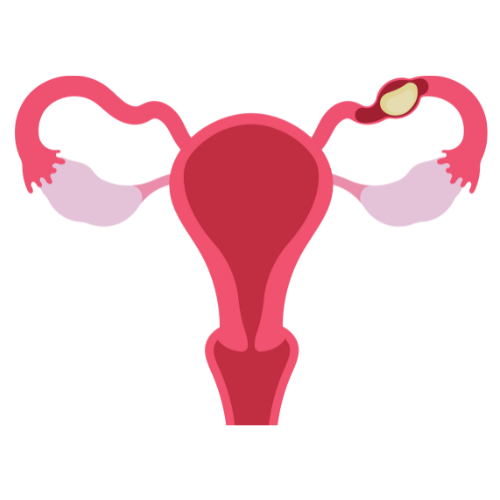
Focal adenomyosis (adenomyoma) — a localised nodule of adenomyotic tissue within the uterine wall, resembling a fibroid on imaging but with characteristic MRI features (ill-defined margins, junctional zone thickening >12mm). Focal adenomyoma can sometimes be excised laparoscopically (adenomyomectomy) — particularly relevant in younger women who wish to preserve fertility.
Symptoms of Adenomyosis
- Severe dysmenorrhoea — typically starts 1–2 days before menstruation and lasts throughout the period; progressively worsening over years; often described as the most severe pain the patient has experienced
- Menorrhagia (heavy periods) — flooding, clots, and prolonged periods (lasting more than 7 days); leading to iron deficiency anaemia, fatigue, and significantly impaired quality of life
- Chronic pelvic pain — non-cyclical dull pelvic ache throughout the month, worsening in the premenstrual phase
- Dyspareunia — deep pelvic pain during sexual intercourse
- Bulky uterus — the uterus may be enlarged to the size of a 10–12 week pregnancy; causing pelvic heaviness, bloating, and urinary frequency
- Infertility and pregnancy loss — adenomyosis impairs implantation, affects uterine contractility, and is associated with increased miscarriage rates and preterm labour


Diagnosis — Imaging Is Essential
Transvaginal ultrasound (TVS) can suggest adenomyosis through findings of a heterogeneous myometrium, asymmetric uterine wall thickening, myometrial cysts, and poor definition of the endometrial–myometrial junction. Sensitivity: approximately 72–82%.
MRI pelvis is the gold standard — provides definitive adenomyosis diagnosis through assessment of junctional zone thickness (JZ ≥12mm is diagnostic), adenomyoma characterisation, and simultaneous evaluation for coexisting endometriosis, fibroids, and ovarian pathology. MRI should be performed in all women with suspected adenomyosis before any treatment decision is made.
Adenomyosis Treatment — A Stepwise Approach
Step 1: Medical Management – First-Line for All Women
Levonorgestrel IUS (Mirena coil) — the single most effective medical treatment for adenomyosis. Releases a small daily dose of levonorgestrel locally into the uterine cavity, dramatically reducing endometrial proliferation. Reduces menstrual blood loss by 80–90% and dysmenorrhoea significantly in most women. Suitable for women who have completed their family or as a bridge to menopause. A Mirena placed immediately after conservative surgery significantly reduces recurrence of symptoms.
GnRH agonists (goserelin, leuprolide) — create temporary medical menopause, suppressing adenomyosis activity and significantly reducing uterine size (by 20–30%) during treatment. Provide substantial symptom relief but are limited to 3–6 month courses due to bone loss. Used pre-operatively to reduce uterine size and vascularity, or as a short-term bridge in perimenopausal women approaching natural menopause.
Dienogest (Visanne) — a selective progestogen approved for endometriosis that also effectively suppresses adenomyosis; oral tablet taken daily; suitable for long-term management; reduces pain and menstrual bleeding.
Combined OCP and NSAIDs — useful for mild–moderate dysmenorrhoea; regulate the cycle and reduce menstrual volume.
Step 2: Conservative Surgery – For Women Wishing to Preserve Fertility
Adenomyomectomy (excision of focal adenomyoma) — laparoscopic or open removal of a defined adenomyoma, analogous to myomectomy for fibroids. Results are less predictable than fibroid myomectomy because adenomyotic tissue blends with normal myometrium without a clear capsule. Suitable for focal adenomyosis in women who want to preserve their uterus and fertility. Post-operative Mirena placement reduces recurrence. Pregnancy must be planned carefully after adenomyomectomy — uterine scar integrity requires monitoring.
Step 3: Hysterectomy – Definitive Treatment
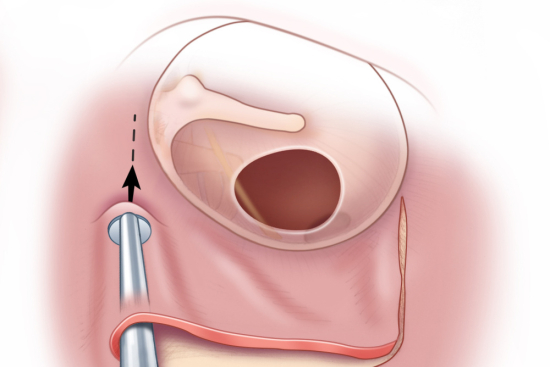
Total laparoscopic hysterectomy (TLH) is the only definitive, permanent treatment for adenomyosis — relieving all adenomyosis-related symptoms permanently. Recommended for women who have completed their family, have severe symptoms unresponsive to medical management, and prefer a definitive solution. Ovary preservation is typically recommended in premenopausal women undergoing hysterectomy for adenomyosis.
Frequently Asked Questions — Adenomyosis Treatment Hyderabad
Why Choose SurgiPartner?
Choosing SurgiPartner means choosing advanced gynecological care with empathy and expertise.
01.
Experienced Gynecologists
Our specialists have extensive experience managing adenomyosis with both conservative and surgical treatments.
02.
Advanced Arthroscopic & Minimally Invasive Techniques
We offer uterus-preserving treatments whenever possible, along with definitive surgical solutions when required.
03.
Personalized Rehabilitation Programs
We understand the physical and emotional impact of adenomyosis and provide respectful, patient-centered care.
04.
Fast, Pain-Free Recovery
Ongoing follow-up ensures effective symptom control and improved quality of life.
Request a Consultation
Take the first step toward relief from heavy bleeding and pelvic pain with SurgiPartner Advanced Adenomyosis Treatment.
Our experts are here to provide safe, effective, and compassionate care.
Comfort, balance, and confidence — that’s the SurgiPartner promise.
View SurgiPartner on Google

Posted on Google
 saikiran challa
Trustindex verifies that the original source of the review is Google.
I am thoroughly impressed with the SurgiPartner model, which delivers integrated, end-to-end patient support across the healthcare continuum—from initial consultations to treatment and surgical interventions, where necessary. I recently availed their Care Buddy service for a consultation, and the experience was highly seamless, efficient, and professionally managed. The structured Care Buddy support, combined with well-aligned financial assistance processes, significantly enhances the overall patient journey. This holistic and patient-centric approach effectively streamlines access to quality healthcare, making it more efficient and convenient in today’s dynamic environment.Posted on Google vasantha kumari buggalaI’m really impressed with the SurgiPartner concept. They provide end-to-end patient support—from doctor consultations to treatment and even surgery when required. I personally used their Care Buddy service for a consultation, and it was a smooth and positive experience. The Care Buddy assistance, along with support in financial processes, makes healthcare much more convenient, especially in today’s fast-paced lifestyle.Posted on Google
 krishna nayakMy Brother Arun Kumar and krishna from Bangalore. We are travelled to Hyderabad for LASIK surgery, and today we successfully underwent the procedure at American Laser Eye Hospital. The surgery went very smoothly and I am feeling very good after the procedure. The hospital environment is very clean and well maintained. All the staff and doctors are very polite, supportive, and professional. A special thanks to SurgiPartner CareBuddy for guiding and helping me throughout the entire process. From the beginning till the end of the day, they were with us at every step and provided excellent support. Overall, I had a very good experience and I highly recommend American Laser Eye Hospital for LASIK surgery with SurgiPartner support.Posted on Google
 ManaswiReally impressed with the concept of SurgiPartner. They offer complete patient support from doctor consultation to treatment and surgery if needed. I personally took a consultation through their Care buddy, and it was a great experience. The care buddy system and help with financial processes make healthcare much easier, especially in today’s busy world.Posted on Google
 Arun NayakMy name is Arun Kumar and I am from Bangalore. I traveled to Hyderabad for LASIK surgery, and today I successfully underwent the procedure at American Laser Eye Hospital. The surgery went very smoothly and I am feeling very good after the procedure. The hospital environment is very clean and well maintained. All the staff and doctors are very polite, supportive, and professional. A special thanks to SurgiPartner CareBuddy for guiding and helping me throughout the entire process. From the beginning till the end of the day, they were with us at every step and provided excellent support. Overall, I had a very good experience and I highly recommend American Laser Eye Hospital for LASIK surgery with SurgiPartner supportPosted on Google
 Shankar S ShankruThank you for the support and service provided by SurgiPartner. The overall experience was smooth and the team was very helpful.Posted on Google
 Thejasree KStaff is very good and nice receiving. They are very humble and their response is very good. Thank youPosted on Google
 Srihari ReddyI want to thank Surgipartner for all the help and support during my LASIK surgery. From the beginning till the end, the team was very proactive with follow-ups and guided me clearly through every step, which made the whole experience easy and stress-free. I would especially like to appreciate CareBuddy Raju and Coordinator Anusha for their outstanding support. They were always in touch with both the hospital staff and me, helped reduce waiting time, and made sure everything went smoothly. Their care, quick responses, and constant guidance really made a big difference. Overall, I had a very positive experience and truly appreciate the support provided by Surgipartner.Verified by TrustindexTrustindex verified badge is the Universal Symbol of Trust. Only the greatest companies can get the verified badge who has a review score above 4.5, based on customer reviews over the past 12 months. Read more
How SurgiPartner Supports You — From First Call to Full Recovery
Follow your step-by-step guide to a successful surgery and recovery, with our expert team supporting you all the way.
Find Doctor & Hospital Support
Fill in your details and we'll call you back to confirm your slot.