Pain Relief. Tooth Preservation. Long-Term Protection
Save Your Natural Tooth with SurgiPartner Advanced Root Canal Treatment
Root Canal Treatment in Hyderabad — Painless RCT
Root canal treatment (RCT) — also known as endodontic treatment — is one of the most misunderstood and unnecessarily feared dental procedures. The truth: modern root canal treatment, performed with rotary endodontic instruments and effective local anaesthesia, is no more painful than getting a routine filling. In fact, the intense, throbbing toothache you feel before root canal treatment is far more painful than the treatment itself. RCT saves natural teeth that would otherwise require extraction — preserving your bite, facial structure, and the health of adjacent teeth. SurgiPartner connects patients in Hyderabad with expert endodontists for painless, efficient root canal treatment with single-sitting options available.


What Is Root Canal Treatment?
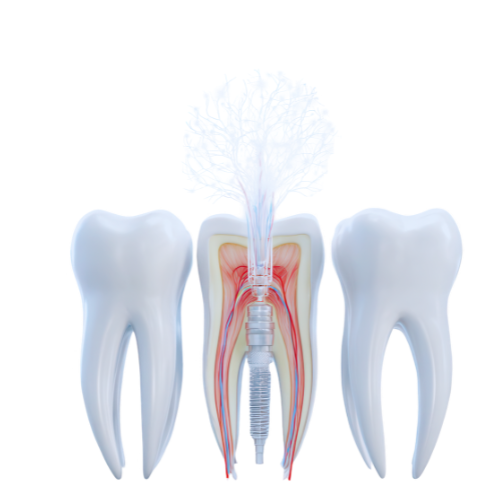
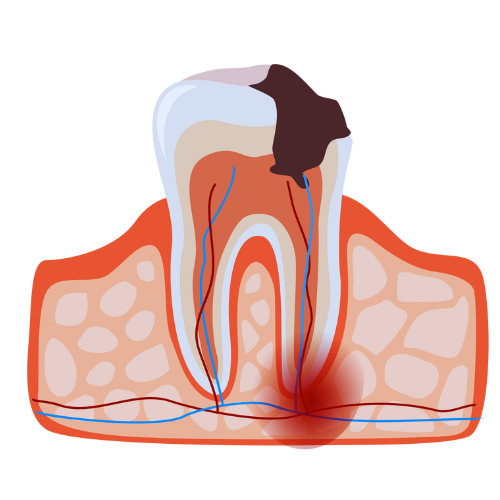
Root canal treatment is a dental procedure to remove infected, inflamed, or necrotic (dead) pulp tissue from inside the tooth’s root canals — the narrow channels within the tooth root that contain blood vessels, nerves, and connective tissue. After removing the infected pulp, the canals are cleaned, shaped, disinfected, and filled with a biocompatible material (gutta-percha). A crown is then placed over the treated tooth to restore its strength and function. The tooth is preserved — alive in its socket — and functions normally for years or decades after treatment.
Root canal treatment is necessary when infection reaches the dental pulp — the innermost living tissue of the tooth. Once the pulp is infected or dead, the tooth cannot heal itself and the infection will spread to surrounding bone, causing a dental abscess, if not treated. Extraction and root canal treatment are the only two options at this stage — RCT preserves the natural tooth, which is always the preferred outcome in dentistry.
Conditions That Require Root Canal Treatment
- Irreversible pulpitis: Bacterial infection has reached the dental pulp causing severe, lingering, spontaneous toothache — the tooth cannot recover without endodontic intervention
- Pulp necrosis: The pulp has died due to infection or trauma — the tooth may be painless but harbours bacteria causing periapical (bone) infection
- Periapical abscess: Pus collection at the root tip caused by pulp infection extending into the surrounding bone — visible as a swelling or sinus tract (pimple) on the gum
- Dental trauma: Cracked tooth or luxation injury exposing or damaging the pulp
- Repeated dental procedures: A tooth that has had multiple fillings, deep decay, or crowns may develop pulp inflammation requiring RCT
Symptoms requiring urgent assessment: Severe toothache worsening at night, lingering sensitivity to hot or cold lasting more than 30 seconds, spontaneous tooth pain with no trigger, swelling of the face or jaw, a pimple or abscess on the gum near a tooth, or a tooth that has darkened (greyish colour indicates pulp death). If you experience any of these, contact SurgiPartner immediately — dental infections can spread rapidly.
Root Canal Treatment Procedure — Step by Step
Step 1: Diagnosis & X-ray Assessment
A periapical X-ray confirms pulp involvement and assesses the length and curvature of the root canals. CBCT imaging may be used for multi-rooted teeth (upper molars have 3–4 canals; lower molars have 2–3 canals) or teeth with suspected canal calcification or complex anatomy.
Step 2: Local Anaesthesia & Rubber Dam Placement
Profound local anaesthesia is administered — for infected teeth, supplementary intraligamentary (PDL) injection or intraosseous anaesthesia may be used for complete pain control. A rubber dam (a thin latex sheet) is placed around the tooth to isolate it from saliva — maintaining sterility throughout the procedure.
Step 3: Access Cavity Preparation
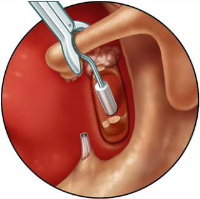
A small access hole is created through the crown of the tooth into the pulp chamber using a dental drill. This provides entry to the root canals without removing more tooth structure than necessary.
Step 4: Canal Location & Working Length Determination
Each canal is located using endodontic explorers. Working length (the precise length of each canal to the root tip) is determined using an electronic apex locator and confirmed radiographically. Accurate working length is critical — instruments must reach the full canal length without perforating the root tip.
Step 5: Canal Shaping & Cleaning (Rotary Endodontics)
Canal shaping uses progressively larger nickel–titanium (NiTi) rotary instruments driven by a torque-controlled motor — creating a tapering canal shape suitable for sealing. Copious irrigation with sodium hypochlorite (NaOCl) and EDTA disinfects the canal system and removes debris, bacterial biofilm, and dentin smear layer. This is the most critical step — thorough disinfection determines the long-term success of treatment.
Step 6: Canal Obturation (Filling)
The cleaned canals are filled with gutta–percha — a biocompatible, dimensionally stable rubber-like material — sealed with a resin sealer using lateral or warm vertical compaction technique. The access cavity is sealed with a temporary or permanent filling.
Step 7: Crown Placement
All root canal treated posterior teeth (premolars and molars) require a porcelain or zirconia crown for structural protection — RCT-treated teeth are more brittle and prone to fracture without a crown. Crown placement is typically arranged 2–4 weeks after completing RCT once the tooth is symptom-free.
Single-Sitting vs Multi-Visit Root Canal Treatment
| Approach | Number of Visits | Best For | Advantage |
|---|---|---|---|
| Single-sitting RCT | 1 appointment (90–120 minutes) | Vital (living) teeth; straightforward canal anatomy; no active abscess | Faster, fewer appointments, reduced risk of reinfection between visits |
| Multi-visit RCT (2–3 visits) | 2–3 appointments over 1–3 weeks | Non-vital teeth with periapical abscess; calcified canals; retreatment cases | Allows intracanal medication (calcium hydroxide) between visits for severe infections |
Why Choose SurgiPartner?
Choosing SurgiPartner means choosing advanced dental care with precision, comfort, and lasting results.
01.
Experienced Endodontists
Highly trained specialists with extensive experience in complex root canal treatments.
02.
Advanced Technology & Painless Techniques
Modern equipment ensures accurate cleaning with minimal discomfort.
03.
Personalized Dental Care Plans
Treatment tailored to infection severity and tooth condition.
04.
Faster Recovery & Long-Term Protection
Focus on preserving natural teeth and preventing reinfection.
Request a Consultation
Take the first step toward relief from abdominal pain with SurgiPartner Advanced Appendectomy Surgery.
Live free from pain and discomfort that’s the SurgiPartner promise.
View SurgiPartner on Google

Posted on Google
 saikiran challa
Trustindex verifies that the original source of the review is Google.
I am thoroughly impressed with the SurgiPartner model, which delivers integrated, end-to-end patient support across the healthcare continuum—from initial consultations to treatment and surgical interventions, where necessary. I recently availed their Care Buddy service for a consultation, and the experience was highly seamless, efficient, and professionally managed. The structured Care Buddy support, combined with well-aligned financial assistance processes, significantly enhances the overall patient journey. This holistic and patient-centric approach effectively streamlines access to quality healthcare, making it more efficient and convenient in today’s dynamic environment.Posted on Google vasantha kumari buggalaI’m really impressed with the SurgiPartner concept. They provide end-to-end patient support—from doctor consultations to treatment and even surgery when required. I personally used their Care Buddy service for a consultation, and it was a smooth and positive experience. The Care Buddy assistance, along with support in financial processes, makes healthcare much more convenient, especially in today’s fast-paced lifestyle.Posted on Google
 krishna nayakMy Brother Arun Kumar and krishna from Bangalore. We are travelled to Hyderabad for LASIK surgery, and today we successfully underwent the procedure at American Laser Eye Hospital. The surgery went very smoothly and I am feeling very good after the procedure. The hospital environment is very clean and well maintained. All the staff and doctors are very polite, supportive, and professional. A special thanks to SurgiPartner CareBuddy for guiding and helping me throughout the entire process. From the beginning till the end of the day, they were with us at every step and provided excellent support. Overall, I had a very good experience and I highly recommend American Laser Eye Hospital for LASIK surgery with SurgiPartner support.Posted on Google
 ManaswiReally impressed with the concept of SurgiPartner. They offer complete patient support from doctor consultation to treatment and surgery if needed. I personally took a consultation through their Care buddy, and it was a great experience. The care buddy system and help with financial processes make healthcare much easier, especially in today’s busy world.Posted on Google
 Arun NayakMy name is Arun Kumar and I am from Bangalore. I traveled to Hyderabad for LASIK surgery, and today I successfully underwent the procedure at American Laser Eye Hospital. The surgery went very smoothly and I am feeling very good after the procedure. The hospital environment is very clean and well maintained. All the staff and doctors are very polite, supportive, and professional. A special thanks to SurgiPartner CareBuddy for guiding and helping me throughout the entire process. From the beginning till the end of the day, they were with us at every step and provided excellent support. Overall, I had a very good experience and I highly recommend American Laser Eye Hospital for LASIK surgery with SurgiPartner supportPosted on Google
 Shankar S ShankruThank you for the support and service provided by SurgiPartner. The overall experience was smooth and the team was very helpful.Posted on Google
 Thejasree KStaff is very good and nice receiving. They are very humble and their response is very good. Thank youPosted on Google
 Srihari ReddyI want to thank Surgipartner for all the help and support during my LASIK surgery. From the beginning till the end, the team was very proactive with follow-ups and guided me clearly through every step, which made the whole experience easy and stress-free. I would especially like to appreciate CareBuddy Raju and Coordinator Anusha for their outstanding support. They were always in touch with both the hospital staff and me, helped reduce waiting time, and made sure everything went smoothly. Their care, quick responses, and constant guidance really made a big difference. Overall, I had a very positive experience and truly appreciate the support provided by Surgipartner.Verified by TrustindexTrustindex verified badge is the Universal Symbol of Trust. Only the greatest companies can get the verified badge who has a review score above 4.5, based on customer reviews over the past 12 months. Read more
How SurgiPartner Supports You — From First Call to Full Recovery
Follow your step-by-step guide to a successful surgery and recovery, with our expert team supporting you all the way.
Find Doctor & Hospital Support
Fill in your details and we'll call you back to confirm your slot.