Kidney Stone Removal in Hyderabad — ESWL, Laser Ureteroscopy, PCNL
Get expert kidney stone removal in Hyderabad with laser and minimally invasive options. SurgiPartner offers free consultation, a clear written cost estimate, cashless insurance and free doorstep pickup. Call +91 9030053009 to know your exact cost.
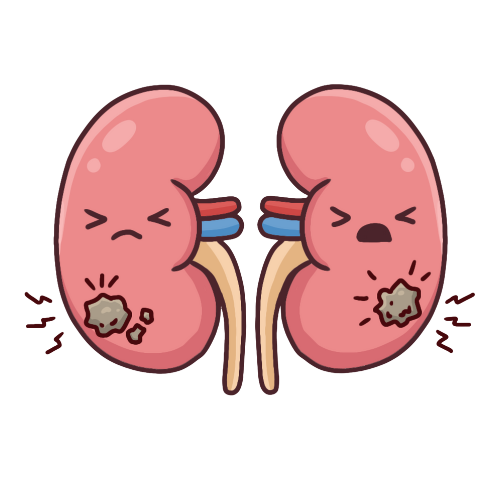
Kidney stones (renal calculi) are one of the most common and painful urological conditions, affecting approximately 12% of the Indian population at some point in their lifetime. SurgiPartner Hyderabad connects patients with expert urologists offering the complete range of stone removal techniques — from non-invasive shockwave therapy to keyhole surgery — ensuring every patient receives the right treatment for their specific stone size, location, and composition.


What Are Kidney Stones? — Types and Formation
Kidney stones form when minerals and salts in the urine become highly concentrated and crystallise, accumulating into hard deposits in the kidneys, ureters, bladder, or urethra. Understanding the type of stone guides both treatment and prevention:
| Stone Type | % of Cases | Causes | Appearance on Imaging |
|---|---|---|---|
| Calcium Oxalate | 70–80% | High oxalate diet, dehydration, hypercalciuria, hyperoxaluria | Highly visible on X-ray and CT |
| Calcium Phosphate | 5–10% | Hyperparathyroidism, renal tubular acidosis, alkaline urine | Visible on X-ray |
| Uric Acid | 5–10% | Gout, high purine diet, acidic urine, dehydration | Radiolucent on X-ray; visible on CT |
| Struvite (Infection) | 5–10% | Chronic urinary tract infections (urease-producing bacteria) | Staghorn calculi; visible on X-ray |
| Cystine | <2% | Hereditary cystinuria (autosomal recessive) | Faintly visible on X-ray; CT diagnostic |
Symptoms of Kidney Stones — Recognising Renal Colic
Kidney stones produce a characteristic pattern of symptoms depending on their location and whether they are obstructing urine flow:
- 1. Renal colic — severe, cramping flank pain radiating to the groin, lower abdomen, and inner thigh. Often described as the worst pain imaginable, coming in waves as the ureter contracts around the stone
- 2. Haematuria — blood in urine (visible red colour or microscopic); present in over 90% of cases
- 3. Dysuria — pain or burning during urination when the stone approaches the bladder
- 4. Urinary urgency and frequency — as the stone irritates the bladder trigone
- 5. Nausea and vomiting — commonly accompanies severe renal colic
- 6. Fever and chills — when a stone causes urinary tract infection or obstructive pyelonephritis (a urological emergency)
- 7. Difficulty passing urine — complete obstruction may cause acute urinary retention
Important emergency warning: Fever with kidney stone pain indicates an infected, obstructed kidney — a potentially life-threatening situation requiring emergency urological drainage. Contact SurgiPartner immediately on +91 9030053009.


Diagnosis of Kidney Stones — Investigations Required
- 1. Non-contrast CT KUB (NCCT) — the gold-standard investigation, detecting 100% of stones of all types with precise size, location, and stone density (Hounsfield units). Essential for treatment planning
- 2. Ultrasound KUB — safe, radiation-free first investigation; excellent for hydronephrosis but may miss small ureteric stones
- 3. X-ray KUB — detects radio-opaque stones (calcium) but misses uric acid and small stones
- 4. Urine analysis — detects haematuria, pyuria (infection), crystals, and urine pH
- 5. Urine culture — essential if infection is suspected
- 6. Blood tests — serum creatinine (kidney function), calcium, uric acid, electrolytes, full blood count
- 7. 24-hour urine collection — for metabolic evaluation in recurrent stone formers
Kidney Stone Removal — All Treatment Options Explained
Treatment Selection — Which Procedure Is Right for You?
| Stone Location & Size | Recommended Procedure | Stone-Free Rate |
|---|---|---|
| Ureteric stone <5mm | Conservative + medical expulsive therapy | 70–80% |
| Ureteric stone 5–10mm | URSL (ureteroscopy + laser) | 90–95% |
| Ureteric stone >10mm | URSL or PCNL | 90%+ |
| Renal stone <10mm | ESWL or RIRS | 75–90% |
| Renal stone 10–20mm | RIRS or ESWL | 85–95% |
| Renal stone >20mm / staghorn | PCNL | 90%+ |
Prevention of Kidney Stone Recurrence
Kidney stones have a 50% recurrence rate within 5 years without preventive measures. SurgiPartner’s urologists provide comprehensive metabolic evaluation and personalised prevention strategies:
- 1. Hydration — the most effective prevention measure. Target urine output of 2.5+ litres per day; urine should be pale yellow, not dark
- 2. Dietary modification — reduce salt and animal protein; moderate oxalate-rich foods (spinach, nuts, chocolate); maintain normal calcium intake (do not restrict calcium)
- 3. Citrate supplementation — potassium citrate alkalinises urine, inhibiting calcium oxalate and uric acid crystallisation
- 4. Uric acid stones — alkalinise urine to pH 6.5–7.0; allopurinol for high uric acid producers
- 5. Metabolic evaluation — 24-hour urine collection and blood tests to identify specific metabolic abnormalities driving stone formation
- 6. Annual ultrasound monitoring — to detect new stone formation early
Frequently Asked Questions — Kidney Stone Removal Hyderabad
Small kidney stones can pass naturally with plenty of water and medication. Larger stones are treated with minimally invasive methods like laser lithotripsy or ureteroscopy, which need no large cuts.
The cost depends on the stone size, location and technique used. SurgiPartner gives you a clear written estimate after consultation, with cashless insurance and free pickup.
No. Laser stone removal is done under anaesthesia, so it is painless during the procedure, with minimal discomfort afterwards and a quick recovery.
Most patients return to normal activities within 2 to 3 days after laser or minimally invasive stone removal.
Surgery or laser treatment is advised when the stone is large, causes severe pain, blocks urine flow, or does not pass naturally with medication.
Why Choose SurgiPartner?
Choosing SurgiPartner means choosing trusted urology care backed by advanced technology and expert surgeons.
01.
Experienced Urologists
All kidney stone removal procedures are performed by highly qualified urology specialists.
02.
Laser & Endoscopic Technology
We offer laser stone removal, RIRS, PCNL, and ESWL based on stone complexity.
03.
Personalized Treatment Plans
Each patient receives a customized treatment approach for complete stone clearance.
04.
Pain-Free & Quick Recovery
Most patients resume normal activities within a few days after treatment.
Request a Consultation
Don’t let kidney stones disrupt your life. Get safe, effective, and advanced treatment at SurgiPartner.
Relief from pain. Precision treatment. Complete stone removal.
View SurgiPartner on Google

Posted on Google
 saikiran challa
Trustindex verifies that the original source of the review is Google.
I am thoroughly impressed with the SurgiPartner model, which delivers integrated, end-to-end patient support across the healthcare continuum—from initial consultations to treatment and surgical interventions, where necessary. I recently availed their Care Buddy service for a consultation, and the experience was highly seamless, efficient, and professionally managed. The structured Care Buddy support, combined with well-aligned financial assistance processes, significantly enhances the overall patient journey. This holistic and patient-centric approach effectively streamlines access to quality healthcare, making it more efficient and convenient in today’s dynamic environment.Posted on Google vasantha kumari buggalaI’m really impressed with the SurgiPartner concept. They provide end-to-end patient support—from doctor consultations to treatment and even surgery when required. I personally used their Care Buddy service for a consultation, and it was a smooth and positive experience. The Care Buddy assistance, along with support in financial processes, makes healthcare much more convenient, especially in today’s fast-paced lifestyle.Posted on Google
 krishna nayakMy Brother Arun Kumar and krishna from Bangalore. We are travelled to Hyderabad for LASIK surgery, and today we successfully underwent the procedure at American Laser Eye Hospital. The surgery went very smoothly and I am feeling very good after the procedure. The hospital environment is very clean and well maintained. All the staff and doctors are very polite, supportive, and professional. A special thanks to SurgiPartner CareBuddy for guiding and helping me throughout the entire process. From the beginning till the end of the day, they were with us at every step and provided excellent support. Overall, I had a very good experience and I highly recommend American Laser Eye Hospital for LASIK surgery with SurgiPartner support.Posted on Google
 ManaswiReally impressed with the concept of SurgiPartner. They offer complete patient support from doctor consultation to treatment and surgery if needed. I personally took a consultation through their Care buddy, and it was a great experience. The care buddy system and help with financial processes make healthcare much easier, especially in today’s busy world.Posted on Google
 Arun NayakMy name is Arun Kumar and I am from Bangalore. I traveled to Hyderabad for LASIK surgery, and today I successfully underwent the procedure at American Laser Eye Hospital. The surgery went very smoothly and I am feeling very good after the procedure. The hospital environment is very clean and well maintained. All the staff and doctors are very polite, supportive, and professional. A special thanks to SurgiPartner CareBuddy for guiding and helping me throughout the entire process. From the beginning till the end of the day, they were with us at every step and provided excellent support. Overall, I had a very good experience and I highly recommend American Laser Eye Hospital for LASIK surgery with SurgiPartner supportPosted on Google
 Shankar S ShankruThank you for the support and service provided by SurgiPartner. The overall experience was smooth and the team was very helpful.Posted on Google
 Thejasree KStaff is very good and nice receiving. They are very humble and their response is very good. Thank youPosted on Google
 Srihari ReddyI want to thank Surgipartner for all the help and support during my LASIK surgery. From the beginning till the end, the team was very proactive with follow-ups and guided me clearly through every step, which made the whole experience easy and stress-free. I would especially like to appreciate CareBuddy Raju and Coordinator Anusha for their outstanding support. They were always in touch with both the hospital staff and me, helped reduce waiting time, and made sure everything went smoothly. Their care, quick responses, and constant guidance really made a big difference. Overall, I had a very positive experience and truly appreciate the support provided by Surgipartner.Verified by TrustindexTrustindex verified badge is the Universal Symbol of Trust. Only the greatest companies can get the verified badge who has a review score above 4.5, based on customer reviews over the past 12 months. Read more
How SurgiPartner Supports You — From First Call to Full Recovery
Follow your step-by-step guide to a successful surgery and recovery, with our expert team supporting you all the way.
Find Doctor & Hospital Support
Fill in your details and we'll call you back to confirm your slot.