Strong Teeth. Natural Look. Long-Lasting Results
Restore Your Smile & Bite with SurgiPartner Advanced Crowns & Bridges Treatment
Crowns & Bridges Treatment in Hyderabad
Dental crowns and bridges are the most commonly prescribed fixed restorative treatments in dentistry — providing durable, natural-looking solutions for damaged, weakened, or missing teeth. Whether you need a crown to protect a tooth after root canal treatment, a bridge to replace a missing tooth without implant surgery, or zirconia restorations for superior aesthetics, SurgiPartner Hyderabad provides expert restorative dental care with digital impressions, precision laboratory fabrication, and long-lasting results


Crowns & Bridges Treatment in Hyderabad
A dental crown (also called a cap) is a tooth-shaped covering that fits over a damaged, weakened, or discoloured tooth — restoring its shape, size, strength, and appearance. The crown completely covers the visible portion of the tooth above the gumline. Crowns are fabricated in a dental laboratory from an impression or digital scan of your prepared tooth and are permanently cemented in place. A well-made crown is virtually indistinguishable from a natural tooth and can last 15–20+ years with proper care.
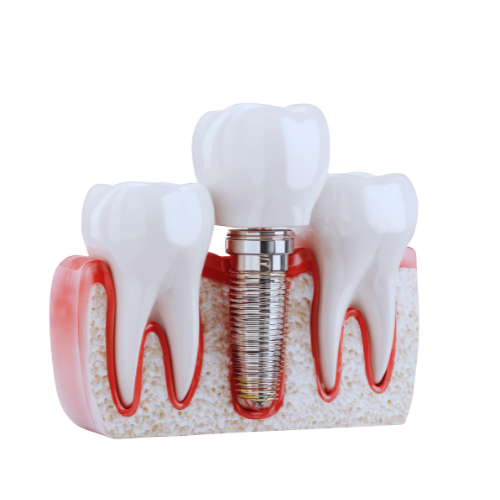
Crowns are indicated for: teeth with large cavities that cannot be restored with fillings alone, teeth weakened by root canal treatment (mandatory for molars), cracked or fractured teeth, severely worn teeth from bruxism, discoloured or malformed teeth requiring cosmetic correction, dental implant restoration, and as anchors for dental bridges.
Types of Dental Crowns — Materials Comparison
| Crown Material | Aesthetics | Strength | Best For | Longevity |
|---|---|---|---|---|
| Full Zirconia | Excellent — translucent, natural | Highest (1,200 MPa) | Any tooth — best overall choice | 20–25+ years |
| Porcelain-Fused-to-Metal (PFM) | Good — metal margin may show at gumline | High | Back teeth; budget-conscious patients | 15–20 years |
| All-Ceramic (Lithium Disilicate e.max) | Excellent — highest translucency | Moderate-high (400 MPa) | Front teeth in aesthetic zone | 10–15 years |
| Metal (Gold/PFM) | Poor (visible metal) | Highest | Back teeth with extreme bite forces; metal allergy ruled out | 25–30+ years |
| Composite Resin (Temporary) | Acceptable | Low | Temporary crown during laboratory fabrication | 4–12 weeks |
What Is a Dental Bridge?
A dental crown (also called a cap) is a tooth-shaped covering that fits over a damaged, weakened, or discoloured tooth — restoring its shape, size, strength, and appearance. The crown completely covers the visible portion of the tooth above the gumline. Crowns are fabricated in a dental laboratory from an impression or digital scan of your prepared tooth and are permanently cemented in place. A well-made crown is virtually indistinguishable from a natural tooth and can last 15–20+ years with proper care.
Crowns are indicated for: teeth with large cavities that cannot be restored with fillings alone, teeth weakened by root canal treatment (mandatory for molars), cracked or fractured teeth, severely worn teeth from bruxism, discoloured or malformed teeth requiring cosmetic correction, dental implant restoration, and as anchors for dental bridges.
Types of Dental Bridges
Traditional Fixed Bridge (3–Unit Bridge)
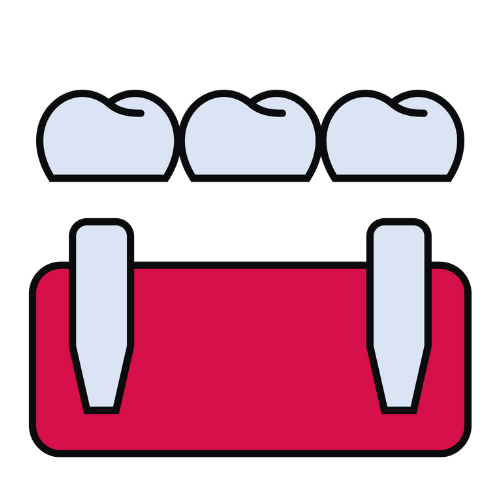
The most common bridge design for replacing a single missing tooth. The two teeth on either side of the gap are prepared (shaped) to support crowns. A 3-unit bridge — two crowns connected to one pontic (false tooth) — is permanently cemented over the prepared teeth. Limitation: requires removing healthy tooth structure from the two abutment teeth.
Maryland (Adhesive) Bridge
Uses minimal tooth preparation — metal or ceramic wings on the back of adjacent teeth are bonded using strong dental adhesive without crowns. Ideal for front teeth where aesthetics matter and abutment teeth are healthy. Less durable than traditional bridge; can debond. Best for single front tooth replacement in non-high-force areas.
Cantilever Bridge
Supported by only one abutment tooth on one side of the gap (rather than two). Used when only one adjacent tooth is available. Carries higher force on the single supporting tooth — suitable only for selected clinical situations.
Implant–Supported Bridge
Two or more dental implants support a bridge spanning the gap — no preparation of natural teeth required. The gold standard for multi-tooth replacement offering the best long-term outcome and tooth preservation.
Crown & Bridge Procedure — Step by Step
Visit 1: Tooth Preparation & Digital Impression
The tooth (for crown) or abutment teeth (for bridge) are prepared by removing a thin, uniform layer of tooth structure from all surfaces to create space for the crown material. A digital oral scanner takes a precise 3D impression — eliminating the discomfort of traditional impression putty. A temporary crown is placed while the final restoration is fabricated in the dental laboratory (typically 5–7 working days).
Visit 2: Fitting and Cementation
The final crown or bridge is tried in and checked for accurate fit, bite, and aesthetics. Minor adjustments are made chairside. Once confirmed, the restoration is permanently cemented using a strong resin cement. The bite is rechecked and polished. Total second visit: 45–60 minutes.
Frequently Asked Questions — Dental Crowns & Bridges Hyderabad
A dental crown is a tooth-shaped cap that covers a damaged, weakened, or discoloured tooth — restoring its shape, strength, and appearance. You need a crown when a tooth has a large cavity too big for a filling, after root canal treatment on a molar, for a cracked or fractured tooth, to cover a dental implant, or as part of a dental bridge. Crowns are permanently cemented and can last 15–25+ years.
Full zirconia crowns are currently the best overall choice for most patients — combining excellent aesthetics (translucent, natural-looking) with the highest strength (1,200 MPa), making them suitable for any tooth including high-force molars. For front teeth requiring maximum aesthetic translucency, lithium disilicate (e.max) all-ceramic crowns are the premium choice. PFM crowns remain a good budget option. SurgiPartner dentists will recommend the best material for your specific tooth based on its location, bite forces, and your aesthetic goals.
A dental crown covers a single damaged tooth. A dental bridge replaces a missing tooth (or teeth) by spanning the gap — with crowns placed on the adjacent teeth to anchor a false tooth (pontic) in between. A 3-unit bridge replaces one missing tooth using two crowns and one pontic. Bridges require preparation of adjacent teeth; dental implants avoid this by providing independent support for replacement teeth.
Full zirconia crowns last 20–25+ years. Lithium disilicate (e.max) crowns last 10–15 years. PFM crowns last 15–20 years. Dental bridges last 10–15 years on average — longer with excellent oral hygiene. All restorations last longer with: twice-daily brushing with fluoride toothpaste, daily flossing (including under the bridge pontic with floss threaders), regular 6-monthly professional cleaning, and wearing a night guard if you grind your teeth (bruxism).
Dental implants are the superior long-term solution for a missing tooth — they replace the tooth root, preserve jawbone, and do not require preparation of adjacent teeth. Bridges are a good option when: adjacent teeth already need crowns, implant surgery is medically contraindicated, immediate tooth replacement is needed, or cost is a limiting factor. A bridge typically costs less than an implant initially but may need replacement more frequently over a 20-year period, making implants more cost-effective long-term.
A zirconia crown is a dental crown made entirely from zirconium dioxide — a high-strength dental ceramic with properties similar to natural tooth enamel. Zirconia crowns offer: excellent aesthetics (translucent and natural-looking), extremely high strength (1,200 MPa — the strongest dental ceramic), biocompatibility (no metal; suitable for metal-sensitive patients), and minimal tooth preparation required. They are the most commonly recommended crown material at SurgiPartner Hyderabad.
Tooth preparation for crowns and bridges is performed under local anaesthesia — completely painless. After anaesthesia wears off, mild sensitivity of the prepared tooth is normal for 1–2 weeks and managed with sensitivity toothpaste. The temporary crown placement and final crown cementation visits are also performed with local anaesthesia as needed. Most patients find crown and bridge procedures significantly more comfortable than they anticipate.
Why Choose SurgiPartner?
Choosing SurgiPartner means choosing precision dental care, advanced materials, and long-lasting restorative solutions.
01.
Experienced Dental Specialists
Our dentists have extensive expertise in restorative and cosmetic dentistry.
02.
Advanced Digital Dentistry
We use modern technology for accurate fitting and natural-looking results.
03.
High-Quality Materials
Zirconia, porcelain, and metal-free crowns ensure strength and aesthetics.
04.
Comfort-Focused Treatment
Minimally invasive procedures with a pain-free approach and faster recovery.
Request a Consultation
Take the first step toward relief from abdominal pain with SurgiPartner Advanced Appendectomy Surgery.
Live free from pain and discomfort that’s the SurgiPartner promise.
View SurgiPartner on Google

Posted on Google
 saikiran challa
Trustindex verifies that the original source of the review is Google.
I am thoroughly impressed with the SurgiPartner model, which delivers integrated, end-to-end patient support across the healthcare continuum—from initial consultations to treatment and surgical interventions, where necessary. I recently availed their Care Buddy service for a consultation, and the experience was highly seamless, efficient, and professionally managed. The structured Care Buddy support, combined with well-aligned financial assistance processes, significantly enhances the overall patient journey. This holistic and patient-centric approach effectively streamlines access to quality healthcare, making it more efficient and convenient in today’s dynamic environment.Posted on Google vasantha kumari buggalaI’m really impressed with the SurgiPartner concept. They provide end-to-end patient support—from doctor consultations to treatment and even surgery when required. I personally used their Care Buddy service for a consultation, and it was a smooth and positive experience. The Care Buddy assistance, along with support in financial processes, makes healthcare much more convenient, especially in today’s fast-paced lifestyle.Posted on Google
 krishna nayakMy Brother Arun Kumar and krishna from Bangalore. We are travelled to Hyderabad for LASIK surgery, and today we successfully underwent the procedure at American Laser Eye Hospital. The surgery went very smoothly and I am feeling very good after the procedure. The hospital environment is very clean and well maintained. All the staff and doctors are very polite, supportive, and professional. A special thanks to SurgiPartner CareBuddy for guiding and helping me throughout the entire process. From the beginning till the end of the day, they were with us at every step and provided excellent support. Overall, I had a very good experience and I highly recommend American Laser Eye Hospital for LASIK surgery with SurgiPartner support.Posted on Google
 ManaswiReally impressed with the concept of SurgiPartner. They offer complete patient support from doctor consultation to treatment and surgery if needed. I personally took a consultation through their Care buddy, and it was a great experience. The care buddy system and help with financial processes make healthcare much easier, especially in today’s busy world.Posted on Google
 Arun NayakMy name is Arun Kumar and I am from Bangalore. I traveled to Hyderabad for LASIK surgery, and today I successfully underwent the procedure at American Laser Eye Hospital. The surgery went very smoothly and I am feeling very good after the procedure. The hospital environment is very clean and well maintained. All the staff and doctors are very polite, supportive, and professional. A special thanks to SurgiPartner CareBuddy for guiding and helping me throughout the entire process. From the beginning till the end of the day, they were with us at every step and provided excellent support. Overall, I had a very good experience and I highly recommend American Laser Eye Hospital for LASIK surgery with SurgiPartner supportPosted on Google
 Shankar S ShankruThank you for the support and service provided by SurgiPartner. The overall experience was smooth and the team was very helpful.Posted on Google
 Thejasree KStaff is very good and nice receiving. They are very humble and their response is very good. Thank youPosted on Google
 Srihari ReddyI want to thank Surgipartner for all the help and support during my LASIK surgery. From the beginning till the end, the team was very proactive with follow-ups and guided me clearly through every step, which made the whole experience easy and stress-free. I would especially like to appreciate CareBuddy Raju and Coordinator Anusha for their outstanding support. They were always in touch with both the hospital staff and me, helped reduce waiting time, and made sure everything went smoothly. Their care, quick responses, and constant guidance really made a big difference. Overall, I had a very positive experience and truly appreciate the support provided by Surgipartner.Verified by TrustindexTrustindex verified badge is the Universal Symbol of Trust. Only the greatest companies can get the verified badge who has a review score above 4.5, based on customer reviews over the past 12 months. Read more
How SurgiPartner Supports You — From First Call to Full Recovery
Follow your step-by-step guide to a successful surgery and recovery, with our expert team supporting you all the way.
Find Doctor & Hospital Support
Fill in your details and we'll call you back to confirm your slot.