Say Goodbye to Discomfort with SurgiPartner Advanced Fistula Treatment
Experience Safe, Painless Healing with Precision Laser Care
Fistula Treatment in Hyderabad — VAAFT, Laser Fistula Surgery
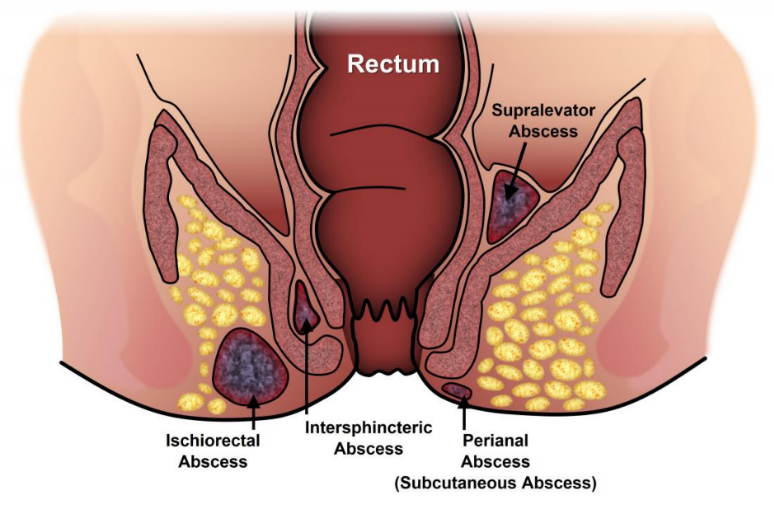
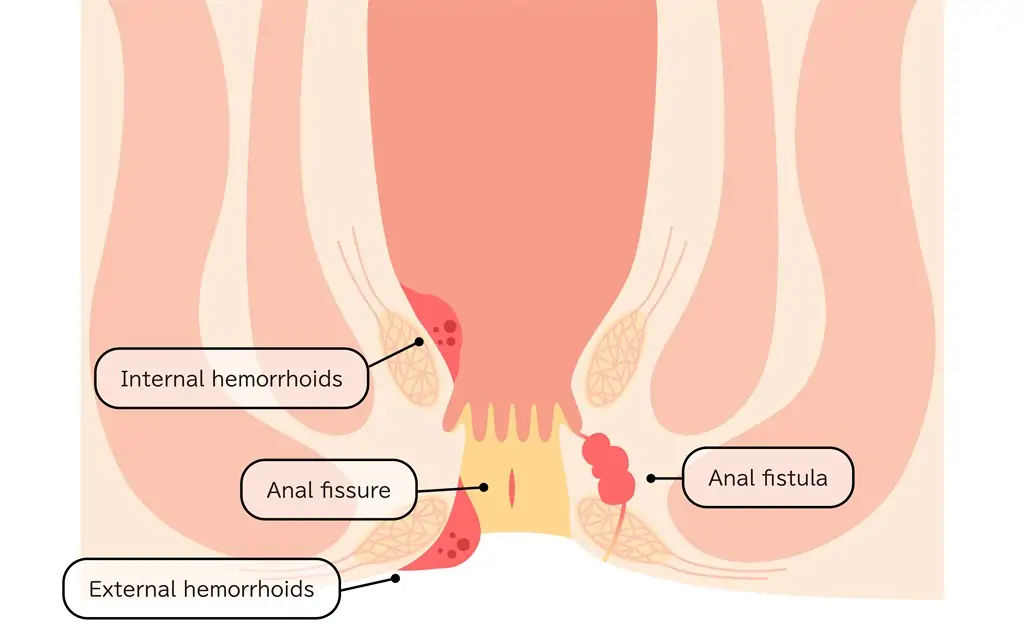
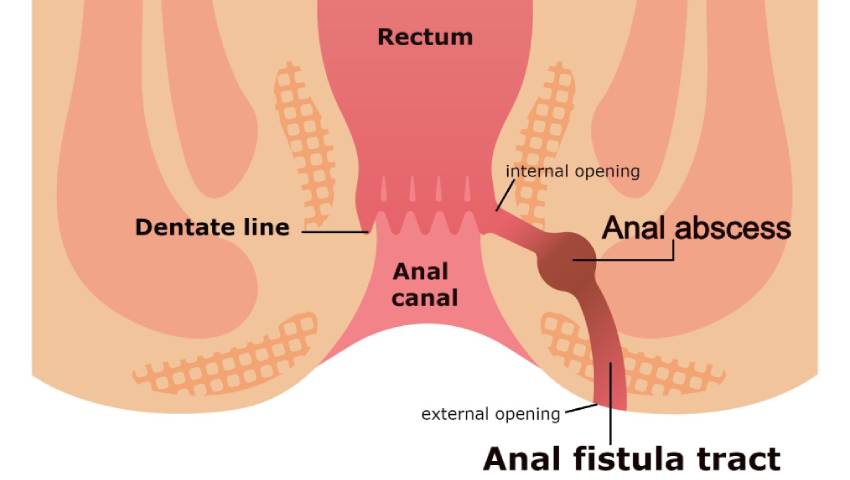
An anal fistula is an abnormal tunnel or tract lined by granulation tissue that connects the inside of the anal canal (internal opening, usually at a crypt in the dentate line) to the skin around the anus (external opening). Most anal fistulas develop following a perianal abscess — which is the acute phase of the same underlying disease process (cryptoglandular infection). Fistulas cause persistent or recurrent discharge of pus, blood, or faecal material from the external opening and never heal spontaneously — surgical treatment is always required. SurgiPartner connects patients in Hyderabad with colorectal specialists for modern, sphincter-preserving fistula surgery.
Pathophysiology — Why Anal Fistulas Form
The most widely accepted theory of anal fistula formation is the cryptoglandular hypothesis: bacterial infection of the anal glands (tiny glands in the anal mucosa that open at the dentate line crypts) → intersphincteric abscess → abscess tracks through or around the sphincters → spontaneous drainage creates the fistula tract. This process explains why the internal opening of an anal fistula is almost always at the dentate line — and why fistulas follow predictable anatomical paths through the sphincter muscles.
Classification of Anal Fistulas — Parks Classification
| Type | Track Course | Prevalence | Sphincter Involved | Treatment Complexity |
|---|---|---|---|---|
| Intersphincteric | Between internal and external sphincter; exits at perianal skin | 70% | Internal sphincter only | Low — fistulotomy safe |
| Transsphincteric | Crosses both sphincters; may exit in ischiorectal fossa | 25% | Both internal and external sphincter (varying amount) | Moderate to high — sphincter-preserving technique required for high tracts |
| Suprasphincteric | Passes above the puborectalis; exits in ischiorectal fossa | 4% | Entire sphincter complex | High — sphincter-preserving surgery essential |
| Extrasphincteric | Passes outside all sphincters; secondary to trauma, IBD, or pelvic sepsis | 1% | None / entire complex lateral | Complex — multidisciplinary approach |
Symptoms of Anal Fistula
- Persistent or intermittent perianal discharge — pus, blood, or mucus from an external opening near the anus; the most constant symptom; the discharge may have an unpleasant smell and stain underwear
- Perianal pain — usually mild and aching unless the tract is blocked (causing abscess formation); sudden worsening of pain indicates abscess development and requires urgent drainage
- Visible external opening — one or more small openings on the perianal skin; may have a surrounding granulation tissue mound or skin tag
- History of perianal abscess — the majority of patients with anal fistula recall a previous episode of acute perianal abscess, either treated by incision and drainage or spontaneously drained
- Skin excoriation and irritation — constant moisture from fistula discharge causes perianal skin irritation, maceration, and pruritus
Investigations Before Fistula Surgery
MRI pelvis (fistula protocol) is the gold standard for fistula assessment — providing a detailed map of the fistula track course, its relationship to the sphincter muscles, identification of secondary extensions, and assessment of any associated collections. This is essential before surgical planning. Endoanal ultrasound provides complementary information about sphincter integrity. Examination under anaesthesia (EUA) allows definitive assessment of the internal opening, track course, and sphincter involvement under controlled conditions.
Treatment Options — The Challenge of Sphincter Preservation
The fundamental challenge in anal fistula surgery is balancing healing (cure) against continence preservation.
Simple low fistulas (intersphincteric, low transsphincteric involving <30% of external sphincter) can be treated definitively by fistulotomy (laying open the track) with minimal incontinence risk.
Complex high fistulas crossing significant amounts of the external sphincter or puborectalis require sphincter-preserving techniques — where dividing the sphincter would cause unacceptable incontinence.
Fistulotomy — For Simple Low Fistulas
The fistula track is probed, the overlying tissue is divided (the track is “laid open”), and the wound is curetted and left to heal by secondary intention — typically 4–8 weeks.
Recurrence rate: <2%.
Incontinence risk for low fistulas: very low.
For fistulas involving significant sphincter, fistulotomy carries unacceptable continence risk.
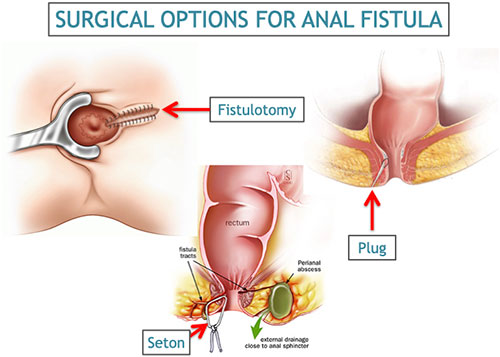
Seton Technique
A seton is a thread (surgical silk, silastic, or vessel loop) passed through the fistula track and tied loosely around the sphincter muscle.
Used as a loose (draining) seton — keeps the track open and draining while awaiting definitive repair; prevents abscess recurrence; used long-term in Crohn’s fistulas.
Or as a cutting seton — gradually tightened over multiple outpatient visits to slowly divide the sphincter with fibrosis developing around it — reducing incontinence risk compared to acute fistulotomy.
The cutting seton approach is now largely replaced by newer sphincter-preserving techniques.
VAAFT — Video-Assisted Anal Fistula Treatment
VAAFT is a modern, minimally invasive, sphincter-preserving technique that uses a small videoendoscope (fistuloscope) inserted into the external opening of the fistula track — providing live internal visualisation of the entire track.
The track is identified and destroyed from inside using electrocautery or laser energy delivered through the fistuloscope.
The internal opening is then closed with a mucosal flap or staple.
VAAFT is particularly suited for complex, horseshoe, or high transsphincteric fistulas where sphincter preservation is paramount.
Success rates: approximately 65–80% primary healing; lower than fistulotomy but with complete sphincter preservation.
LIFT — Ligation of Intersphincteric Fistula Track
LIFT involves dissecting into the intersphincteric space, identifying the fistula track between the two sphincters, ligating (tying off) it, and dividing it between ligatures.
The track is curetted. No sphincter muscle is divided.
Suitable for intersphincteric and low transsphincteric fistulas.
Success rate: 60–80%.
Advantage: simple, reproducible, low incontinence risk.
Laser Fistula Closure (FiLaC)
A radially emitting laser fibre is inserted into the fistula track from the external opening; laser energy destroys the fistula epithelium as the probe is slowly withdrawn, causing track obliteration.
Internal opening is closed with a mucosal advancement flap.
Completely sphincter-sparing.
Success rates: 60–70% at 12 months.
The comfort of the procedure (minimal tissue trauma, no incisions) makes it an attractive option for patients where sphincter preservation is a priority.
Mucosal Advancement Flap
A flap of healthy rectal mucosa, submucosa, and internal sphincter muscle is raised proximal to the internal opening; the fistula track is curetted and the internal opening closed by advancing the flap over it.
Success rate: 60–75%.
Can be combined with other sphincter-preserving techniques.
All anal fistulas are assessed with MRI fistula protocol before surgical planning.
The most appropriate technique is selected based on fistula classification, sphincter involvement, and patient’s incontinence risk profile.
All consultations are completely confidential.
Call +91 9030053009.
Frequently Asked Questions — Fistula Treatment Hyderabad
Why Choose SurgiPartner?
Choosing SurgiPartner means choosing advanced technology, expert care, and long-term relief. Our Laser Fistula Treatment ensures minimal pain, quick recovery, and effective healing without open surgery or prolonged hospital stays.
01.
Expert Proctologists & Surgeons
Our experienced team has successfully treated hundreds of patients with complex anal fistulas, providing safe and lasting solutions.
02.
Advanced Laser Treatment Technology
We use precision laser ablation techniques that target the fistula tract accurately, ensuring faster healing and minimal recurrence.
03.
Personalized Care Approach
Each fistula case is unique our specialists design customized treatment plans based on the type and severity to ensure the best outcome.
04.
Quick, Pain-Free Recovery
Most procedures are day-care treatments, allowing patients to walk out the same day and resume normal activities within 24 hours.
Request a Consultation
Take the first step toward pain-free healing with SurgiPartner Advanced Laser Fistula Treatment. Our experts are here to ensure safe, precise, and permanent relief.
Freedom from pain and recurrence – that’s the SurgiPartner promise.
View SurgiPartner on Google

Posted on Google
 saikiran challa
Trustindex verifies that the original source of the review is Google.
I am thoroughly impressed with the SurgiPartner model, which delivers integrated, end-to-end patient support across the healthcare continuum—from initial consultations to treatment and surgical interventions, where necessary. I recently availed their Care Buddy service for a consultation, and the experience was highly seamless, efficient, and professionally managed. The structured Care Buddy support, combined with well-aligned financial assistance processes, significantly enhances the overall patient journey. This holistic and patient-centric approach effectively streamlines access to quality healthcare, making it more efficient and convenient in today’s dynamic environment.Posted on Google vasantha kumari buggalaI’m really impressed with the SurgiPartner concept. They provide end-to-end patient support—from doctor consultations to treatment and even surgery when required. I personally used their Care Buddy service for a consultation, and it was a smooth and positive experience. The Care Buddy assistance, along with support in financial processes, makes healthcare much more convenient, especially in today’s fast-paced lifestyle.Posted on Google
 krishna nayakMy Brother Arun Kumar and krishna from Bangalore. We are travelled to Hyderabad for LASIK surgery, and today we successfully underwent the procedure at American Laser Eye Hospital. The surgery went very smoothly and I am feeling very good after the procedure. The hospital environment is very clean and well maintained. All the staff and doctors are very polite, supportive, and professional. A special thanks to SurgiPartner CareBuddy for guiding and helping me throughout the entire process. From the beginning till the end of the day, they were with us at every step and provided excellent support. Overall, I had a very good experience and I highly recommend American Laser Eye Hospital for LASIK surgery with SurgiPartner support.Posted on Google
 ManaswiReally impressed with the concept of SurgiPartner. They offer complete patient support from doctor consultation to treatment and surgery if needed. I personally took a consultation through their Care buddy, and it was a great experience. The care buddy system and help with financial processes make healthcare much easier, especially in today’s busy world.Posted on Google
 Arun NayakMy name is Arun Kumar and I am from Bangalore. I traveled to Hyderabad for LASIK surgery, and today I successfully underwent the procedure at American Laser Eye Hospital. The surgery went very smoothly and I am feeling very good after the procedure. The hospital environment is very clean and well maintained. All the staff and doctors are very polite, supportive, and professional. A special thanks to SurgiPartner CareBuddy for guiding and helping me throughout the entire process. From the beginning till the end of the day, they were with us at every step and provided excellent support. Overall, I had a very good experience and I highly recommend American Laser Eye Hospital for LASIK surgery with SurgiPartner supportPosted on Google
 Shankar S ShankruThank you for the support and service provided by SurgiPartner. The overall experience was smooth and the team was very helpful.Posted on Google
 Thejasree KStaff is very good and nice receiving. They are very humble and their response is very good. Thank youPosted on Google
 Srihari ReddyI want to thank Surgipartner for all the help and support during my LASIK surgery. From the beginning till the end, the team was very proactive with follow-ups and guided me clearly through every step, which made the whole experience easy and stress-free. I would especially like to appreciate CareBuddy Raju and Coordinator Anusha for their outstanding support. They were always in touch with both the hospital staff and me, helped reduce waiting time, and made sure everything went smoothly. Their care, quick responses, and constant guidance really made a big difference. Overall, I had a very positive experience and truly appreciate the support provided by Surgipartner.Verified by TrustindexTrustindex verified badge is the Universal Symbol of Trust. Only the greatest companies can get the verified badge who has a review score above 4.5, based on customer reviews over the past 12 months. Read more
How SurgiPartner Supports You — From First Call to Full Recovery
Follow your step-by-step guide to a successful surgery and recovery, with our expert team supporting you all the way.
Find Doctor & Hospital Support
Fill in your details and we'll call you back to confirm your slot.