Advanced ENT Care • Infection Control • Hearing Protection
Get Lasting Relief from Chronic Ear Infections with SurgiPartner Advanced Mastoidectomy
Mastoidectomy in Hyderabad — Mastoid Surgery for Cholesteatoma, Mastoiditis
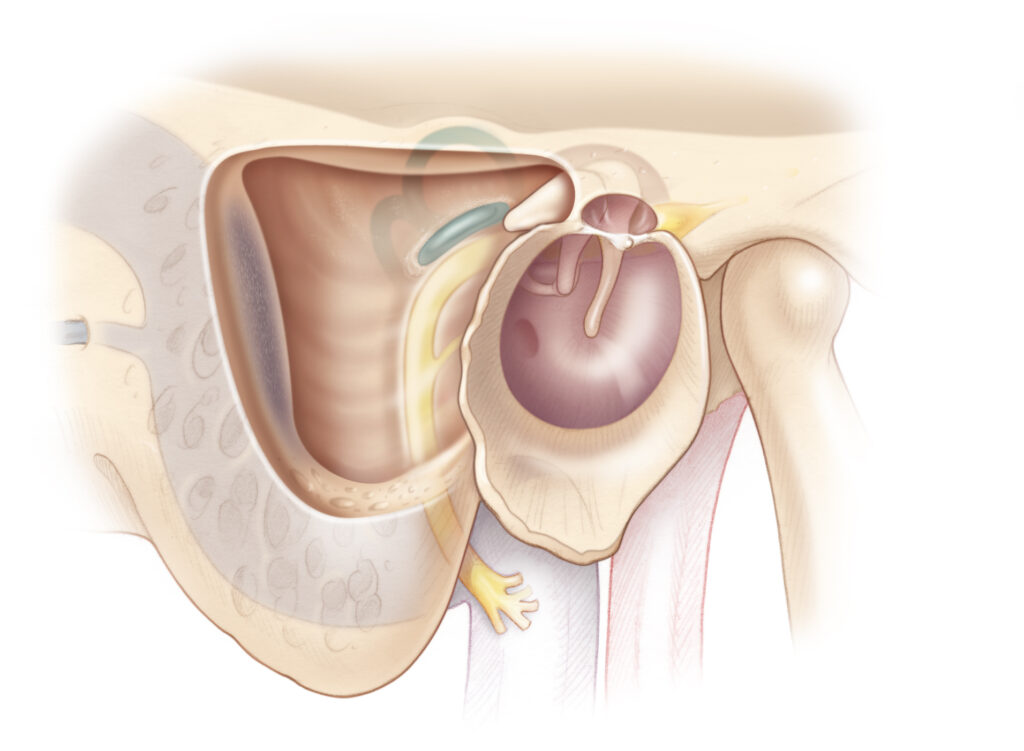
Mastoidectomy is a surgical procedure to remove diseased mastoid air cells — the honeycomb-structured bone situated directly behind the auricle (outer ear). The mastoid air cell system connects to the middle ear space and when middle ear disease spreads to the mastoid, surgical intervention becomes necessary to prevent serious complications including facial nerve paralysis, meningitis, and brain abscess. SurgiPartner connects patients in Hyderabad with ENT otologists (ear specialists) experienced in mastoid and middle ear microsurgery.


The Mastoid Bone — Anatomy and Disease
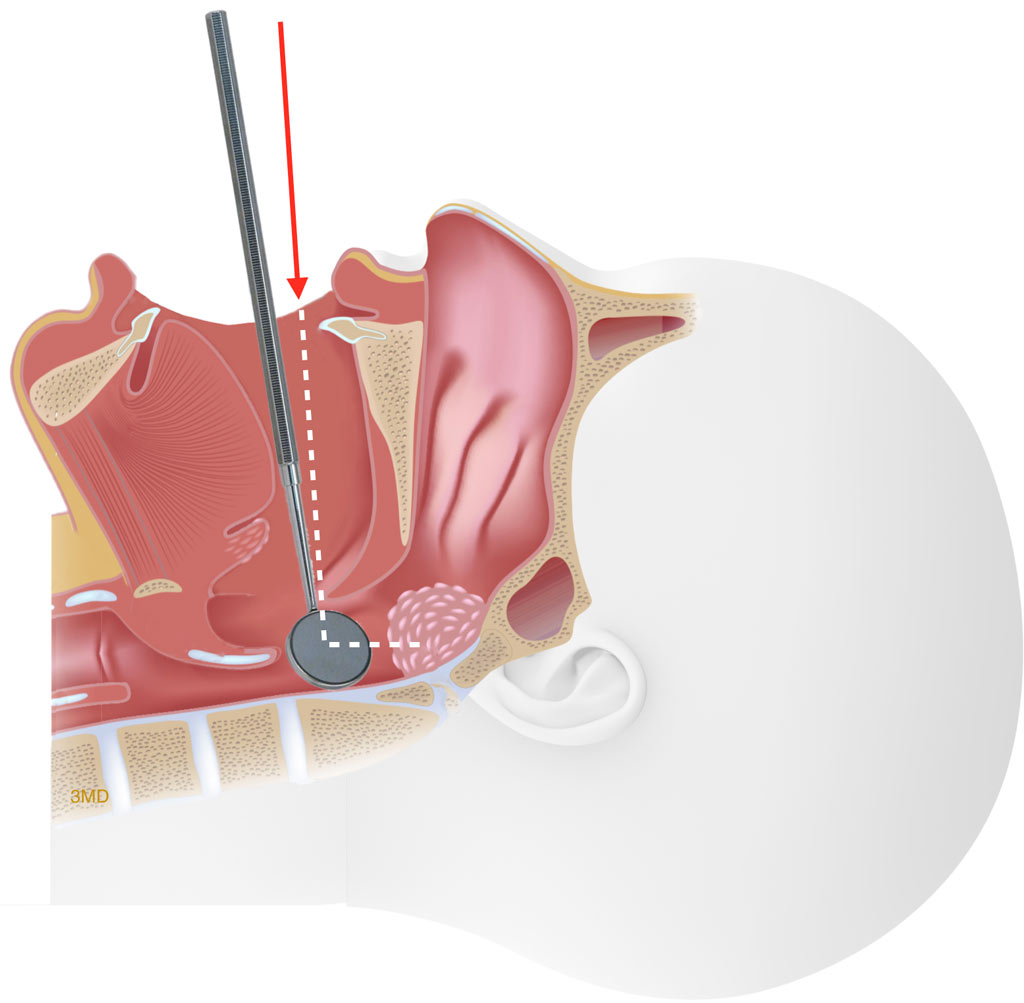
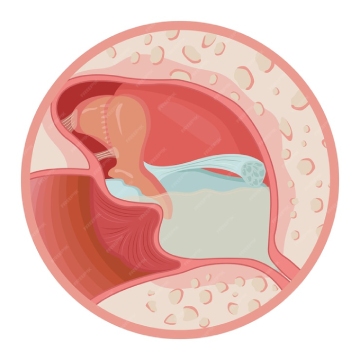
The mastoid process is the bony prominence you can feel directly behind your ear. Inside it lies a network of interconnected air cells lined with a mucous membrane continuous with the middle ear lining. This anatomical communication is a two-way pathway — the middle ear and mastoid benefit from shared ventilation under normal conditions, but infectious or erosive disease in the middle ear spreads readily into the mastoid. The proximity of the mastoid to critical structures — the sigmoid sinus (major venous drainage), the facial nerve (CN VII), the dura of the posterior fossa, and the inner ear — makes untreated mastoid disease potentially life-threatening.
Conditions Treated by Mastoidectomy
Cholesteatoma — The Most Important Indication
A cholesteatoma is a pocket of keratinising squamous epithelium (skin cells) that grows abnormally in the middle ear and mastoid. Unlike normal skin, cholesteatoma expands progressively and secretes enzymes that erode bone — including the ossicular chain (causing hearing loss), the tegmen (roof of the middle ear, adjacent to the brain), the lateral semicircular canal (causing vertigo and inner ear damage), and the bony canal of the facial nerve (causing facial paralysis). Cholesteatoma never resolves with medication and invariably requires surgical removal. Mastoidectomy is the standard surgical approach — combined with tympanoplasty (eardrum reconstruction) when the eardrum is involved.
Acute Mastoiditis
Acute mastoiditis is a bacterial infection of the mastoid air cells, typically a complication of inadequately treated acute otitis media. Presenting with post-auricular pain, swelling, tenderness, and fever — with the auricle pushed forward and downward by the subperiosteal abscess — acute mastoiditis is a surgical emergency when it does not respond promptly to intravenous antibiotics and myringotomy. Cortical mastoidectomy drains the infected mastoid and prevents spread to intracranial structures.
Chronic Suppurative Otitis Media (CSOM)
Long-standing middle ear infection with persistent eardrum perforation and intermittent or constant ear discharge (otorrhoea). When granulation tissue, polyps, or middle ear and mastoid mucosal disease becomes extensive and does not respond to medical treatment, mastoidectomy combined with tympanoplasty (eardrum repair) provides disease control and potentially hearing restoration.


Types of Mastoidectomy
| Procedure | Extent | When Used | Canal Wall |
|---|---|---|---|
| Cortical (simple) mastoidectomy | Mastoid air cells only; middle ear not entered | Acute mastoiditis, cochlear implant access | Preserved (canal wall up) |
| Modified Radical Mastoidectomy (MRM) | Mastoid + posterior ear canal wall taken down; middle ear partially exenterated; ossicular chain preserved when possible | Cholesteatoma, extensive CSOM | Taken down (canal wall down) — creates open cavity |
| Radical Mastoidectomy | Complete exenteration of mastoid + middle ear; ossicles removed; Eustachian tube blocked | Extensive disease, salvage in irradiated field | Taken down — wide open cavity |
| Canal Wall Up (CWU) / Combined Approach Tympanoplasty (CAT) | Mastoidectomy with posterior canal wall preserved; middle ear approached through canal and mastoid simultaneously | Cholesteatoma — requires second-look surgery at 6–12 months | Preserved — better hearing outcomes but higher recurrence risk |
Mastoidectomy — What to Expect
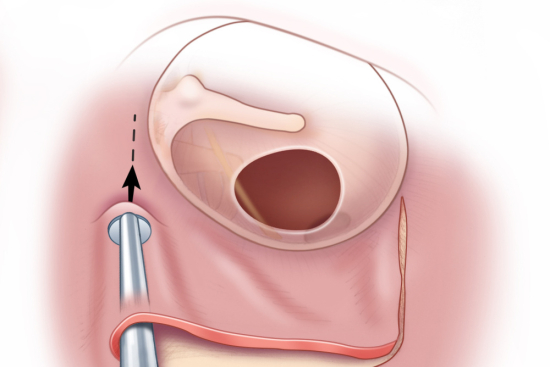
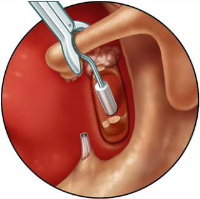
Mastoidectomy is performed under general anaesthesia with the patient’s head turned away from the surgeon. Duration: 1.5–3 hours for primary cases; up to 5 hours for extensive disease. An incision is made behind the ear (post-auricular incision) to expose the mastoid cortex. Using a surgical drill under operating microscope or endoscope visualisation, the mastoid air cells are carefully removed to expose and remove diseased tissue while preserving critical structures. Facial nerve monitoring (continuous EMG) is used in all cases where the facial nerve may be at risk. Hospitalisation: 1–2 nights. Post-operative head bandage for 24–48 hours.
Frequently Asked Questions — Mastoidectomy Hyderabad
Why Choose SurgiPartner for Mastoidectomy?
SurgiPartner ensures advanced ENT expertise combined with complete patient support throughout treatment.
01.
Highly Experienced ENT Surgeons
Specialists trained in complex ear surgeries and infection management.
02.
Advanced Microscopic & Endoscopic Techniques
Ensures complete infection clearance with minimal tissue damage.
03.
Hearing Preservation Focus
Every effort is made to protect and improve hearing outcomes.
04.
End-to-End Care & Follow-Ups
From diagnosis to recovery, we guide patients at every step.
Book Your Consultation
Take the first step toward relief from abdominal pain with SurgiPartner Advanced Appendectomy Surgery.
Live free from pain and discomfort that’s the SurgiPartner promise.
What Our Patients Say

Posted onTrustindex verifies that the original source of the review is Google. I am thoroughly impressed with the SurgiPartner model, which delivers integrated, end-to-end patient support across the healthcare continuum—from initial consultations to treatment and surgical interventions, where necessary. I recently availed their Care Buddy service for a consultation, and the experience was highly seamless, efficient, and professionally managed. The structured Care Buddy support, combined with well-aligned financial assistance processes, significantly enhances the overall patient journey. This holistic and patient-centric approach effectively streamlines access to quality healthcare, making it more efficient and convenient in today’s dynamic environment.Posted onTrustindex verifies that the original source of the review is Google. I’m really impressed with the SurgiPartner concept. They provide end-to-end patient support—from doctor consultations to treatment and even surgery when required. I personally used their Care Buddy service for a consultation, and it was a smooth and positive experience. The Care Buddy assistance, along with support in financial processes, makes healthcare much more convenient, especially in today’s fast-paced lifestyle.Posted onTrustindex verifies that the original source of the review is Google. My Brother Arun Kumar and krishna from Bangalore. We are travelled to Hyderabad for LASIK surgery, and today we successfully underwent the procedure at American Laser Eye Hospital. The surgery went very smoothly and I am feeling very good after the procedure. The hospital environment is very clean and well maintained. All the staff and doctors are very polite, supportive, and professional. A special thanks to SurgiPartner CareBuddy for guiding and helping me throughout the entire process. From the beginning till the end of the day, they were with us at every step and provided excellent support. Overall, I had a very good experience and I highly recommend American Laser Eye Hospital for LASIK surgery with SurgiPartner support.Posted onTrustindex verifies that the original source of the review is Google. Really impressed with the concept of SurgiPartner. They offer complete patient support from doctor consultation to treatment and surgery if needed. I personally took a consultation through their Care buddy, and it was a great experience. The care buddy system and help with financial processes make healthcare much easier, especially in today’s busy world.Posted onTrustindex verifies that the original source of the review is Google. My name is Arun Kumar and I am from Bangalore. I traveled to Hyderabad for LASIK surgery, and today I successfully underwent the procedure at American Laser Eye Hospital. The surgery went very smoothly and I am feeling very good after the procedure. The hospital environment is very clean and well maintained. All the staff and doctors are very polite, supportive, and professional. A special thanks to SurgiPartner CareBuddy for guiding and helping me throughout the entire process. From the beginning till the end of the day, they were with us at every step and provided excellent support. Overall, I had a very good experience and I highly recommend American Laser Eye Hospital for LASIK surgery with SurgiPartner supportPosted onTrustindex verifies that the original source of the review is Google. Thank you for the support and service provided by SurgiPartner. The overall experience was smooth and the team was very helpful.Posted onTrustindex verifies that the original source of the review is Google. Staff is very good and nice receiving. They are very humble and their response is very good. Thank youPosted onTrustindex verifies that the original source of the review is Google. I want to thank Surgipartner for all the help and support during my LASIK surgery. From the beginning till the end, the team was very proactive with follow-ups and guided me clearly through every step, which made the whole experience easy and stress-free. I would especially like to appreciate CareBuddy Raju and Coordinator Anusha for their outstanding support. They were always in touch with both the hospital staff and me, helped reduce waiting time, and made sure everything went smoothly. Their care, quick responses, and constant guidance really made a big difference. Overall, I had a very positive experience and truly appreciate the support provided by Surgipartner.Verified by TrustindexTrustindex verified badge is the Universal Symbol of Trust. Only the greatest companies can get the verified badge who has a review score above 4.5, based on customer reviews over the past 12 months. Read more