Knee Replacement Surgery in Hyderabad — Total, Partial & Robotic Knee Replacement
Get expert knee replacement surgery in Hyderabad with experienced joint surgeons and at-home physiotherapy support. SurgiPartner offers free consultation, a clear written cost estimate, cashless insurance and free doorstep pickup. Call +91 9030053009 to know your exact cost.
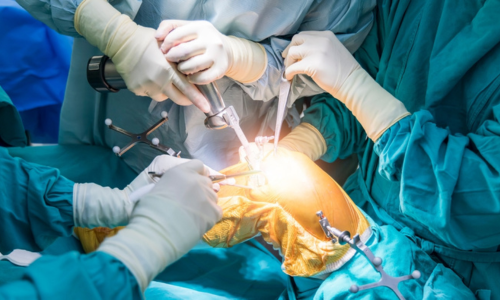
Knee replacement surgery (knee arthroplasty) is one of the most successful and transformative procedures in modern medicine — reliably eliminating chronic knee pain, restoring mobility, and dramatically improving quality of life for patients with knee arthritis. SurgiPartner connects patients across Hyderabad with experienced joint replacement surgeons offering total knee replacement, partial knee replacement, and robotic-assisted knee replacement at multiple partner hospitals
Understanding Knee Arthritis — Why the Knee Wears Out
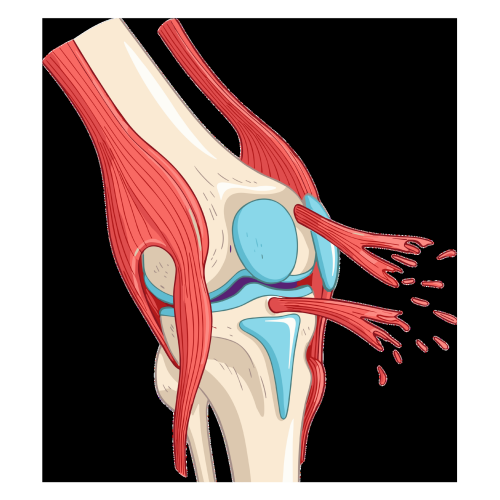
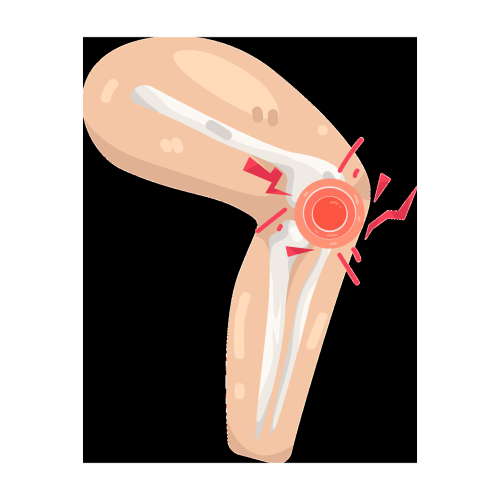
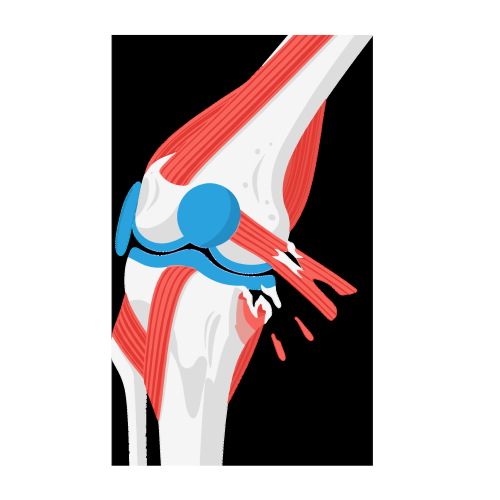
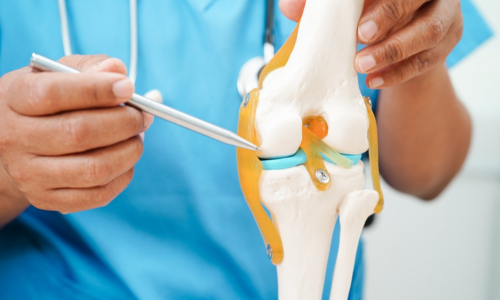
The knee joint is the largest and most complex joint in the human body, designed to withstand forces of 3–6 times body weight during walking and up to 10 times during running. Articular cartilage — a specialised, smooth tissue covering the ends of the femur, tibia, and patella — normally provides a frictionless surface for joint movement. In knee arthritis, this cartilage progressively wears away, eventually exposing raw bone that grinds against bone with every step.
Types of Knee Arthritis Requiring Replacement
- Osteoarthritis (OA) — the most common type; age-related cartilage degeneration worsened by obesity, previous injury, and mechanical factors. Affects 15% of adults over 60.
- Rheumatoid Arthritis (RA) — autoimmune inflammatory destruction of the knee joint. Often requires replacement at a younger age than OA.
- Post-traumatic Arthritis — develops years after knee fractures, ligament injuries, or meniscal damage.
- Avascular Necrosis (AVN) — death of bone due to loss of blood supply, causing joint collapse.
- Psoriatic Arthritis, Gout Arthritis — inflammatory arthritis types that can cause severe joint destruction.
Signs That You May Need Knee Replacement
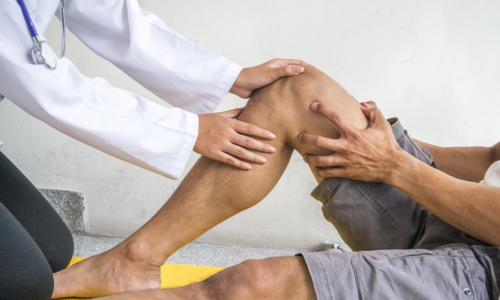
- 1. Severe knee pain that limits walking, climbing stairs, or rising from a chair
- 2. Knee pain persisting or waking you at night despite rest
- 3. Significant knee deformity — bowing inward (varus) or outward (valgus)
- 4. Failed conservative treatment over 6+ months — physiotherapy, weight loss, anti-inflammatory medications, and joint injections no longer providing adequate relief
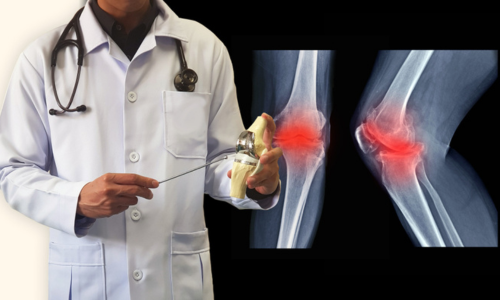
- 5. X-ray showing severe joint space narrowing, bone-on-bone contact, and osteophytes
- 6. Significant stiffness with range of motion less than 90°
Types of Knee Replacement — Choosing the Right Procedure
1. Total Knee Replacement (TKR)
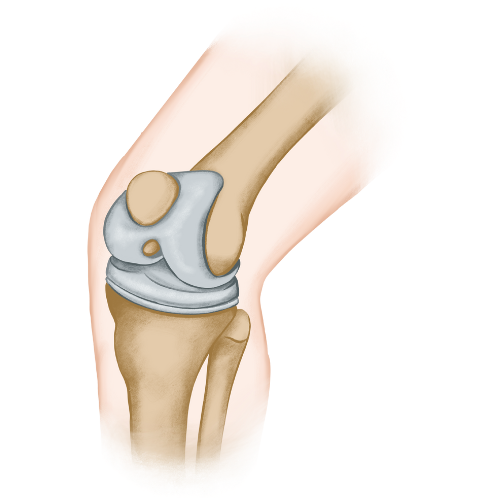
The most commonly performed type. The damaged cartilage and bone surfaces on the femur, tibia, and patella are resected and replaced with metal alloy components (femoral and tibial implants) and a high-density polyethylene bearing surface that recreates smooth, pain-free joint movement. Modern TKR implants are designed to last 15–25+ years. TKR is indicated when arthritis affects multiple compartments of the knee.
2. Partial (Unicompartmental) Knee Replacement (PKR/UKR)
Only the most affected compartment of the knee is replaced — typically the medial (inner) compartment. PKR preserves the unaffected compartments and cruciate ligaments, resulting in a more natural feel, faster recovery, and less blood loss compared to TKR. Indicated for isolated medial compartment arthritis in appropriately selected patients. Can be converted to TKR if needed in future.
3. Bilateral Knee Replacement
Both knees replaced in a single surgical session or staged 6–8 weeks apart. Simultaneous bilateral TKR (done together) is efficient for appropriate patients but carries higher cardiovascular risk. Staged bilateral replacement — one knee at a time — is generally safer for elderly or medically complex patients.
4. Robotic-Assisted Knee Replacement
Computer navigation and robotic arm assistance (MAKO, Stryker; ROSA, Zimmer) provides real-time feedback during surgery, ensuring millimetre-precise bone cuts and implant alignment. Benefits include superior implant positioning accuracy, personalised surgical planning from pre-operative CT scan, preservation of more healthy bone, and potentially longer implant longevity. SurgiPartner’s premium partner hospitals in Hyderabad offer robotic-assisted knee replacement.
The Knee Replacement Procedure — Step by Step
1. Total Knee Replacement (TKR)
The most commonly performed type. The damaged cartilage and bone surfaces on the femur, tibia, and patella are resected and replaced with metal alloy components (femoral and tibial implants) and a high-density polyethylene bearing surface that recreates smooth, pain-free joint movement. Modern TKR implants are designed to last 15–25+ years. TKR is indicated when arthritis affects multiple compartments of the knee.
2. Partial (Unicompartmental) Knee Replacement (PKR/UKR)
Only the most affected compartment of the knee is replaced — typically the medial (inner) compartment. PKR preserves the unaffected compartments and cruciate ligaments, resulting in a more natural feel, faster recovery, and less blood loss compared to TKR. Indicated for isolated medial compartment arthritis in appropriately selected patients. Can be converted to TKR if needed in future.
3. Bilateral Knee Replacement
Both knees replaced in a single surgical session or staged 6–8 weeks apart. Simultaneous bilateral TKR (done together) is efficient for appropriate patients but carries higher cardiovascular risk. Staged bilateral replacement — one knee at a time — is generally safer for elderly or medically complex patients.
4. Robotic-Assisted Knee Replacement
Computer navigation and robotic arm assistance (MAKO, Stryker; ROSA, Zimmer) provides real-time feedback during surgery, ensuring millimetre-precise bone cuts and implant alignment. Benefits include superior implant positioning accuracy, personalised surgical planning from pre-operative CT scan, preservation of more healthy bone, and potentially longer implant longevity. SurgiPartner’s premium partner hospitals in Hyderabad offer robotic-assisted knee replacement.
Frequently Asked Questions — Knee Replacement Hyderabad
Modern knee replacement implants are designed to last 15–25+ years. Studies show that 90–95% of total knee replacements are still functioning well at 15 years, and 85% at 20 years. Implant longevity is influenced by: patient age and activity level (younger, more active patients put more stress on the implant), BMI (higher BMI reduces implant lifespan), implant quality, and surgical precision of component placement. Robotic-assisted TKR with optimal alignment is expected to further improve long-term outcomes.
Modern knee replacement with enhanced recovery protocols, regional nerve blocks, and multimodal analgesia has dramatically reduced post-operative pain. Most patients describe the pain as significantly less than expected. Day 1 is the most uncomfortable, but patients are walking the same evening. At 2–3 weeks, most patients have less knee pain than they had from their arthritis before surgery. Full comfort is typically achieved by 3 months, with progressive improvement to 1 year.
There is no strict age limit for knee replacement. Chronological age alone is not the determining factor — overall health, fitness, and bone quality are more important. TKR has been successfully performed in patients from their 40s to over 90 years. In younger patients (under 60), surgeons may prefer partial knee replacement or consider that the patient will outlive the implant and require revision surgery. SurgiPartner's knee surgeons assess all factors individually to recommend the optimal timing and type of surgery.
Most patients can kneel after TKR, though it may feel uncomfortable due to numbness in the anterior knee skin and the presence of the implant. The majority of patients can achieve 120–130° of knee flexion, which allows many floor-based activities. Deep squatting and full cross-legged sitting are more variable — approximately 60–70% of TKR patients can sit cross-legged at comfortable depth, while some find it difficult. High-flexion implant designs and specialised surgical techniques can improve post-operative flexion in appropriately selected patients.
Why Choose SurgiPartner?
Choosing SurgiPartner means choosing trust, expertise, and innovation. Our approach to Knee Replacement Surgery combines world-class orthopedic techniques with compassionate care — helping patients regain strength, stability, and confidence in every step.
01.
Expert Ophthalmic Surgeons
Our specialists have performed thousands of successful total and partial knee replacement surgeries with outstanding patient satisfaction.
02.
Robotic & Minimally Invasive Technology
We use next-generation robotic and computer-assisted systems to achieve perfect implant alignment, minimal tissue damage, and faster recovery.
03.
Personalized Treatment Plans
Every knee is unique our team customizes each surgery and rehabilitation plan to meet your comfort, activity level, and recovery goals.
04.
Pain-Free & Quick Recovery
Experience minimal post-operative discomfort with most patients walking within 24–48 hours and resuming normal activities in just a few weeks.
Book Your Consultation
Take the first step toward pain-free, active living with SurgiPartner Knee Replacement Surgery. Our experts are here to guide you through a safe, precise, and life-changing orthopedic experience.
Clear vision isn’t a dream anymore – it’s a SurgiPartner promise.
View SurgiPartner on Google

Posted on Google
 saikiran challa
Trustindex verifies that the original source of the review is Google.
I am thoroughly impressed with the SurgiPartner model, which delivers integrated, end-to-end patient support across the healthcare continuum—from initial consultations to treatment and surgical interventions, where necessary. I recently availed their Care Buddy service for a consultation, and the experience was highly seamless, efficient, and professionally managed. The structured Care Buddy support, combined with well-aligned financial assistance processes, significantly enhances the overall patient journey. This holistic and patient-centric approach effectively streamlines access to quality healthcare, making it more efficient and convenient in today’s dynamic environment.Posted on Google vasantha kumari buggalaI’m really impressed with the SurgiPartner concept. They provide end-to-end patient support—from doctor consultations to treatment and even surgery when required. I personally used their Care Buddy service for a consultation, and it was a smooth and positive experience. The Care Buddy assistance, along with support in financial processes, makes healthcare much more convenient, especially in today’s fast-paced lifestyle.Posted on Google
 krishna nayakMy Brother Arun Kumar and krishna from Bangalore. We are travelled to Hyderabad for LASIK surgery, and today we successfully underwent the procedure at American Laser Eye Hospital. The surgery went very smoothly and I am feeling very good after the procedure. The hospital environment is very clean and well maintained. All the staff and doctors are very polite, supportive, and professional. A special thanks to SurgiPartner CareBuddy for guiding and helping me throughout the entire process. From the beginning till the end of the day, they were with us at every step and provided excellent support. Overall, I had a very good experience and I highly recommend American Laser Eye Hospital for LASIK surgery with SurgiPartner support.Posted on Google
 ManaswiReally impressed with the concept of SurgiPartner. They offer complete patient support from doctor consultation to treatment and surgery if needed. I personally took a consultation through their Care buddy, and it was a great experience. The care buddy system and help with financial processes make healthcare much easier, especially in today’s busy world.Posted on Google
 Arun NayakMy name is Arun Kumar and I am from Bangalore. I traveled to Hyderabad for LASIK surgery, and today I successfully underwent the procedure at American Laser Eye Hospital. The surgery went very smoothly and I am feeling very good after the procedure. The hospital environment is very clean and well maintained. All the staff and doctors are very polite, supportive, and professional. A special thanks to SurgiPartner CareBuddy for guiding and helping me throughout the entire process. From the beginning till the end of the day, they were with us at every step and provided excellent support. Overall, I had a very good experience and I highly recommend American Laser Eye Hospital for LASIK surgery with SurgiPartner supportPosted on Google
 Shankar S ShankruThank you for the support and service provided by SurgiPartner. The overall experience was smooth and the team was very helpful.Posted on Google
 Thejasree KStaff is very good and nice receiving. They are very humble and their response is very good. Thank youPosted on Google
 Srihari ReddyI want to thank Surgipartner for all the help and support during my LASIK surgery. From the beginning till the end, the team was very proactive with follow-ups and guided me clearly through every step, which made the whole experience easy and stress-free. I would especially like to appreciate CareBuddy Raju and Coordinator Anusha for their outstanding support. They were always in touch with both the hospital staff and me, helped reduce waiting time, and made sure everything went smoothly. Their care, quick responses, and constant guidance really made a big difference. Overall, I had a very positive experience and truly appreciate the support provided by Surgipartner.Verified by TrustindexTrustindex verified badge is the Universal Symbol of Trust. Only the greatest companies can get the verified badge who has a review score above 4.5, based on customer reviews over the past 12 months. Read more
How SurgiPartner Supports You — From First Call to Full Recovery
Follow your step-by-step guide to a successful surgery and recovery, with our expert team supporting you all the way.
Find Doctor & Hospital Support
Fill in your details and we'll call you back to confirm your slot.