Regain Your Confidence with SurgiPartner Advanced Hair Transplantation
Natural Hair. Permanent Results.
Hair Transplant in Hyderabad — FUE, FUT & DHI Techniques
Get natural-result hair transplant in Hyderabad with advanced FUE technique. SurgiPartner offers free consultation, a clear written cost estimate, complete privacy and free doorstep pickup. Call +91 9030053009 to know your exact cost.
Hair loss is one of the most common concerns among men and women in Hyderabad — affecting not just appearance but self-confidence, professional image, and emotional wellbeing. Whether caused by androgenetic alopecia (pattern baldness), stress, nutritional deficiency, or hormonal change, hair loss responds exceptionally well to modern hair transplant surgery when it is correctly planned and expertly executed. SurgiPartner connects patients in Hyderabad with board-qualified hair restoration surgeons offering FUE, FUT, and DHI techniques with transparent pricing, thorough pre-operative assessment, and complete post-operative care.
This comprehensive guide covers everything you need to know about hair transplant surgery in Hyderabad — including how the three main techniques differ, who qualifies, what the procedure involves, how to care for transplanted hair, what results to expect, and what it costs.
Understanding Hair Loss — Why It Happens
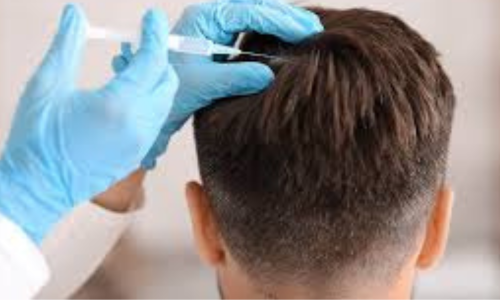
Hair loss in both men and women is primarily driven by androgenetic alopecia — a genetically programmed sensitivity of scalp follicles to the hormone dihydrotestosterone (DHT). DHT binds to receptors in susceptible follicles, causing progressive miniaturisation: each successive hair cycle produces a finer, shorter, less pigmented hair until the follicle stops producing hair altogether. This process — which affects the frontal hairline, crown, and vertex in men (Norwood-Hamilton pattern) and the central crown in women (Ludwig pattern) — is gradual, predictable, and permanent without intervention.
The back and sides of the scalp contain follicles that are genetically resistant to DHT — they do not miniaturise and do not fall out over a lifetime. This biological fact is the foundation of hair transplantation: DHT-resistant follicles from the permanent donor zone are relocated to bald or thinning recipient areas, where they retain their genetic resistance and grow permanently for life.
Other Causes of Hair Loss Requiring Assessment Before Transplant
Before hair transplant surgery, all modifiable and reversible causes of hair loss must be identified and addressed:
- Iron deficiency anaemia — the most common overlooked cause of diffuse hair shedding in Indian women; corrected with dietary changes and supplementation before transplant
- Thyroid dysfunction — both hypothyroidism and hyperthyroidism cause telogen effluvium (diffuse shedding); must be treated and thyroid function normalised before surgery
- Nutritional deficiencies — zinc, biotin, vitamin D, and protein deficiencies impair hair growth; dietary optimisation improves transplant results
- Alopecia areata — autoimmune patchy hair loss; an absolute contraindication to transplant as the immune attack will destroy transplanted follicles
- Telogen effluvium — diffuse shedding triggered by physical stress (illness, surgery, COVID-19), emotional stress, or weight loss; must be fully resolved and hair cycle restabilised before transplant
- Scarring alopecia (lichen planopilaris, discoid lupus) — inflammatory destruction of follicles; must be in remission and confirmed stable before any transplant consideration
- Medications — finasteride, minoxidil results and contraindicated drugs (anticoagulants, some antihypertensives) must be reviewed pre-operatively
Hair Transplant Techniques — Comparison
FUE – Follicular Unit Extraction
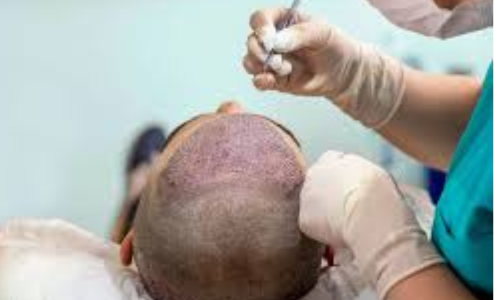
FUE is the most widely performed hair transplant technique in Hyderabad and globally. Individual follicular units (containing 1–4 hairs) are extracted one at a time from the donor zone (back and sides of the scalp) using a precisely sized cylindrical punch of 0.7–1.0mm diameter. The punch scores the skin around the follicular unit; the unit is then extracted with fine forceps and placed in a chilled holding solution to maintain viability until implantation.
Donor site: The back of the scalp is shaved (in standard FUE) or hair is trimmed to 1–2mm. Individual extraction sites heal as tiny dot scars — each measuring less than 1mm — that are invisible with hair of any length beyond a very short buzz cut. The dot scars are permanent but undetectable in typical hairstyles.
Recipient site creation: Small incisions (slits or holes) are made in the bald or thinning recipient area at the correct angle, depth, and density to create a natural-looking hairline and growth direction. The extracted follicular units are then carefully placed into each incision.
Advantages of FUE: No linear scar; suitable for patients who wear their hair short; faster healing (return to work in 3–5 days); less post-operative discomfort; can harvest from the beard or body (as supplementary donor sites) when scalp donor supply is limited.
Limitations of FUE: More time-consuming per graft than FUT strip harvest; higher transection rate in inexperienced hands (damaged follicles that do not survive); typically allows fewer grafts per session than FUT; slightly higher cost per graft.
FUT – Follicular Unit Transplantation (Strip Method)
FUT involves excising a strip of scalp tissue (typically 1–1.5cm wide × 15–25cm long) from the permanent donor zone under local anaesthesia. The donor wound is closed with sutures or trichophytic closure (a technique that allows hair to grow through the scar, minimising its visibility). The excised strip is then placed under stereoscopic microscopes, where a team of surgical technicians meticulously dissect it into individual follicular units.
Donor site: The resulting linear scar is permanent and runs horizontally across the back of the scalp. With trichophytic closure, hair grows through and over the scar, making it nearly invisible when the hair is at medium length. However, wearing very short hair (<1cm) reveals the linear scar — a permanent consideration for patients who prefer short back-and-sides styles.
Advantages of FUT: Higher graft yield per session (3,000–5,000+ grafts possible in a single procedure); lower transection rate when performed by an experienced team (follicles removed with full dermal papilla intact under microscope); more cost-effective for large sessions; the strip can be utilised completely before depleting point-extraction donor density.
Limitations of FUT: Linear scar (requires hair long enough to conceal); more post-operative discomfort from the suture line (10–14 days); not ideal for patients who prefer to shave their head.
DHI – Direct Hair Implantation
DHI is a refined FUE technique where extracted follicular units are immediately implanted into the recipient area using a specialised instrument called the Choi implanter pen — a hollow needle that simultaneously creates the recipient incision and deposits the follicle in one motion, without the need for pre-made incisions. This eliminates the time the extracted grafts spend outside the body, theoretically improving graft survival. DHI also allows implantation without shaving the recipient area — beneficial for women with diffuse thinning who want to maintain hairstyle coverage during and after surgery.
Advantages of DHI: Higher implantation density in a single session; no pre-made incisions (greater control over angle, direction, and depth of each follicle); can be performed in the recipient area without shaving (unshaven DHI); potentially improved graft survival due to reduced out-of-body time.
Limitations of DHI: More expensive than standard FUE (Choi pens are single-use instruments); fewer grafts per session than FUE or FUT in most centres; technique-dependent — quality varies significantly between surgeons and centres.
Detailed Technique Comparison Table
| Feature | FUE | FUT (Strip) | DHI |
|---|---|---|---|
| Scar type | Tiny dot scars (invisible with >3mm hair) | Linear scar (requires ≥1cm hair to conceal) | Same as FUE (dot scars) |
| Max grafts per session | 2,000–3,500 | 3,000–5,000+ | 1,500–2,500 |
| Scalp shaving required | Full donor shave; recipient shave | Donor strip only; recipient shave | Donor shave; recipient optional (unshaven DHI) |
| Recovery time | 3–5 days desk work | 10–14 days (suture healing) | 3–5 days desk work |
| Post-op discomfort | Mild | Moderate (linear wound) | Mild |
| Best candidates | Most patients; Norwood II–V; shorter hair preference | Large sessions; Norwood V–VI; hair worn longer | Women; density filling; hairline refinement; unshaven preference |
| Cost per graft | ₹25–₹50 | ₹20–₹35 | ₹50–₹80 |
Are You a Good Candidate? — Complete Assessment Criteria
Ideal Candidates
- Stable hair loss pattern — no significant change in hairline or density in the past 12 months; transplanting during active progression leads to poor long-term results as surrounding native hair continues to thin, leaving transplanted hair isolated in unnatural patterns
- Age ≥25 years — to allow the full lifetime pattern of hair loss to be established before committing to a surgical distribution of donor grafts
- Adequate donor density — minimum 70–80 follicular units per cm² assessed by trichoscopy; patients with low donor density cannot achieve high coverage
- Realistic expectations — understanding that hair transplant redistributes existing hair rather than creating new hair; results depend on the number of available donor grafts relative to the area requiring coverage
- Good general health — no uncontrolled diabetes, no active scalp inflammation, not on anticoagulant therapy that cannot be safely paused
- Non-smoker or willing to stop for 2 weeks — smoking impairs wound healing and graft survival through vasoconstriction
Norwood Scale and Graft Count Guide
| Norwood Grade | Hair Loss Pattern | Estimated Grafts Needed | Technique Recommendation |
|---|---|---|---|
| Norwood II–III | Mild frontal recession; early temples | 800–1,500 | FUE or DHI; single session |
| Norwood III–IV | Defined frontal recession; early crown thinning | 1,500–2,500 | FUE; single or double session |
| Norwood IV–V | Significant frontal + crown; bridge of hair remains | 2,500–3,500 | FUE or FUT; possibly staged |
| Norwood V–VI | Large bald area; limited bridge; significant crown | 3,500–5,000 | FUT or staged FUE; two sessions often needed |
| Norwood VI–VII | Advanced baldness; very limited donor | 3,000–4,500 (limited by donor) | Conservative FUT + beard/body FUE; realistic limitations counselling essential |
Are You a Good Candidate? — Complete Assessment Criteria
Pre-operative Assessment (2–4 Weeks Before Surgery)
A comprehensive pre-operative assessment includes:
- Trichoscopy (dermoscopic scalp examination) — measures hair shaft density per cm², miniaturisation ratio, follicular unit distribution, and identifies early signs of scarring alopecia or active inflammation
- Blood tests — complete blood count, serum ferritin, thyroid function (TSH, T3, T4), serum zinc, vitamin B12, vitamin D, fasting blood glucose, and coagulation profile
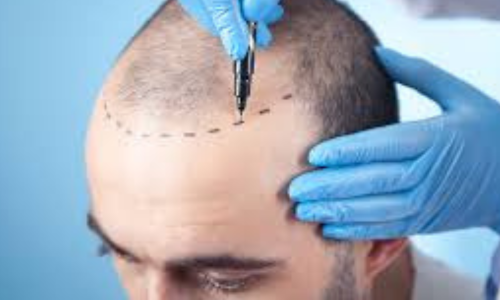
- Hairline design — the single most important aesthetic decision in hair transplantation; designed in consultation with the patient using the golden ratio of facial proportions; natural, age-appropriate, irregular hairlines look better than geometric ones
- Graft count planning — based on the area to be covered, desired density, available donor supply, and Norwood grade
- Medical optimisation — starting or continuing finasteride (in men) and minoxidil (in both sexes) 3 months before surgery to stabilise existing hair and improve scalp vascularity
Surgery Day
Surgery begins with local anaesthetic infiltration of the donor and recipient areas using a combination of lidocaine with adrenaline and ring blocks for sustained anaesthesia. The procedure is performed with the patient awake but comfortable — seated or lying — and most patients listen to music or watch content on a screen during the 6–10 hour session for large cases.
The harvesting team extracts grafts while the implantation team simultaneously creates recipient sites and places earlier-harvested grafts — assembly-line efficiency that minimises graft out-of-body time. Grafts are stored in HypoThermosol or similar advanced holding solution at 4°C — critical for maintaining follicle viability during the hours between harvest and implantation.
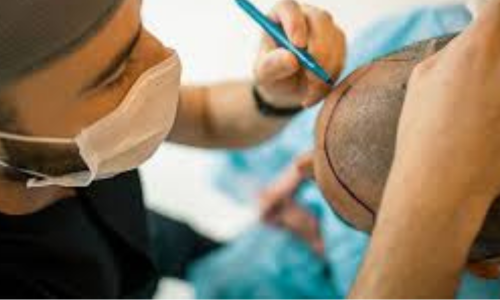
Placement of each follicular unit is the most skill-dependent step — the surgeon must ensure each follicle is oriented at the correct angle (30–45° for the hairline, steeper for the crown), in the correct direction matching native hair growth, and at the appropriate density for the zone being treated.
Immediate Post-operative Period (Days 1–7)
The scalp is covered with a light dressing for 24 hours. Mild swelling of the forehead and around the eyes on days 2–4 is normal and resolves without intervention. Saline spray is applied to the recipient area every hour for the first 48 hours to keep grafts moist. Sleeping semi-reclined (30–45°) for the first 3 nights reduces forehead swelling. Oral antibiotics for 5 days and anti-inflammatories reduce infection risk and swelling. No gym, no swimming, no direct sun exposure for 2 weeks.
Shedding Phase and Growth Timeline
This is the phase that causes the most anxiety for patients — understanding it is essential:
- Weeks 2–6: Shock loss (shedding) — transplanted hairs shed as follicles enter telogen (resting phase) after the trauma of extraction and implantation. This is completely normal and expected. The follicle itself remains alive beneath the skin surface, ready to restart the growth cycle.
- Months 3–4: New growth begins — thin, fine hairs emerge from the transplanted follicles. Many patients are impatient at this stage; it is important to understand that these early hairs will gradually thicken.
- Month 6: 50–60% of result visible — appreciable coverage and density; most patients begin to feel satisfied with progress at this stage.
- Month 9: 70–80% of result visible — good density; hairline well-defined; hair thickening progressively.
- Month 12: Final result assessed — full density achieved; hair texture and calibre have normalised; result photographed and evaluated against pre-operative baseline.
💡 PRP post-operative protocol: Platelet-Rich Plasma (PRP) therapy administered at 6 weeks, 3 months, and 6 months post-transplant has been shown in multiple RCTs to improve graft survival by 10–20% and accelerate visible growth. SurgiPartner includes a PRP protocol recommendation in all hair transplant planning — call +91 9030053009.
Frequently Asked Questions — Hair Transplant Hyderabad
FUE (Follicular Unit Extraction) extracts individual follicular units one at a time using a small punch (0.8–1.0mm) — leaving only tiny dot scars invisible with short hair. FUT (Follicular Unit Transplantation) removes a strip of scalp from the back of the head, from which follicles are dissected under a microscope — leaving a linear scar concealed by hair. FUE has faster recovery (3–5 days vs 10–14 days) and no linear scar, making it the preferred choice for most patients. FUT provides a higher graft yield in a single session and is more cost-effective for very large sessions (4,000+ grafts). Your SurgiPartner surgeon will recommend the most appropriate technique after scalp assessment — call +91 9030053009.
Why Choose SurgiPartner?
Choosing SurgiPartner means choosing expertise, precision, and natural-looking transformation.
Our hair transplantation procedures are designed to restore not only your hair – but also your self-confidence – using modern, minimally invasive techniques with lifelong results.
01.
Certified Hair Restoration Specialists
Our expert surgeons specialize in advanced transplant procedures that guarantee natural density, minimal scarring, and lasting growth.
02.
Latest FUE & DHI Technologies
We use the most trusted and precise techniques - Follicular Unit Extraction (FUE) and Direct Hair Implantation (DHI) - ensuring comfort, accuracy, and fast healing.
03.
Personalized Hairline Design
Your face is unique - so should your hairline be. We design every transplant to match your natural growth pattern and facial features perfectly.
04.
Safe, Painless & Long-Term Results
With advanced anesthesia and high-precision grafting, patients experience a smooth, comfortable procedure and enjoy permanent, natural regrowth.
Request a Consultation
Take the first step toward your new look with SurgiPartner’s hair restoration experts. Our specialists ensure precision, care, and results that look 100% natural – giving you back your youthful confidence.
Clear vision isn’t a dream anymore – it’s a SurgiPartner promise.
View SurgiPartner on Google

Posted on Google
 saikiran challa
Trustindex verifies that the original source of the review is Google.
I am thoroughly impressed with the SurgiPartner model, which delivers integrated, end-to-end patient support across the healthcare continuum—from initial consultations to treatment and surgical interventions, where necessary. I recently availed their Care Buddy service for a consultation, and the experience was highly seamless, efficient, and professionally managed. The structured Care Buddy support, combined with well-aligned financial assistance processes, significantly enhances the overall patient journey. This holistic and patient-centric approach effectively streamlines access to quality healthcare, making it more efficient and convenient in today’s dynamic environment.Posted on Google vasantha kumari buggalaI’m really impressed with the SurgiPartner concept. They provide end-to-end patient support—from doctor consultations to treatment and even surgery when required. I personally used their Care Buddy service for a consultation, and it was a smooth and positive experience. The Care Buddy assistance, along with support in financial processes, makes healthcare much more convenient, especially in today’s fast-paced lifestyle.Posted on Google
 krishna nayakMy Brother Arun Kumar and krishna from Bangalore. We are travelled to Hyderabad for LASIK surgery, and today we successfully underwent the procedure at American Laser Eye Hospital. The surgery went very smoothly and I am feeling very good after the procedure. The hospital environment is very clean and well maintained. All the staff and doctors are very polite, supportive, and professional. A special thanks to SurgiPartner CareBuddy for guiding and helping me throughout the entire process. From the beginning till the end of the day, they were with us at every step and provided excellent support. Overall, I had a very good experience and I highly recommend American Laser Eye Hospital for LASIK surgery with SurgiPartner support.Posted on Google
 ManaswiReally impressed with the concept of SurgiPartner. They offer complete patient support from doctor consultation to treatment and surgery if needed. I personally took a consultation through their Care buddy, and it was a great experience. The care buddy system and help with financial processes make healthcare much easier, especially in today’s busy world.Posted on Google
 Arun NayakMy name is Arun Kumar and I am from Bangalore. I traveled to Hyderabad for LASIK surgery, and today I successfully underwent the procedure at American Laser Eye Hospital. The surgery went very smoothly and I am feeling very good after the procedure. The hospital environment is very clean and well maintained. All the staff and doctors are very polite, supportive, and professional. A special thanks to SurgiPartner CareBuddy for guiding and helping me throughout the entire process. From the beginning till the end of the day, they were with us at every step and provided excellent support. Overall, I had a very good experience and I highly recommend American Laser Eye Hospital for LASIK surgery with SurgiPartner supportPosted on Google
 Shankar S ShankruThank you for the support and service provided by SurgiPartner. The overall experience was smooth and the team was very helpful.Posted on Google
 Thejasree KStaff is very good and nice receiving. They are very humble and their response is very good. Thank youPosted on Google
 Srihari ReddyI want to thank Surgipartner for all the help and support during my LASIK surgery. From the beginning till the end, the team was very proactive with follow-ups and guided me clearly through every step, which made the whole experience easy and stress-free. I would especially like to appreciate CareBuddy Raju and Coordinator Anusha for their outstanding support. They were always in touch with both the hospital staff and me, helped reduce waiting time, and made sure everything went smoothly. Their care, quick responses, and constant guidance really made a big difference. Overall, I had a very positive experience and truly appreciate the support provided by Surgipartner.Verified by TrustindexTrustindex verified badge is the Universal Symbol of Trust. Only the greatest companies can get the verified badge who has a review score above 4.5, based on customer reviews over the past 12 months. Read more
How SurgiPartner Supports You — From First Call to Full Recovery
Follow your step-by-step guide to a successful surgery and recovery, with our expert team supporting you all the way.
Find Doctor & Hospital Support
Fill in your details and we'll call you back to confirm your slot.