Coccyx Pain
Coccydynia — pain in and around the coccyx (tailbone), the small triangular bone at the very base of the spine formed by 3–5 fused vertebrae — is a significantly debilitating condition that disproportionately affects women (5× more common than in men) and causes severe pain with sitting, rising from a seated position, and during bowel movements. Despite its significant impact on quality of life, coccydynia is frequently misdiagnosed, undertreated, or dismissed by clinicians unfamiliar with the condition. SurgiPartner’s interventional pain specialists in Hyderabad offer targeted, image-guided procedures — including the ganglion impar block and cryoanalgesia — that provide sustained relief where conventional treatments have failed.
Coccyx Pain (Coccydynia) Treatment in Hyderabad — Ganglion Impar Block, Cryoanalgesia
Anatomy of the Coccyx — Why It Causes Such Severe Pain
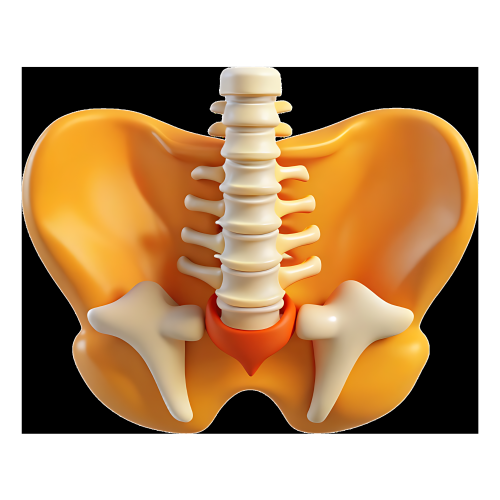
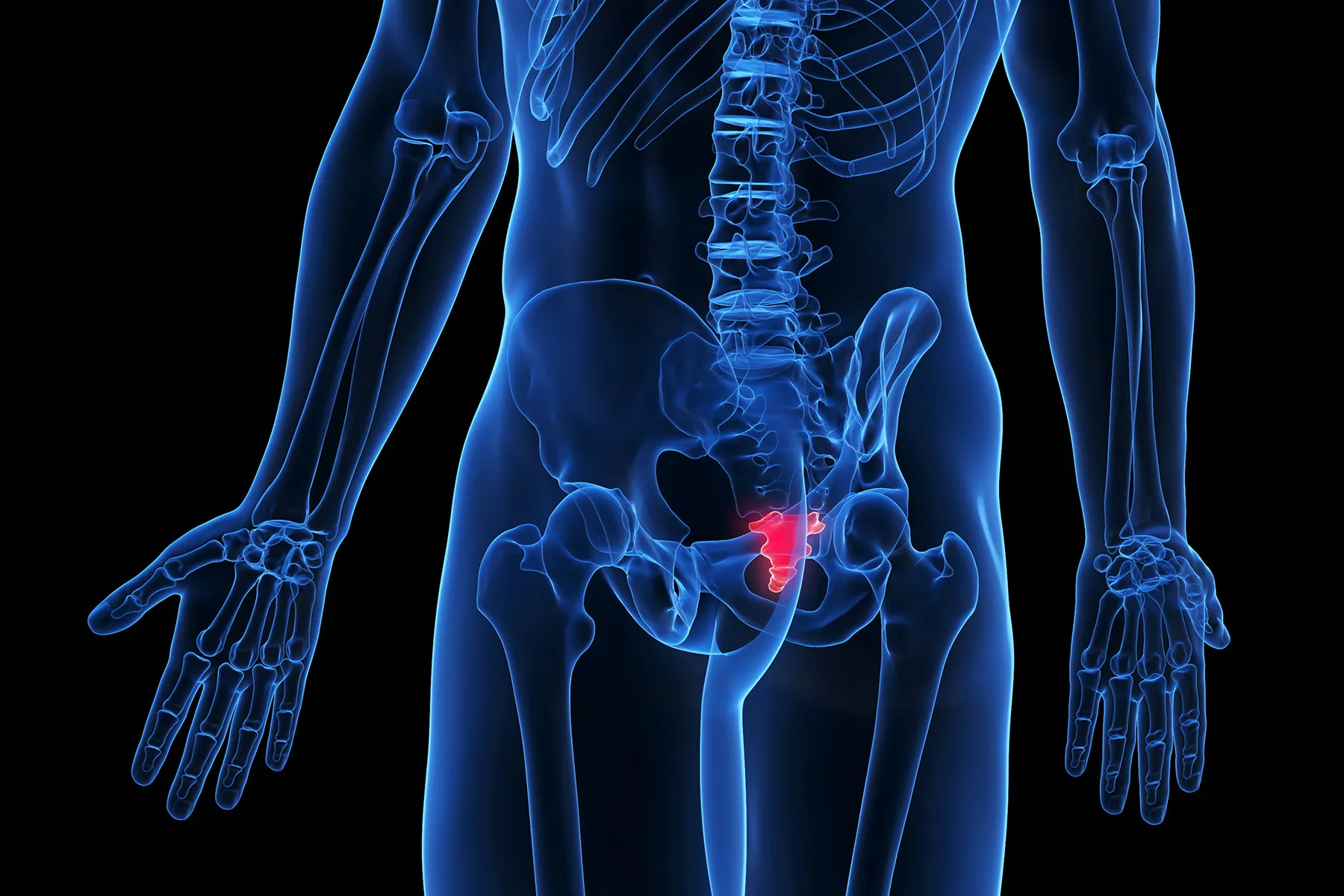
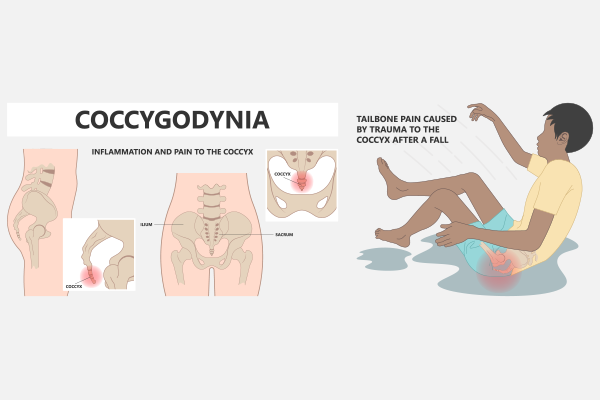
The coccyx is the terminal segment of the spine, connecting to the sacrum above via the sacrococcygeal joint. It serves as an attachment point for the coccygeal muscles (part of the pelvic floor), the ligaments of the sacrotuberous and sacrospinous ligament complex, and several gluteal muscle fibres. The coccyx region is richly innervated by the coccygeal plexus (formed by the S4, S5, and Co1 nerve roots) — explaining the intensity of pain when the coccyx is injured or inflamed. The ganglion impar — a sympathetic ganglion at the sacrococcygeal junction — serves as a major relay station for pain signals from the perineum, anus, distal rectum, distal urethra, and vagina, making it an ideal interventional target for coccydynia and perineal pain.
Causes of Coccyx Pain
| Cause | Details | Prevalence |
|---|---|---|
| Trauma | Fall onto the coccyx (the most common cause — falling on ice, hard surfaces, backward falls during sport); fracture or dislocation of the sacrococcygeal joint; obstetric trauma (prolonged second stage labour, instrumental delivery, large baby) | Most common |
| Idiopathic | No identifiable cause; may represent subclinical hypermobility or instability of the coccyx; particularly in obese individuals (excess weight increases pressure on coccyx during sitting) | 30–40% |
| Degenerative | Osteoarthritis of the sacrococcygeal joint; disc degeneration between coccygeal segments; osteophyte formation causing bony spurs that impinge on surrounding soft tissue during sitting | Common in older adults |
| Coccygeal instability | Excessive mobility of the coccyx during sitting/standing transitions — demonstrated on dynamic X-rays taken in sitting and standing; causes shearing forces on the sacrococcygeal joint | 25–30% |
| Pelvic floor tension | Hypertonic pelvic floor muscles directly attached to the coccyx pulling it anteriorly — closely associated with pelvic floor dysfunction and CPP | Frequently coexists with other causes |
| Referred pain | Pain referred to the coccyx from sacroiliac joint dysfunction, piriformis syndrome, lumbar disc pathology, or rectal pathology | Important to exclude |
| Bone pathology | Primary coccygeal tumour (rare) or metastatic disease; sacrococcygeal chordoma (locally aggressive tumour) | Rare but must be excluded with imaging |
Diagnosis of Coccydynia
Clinical examination confirms localised tenderness precisely over the coccyx on palpation — a hallmark that distinguishes coccydynia from sacral or gluteal pain. Per-rectal examination assesses coccyx mobility (reducible vs irreducible) and identifies associated pelvic floor muscle tension.
Dynamic X-ray of the coccyx — the most important imaging investigation; lateral view radiographs taken in standing and sitting positions identify coccygeal instability (hypermobility: >25° flexion on sitting) or subluxation; detects fractures, dislocations, and degenerative changes.
MRI sacrum and coccyx — assesses disc pathology, identifies bone marrow oedema from recent fracture, excludes sacrococcygeal chordoma, and evaluates the pelvic floor muscles and their attachment to the coccyx.
Ganglion impar block (diagnostic) — a single injection of local anaesthetic at the ganglion impar; dramatic relief confirms the ganglion as the primary pain relay and guides therapeutic intervention.
Treatment Pathway for Coccydynia
The coccyx is the terminal segment of the spine, connecting to the sacrum above via the sacrococcygeal joint. It serves as an attachment point for the coccygeal muscles (part of the pelvic floor), the ligaments of the sacrotuberous and sacrospinous ligament complex, and several gluteal muscle fibres. The coccyx region is richly innervated by the coccygeal plexus (formed by the S4, S5, and Co1 nerve roots) — explaining the intensity of pain when the coccyx is injured or inflamed. The ganglion impar — a sympathetic ganglion at the sacrococcygeal junction — serves as a major relay station for pain signals from the perineum, anus, distal rectum, distal urethra, and vagina, making it an ideal interventional target for coccydynia and perineal pain.
Frequently Asked Questions — Coccyx Pain Treatment Hyderabad
For immediate relief, the most effective first step is using a specialised coccyx relief cushion — a wedge-shaped cushion with a central cutout that transfers sitting weight to the ischial tuberosities (sitting bones) rather than the coccyx. This provides dramatic immediate pain reduction for most patients and can be used at work, home, and in cars. For acute post-traumatic coccydynia, oral NSAIDs (ibuprofen) combined with the coccyx cushion manage most cases within 6–8 weeks. For persistent pain (more than 8 weeks), assessment by a pain specialist or physiotherapist is recommended. Ganglion impar block with PRF or cryoanalgesia provides the most sustained relief for chronic refractory coccydynia — 70–90% of patients achieve significant improvement after intervention. SurgiPartner's pain specialists in Hyderabad assess and treat coccydynia comprehensively — call +91 9030053009.
The ganglion impar is a sympathetic nerve ganglion located at the sacrococcygeal junction that relays pain signals from the perineum, anus, lower rectum, distal urethra, and the coccyx region itself. In coccydynia, the ganglion impar amplifies and transmits the pain signals that generate the characteristic severe sitting pain. A ganglion impar block delivers local anaesthetic (for diagnosis) or neurolytic/PRF treatment (for sustained relief) precisely to this ganglion under fluoroscopic X-ray guidance. The procedure takes approximately 20–30 minutes; the patient is prone; a needle is passed through the anococcygeal ligament using a trans-anococcygeal approach. Studies consistently report 70–90% significant pain relief from ganglion impar block with PRF or cryoanalgesia in chronic coccydynia. It is a safe, same-day outpatient procedure available at SurgiPartner partner centres in Hyderabad — call +91 9030053009.
Why Choose SurgiPartner?
Choosing SurgiPartner means choosing expert care, advanced technology, and a commitment to restoring full mobility. Our approach to ACL Reconstruction Surgery helps athletes and active individuals regain knee stability, confidence, and performance.
01.
Experienced Sports Orthopedic Surgeons
Our skilled surgeons specialize in ACL reconstruction, ligament repair, and sports injury management, ensuring precision and faster return to activity.
02.
Advanced Arthroscopic & Minimally Invasive Techniques
We use keyhole surgical methods that reduce scarring, pain, and recovery time promoting faster joint healing
03.
Personalized Rehabilitation Programs
Each recovery plan is custom-designed with physiotherapists to restore flexibility, strength, and confidence step by step.
04.
Fast, Pain-Free Recovery
Most patients start walking within days and return to sports or active routines within a few months supported by guided rehab care.
Request a Consultation
Take the first step toward stronger, more stable knees with SurgiPartner advanced ACL Reconstruction Surgery. Our specialists are here to guide you through a safe and effective recovery journey.
Get back in the game – that’s the SurgiPartner promise
View SurgiPartner on Google

Posted on Google
 saikiran challa
Trustindex verifies that the original source of the review is Google.
I am thoroughly impressed with the SurgiPartner model, which delivers integrated, end-to-end patient support across the healthcare continuum—from initial consultations to treatment and surgical interventions, where necessary. I recently availed their Care Buddy service for a consultation, and the experience was highly seamless, efficient, and professionally managed. The structured Care Buddy support, combined with well-aligned financial assistance processes, significantly enhances the overall patient journey. This holistic and patient-centric approach effectively streamlines access to quality healthcare, making it more efficient and convenient in today’s dynamic environment.Posted on Google vasantha kumari buggalaI’m really impressed with the SurgiPartner concept. They provide end-to-end patient support—from doctor consultations to treatment and even surgery when required. I personally used their Care Buddy service for a consultation, and it was a smooth and positive experience. The Care Buddy assistance, along with support in financial processes, makes healthcare much more convenient, especially in today’s fast-paced lifestyle.Posted on Google
 krishna nayakMy Brother Arun Kumar and krishna from Bangalore. We are travelled to Hyderabad for LASIK surgery, and today we successfully underwent the procedure at American Laser Eye Hospital. The surgery went very smoothly and I am feeling very good after the procedure. The hospital environment is very clean and well maintained. All the staff and doctors are very polite, supportive, and professional. A special thanks to SurgiPartner CareBuddy for guiding and helping me throughout the entire process. From the beginning till the end of the day, they were with us at every step and provided excellent support. Overall, I had a very good experience and I highly recommend American Laser Eye Hospital for LASIK surgery with SurgiPartner support.Posted on Google
 ManaswiReally impressed with the concept of SurgiPartner. They offer complete patient support from doctor consultation to treatment and surgery if needed. I personally took a consultation through their Care buddy, and it was a great experience. The care buddy system and help with financial processes make healthcare much easier, especially in today’s busy world.Posted on Google
 Arun NayakMy name is Arun Kumar and I am from Bangalore. I traveled to Hyderabad for LASIK surgery, and today I successfully underwent the procedure at American Laser Eye Hospital. The surgery went very smoothly and I am feeling very good after the procedure. The hospital environment is very clean and well maintained. All the staff and doctors are very polite, supportive, and professional. A special thanks to SurgiPartner CareBuddy for guiding and helping me throughout the entire process. From the beginning till the end of the day, they were with us at every step and provided excellent support. Overall, I had a very good experience and I highly recommend American Laser Eye Hospital for LASIK surgery with SurgiPartner supportPosted on Google
 Shankar S ShankruThank you for the support and service provided by SurgiPartner. The overall experience was smooth and the team was very helpful.Posted on Google
 Thejasree KStaff is very good and nice receiving. They are very humble and their response is very good. Thank youPosted on Google
 Srihari ReddyI want to thank Surgipartner for all the help and support during my LASIK surgery. From the beginning till the end, the team was very proactive with follow-ups and guided me clearly through every step, which made the whole experience easy and stress-free. I would especially like to appreciate CareBuddy Raju and Coordinator Anusha for their outstanding support. They were always in touch with both the hospital staff and me, helped reduce waiting time, and made sure everything went smoothly. Their care, quick responses, and constant guidance really made a big difference. Overall, I had a very positive experience and truly appreciate the support provided by Surgipartner.Verified by TrustindexTrustindex verified badge is the Universal Symbol of Trust. Only the greatest companies can get the verified badge who has a review score above 4.5, based on customer reviews over the past 12 months. Read more
How SurgiPartner Supports You — From First Call to Full Recovery
Follow your step-by-step guide to a successful surgery and recovery, with our expert team supporting you all the way.
Find Doctor & Hospital Support
Fill in your details and we'll call you back to confirm your slot.