Get Lasting Relief from Pain & Infection with SurgiPartner Advanced Pilonidal Sinus Treatment
Minimally Invasive Care. Faster Healing. Lower Risk of Recurrence
Pilonidal Sinus Treatment in Hyderabad — Laser Ablation, Surgical Excision
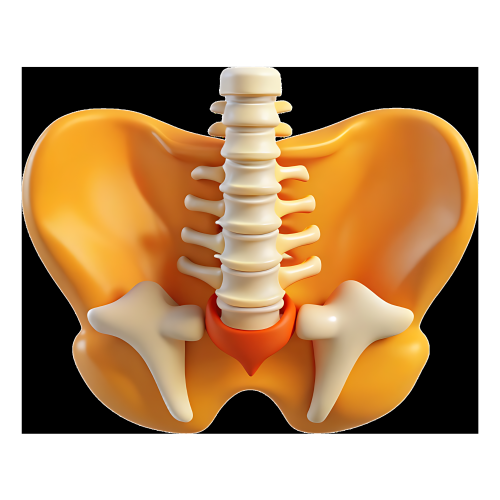
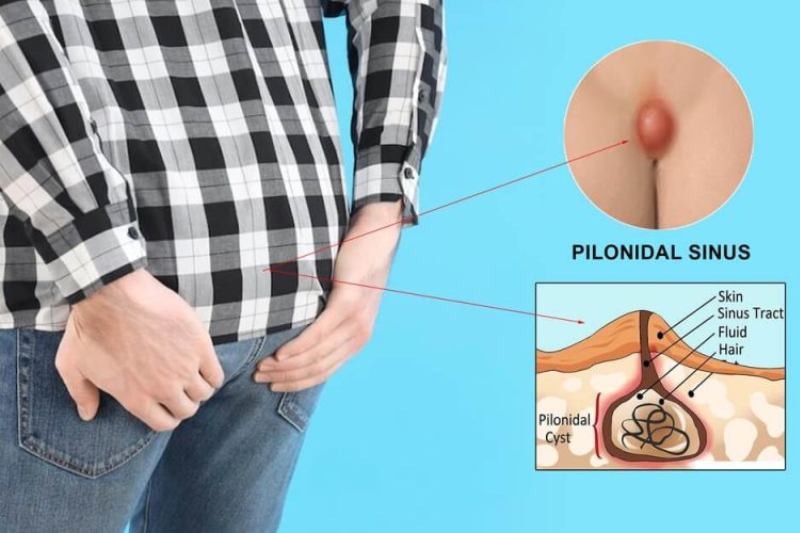
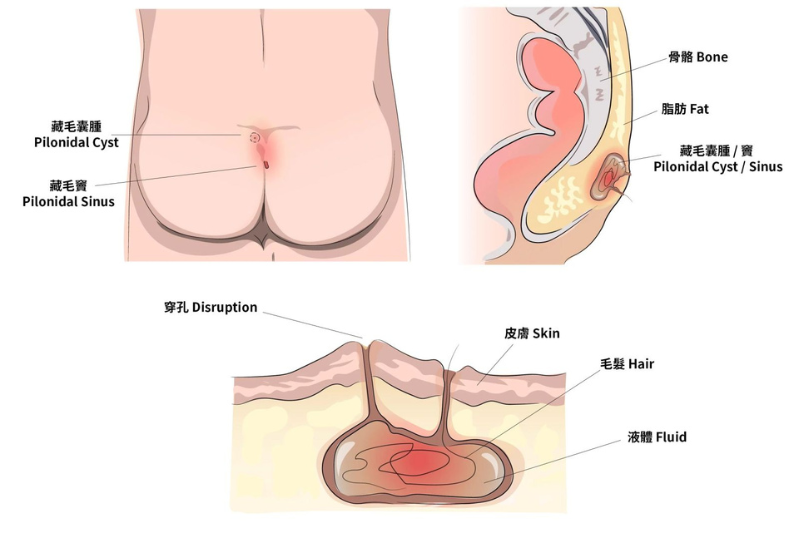
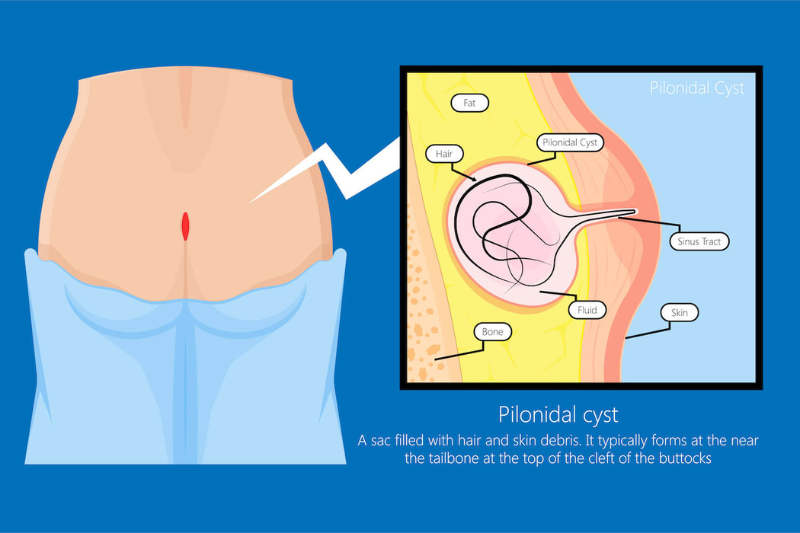
A pilonidal sinus is a small hole or tunnel in the skin — most commonly in the natal cleft (the crease between the buttocks, above the coccyx) — that contains hair, skin debris, and bacteria. It is a source of significant morbidity in young adults, typically presenting with recurrent abscess formation, chronic discharge, and pain that interferes with sitting, driving, and daily activities. SurgiPartner connects patients in Hyderabad with general surgeons experienced in modern pilonidal sinus surgery including laser ablation and flap repair techniques.
Pilonidal Sinus Treatment in Hyderabad — Laser Ablation, Surgical Excision
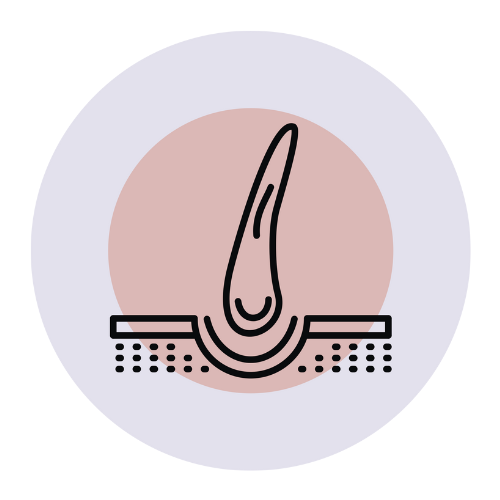
The exact mechanism of pilonidal sinus formation is debated, but the most widely accepted theory is the acquired hair penetration hypothesis: loose hairs in the natal cleft are driven into the skin by the friction and suction generated by the cleft’s movement during walking and sitting. Once embedded, the hair creates a foreign body reaction and infection — forming a sinus tract. The characteristic features of pilonidal disease: midline pits (small holes in the skin of the natal cleft) from which hairs often protrude; one or more lateral sinus openings from previous abscesses; and a chronic cavity containing hair, granulation tissue, and bacteria.
Risk Factors
- Male sex — 3–4× more common in men; testosterone drives coarser body hair
- Hirsutism — thick, coarse body hair in the gluteal region is the primary risk factor
- Obesity — deep natal cleft with poor ventilation creates a moist, hair-trapping environment
- Prolonged sitting — drivers, office workers, students with sedentary occupations
- Age 15–35 years — pilonidal disease is a disease of young adults; rare after age 40
- Poor natal cleft hygiene — inadequate cleansing allows hair accumulation
- Previous pilonidal abscess — the strongest predictor; once pilonidal disease occurs, recurrence without definitive treatment is almost universal
Clinical Presentations
| Presentation | Features | Management |
|---|---|---|
| Asymptomatic pilonidal pits | Incidental finding; midline pits only; no discharge or abscess | Conservative — regular shaving/depilation of natal cleft; improved hygiene |
| Acute pilonidal abscess | Sudden painful fluctuant swelling; fever; extremely tender; cannot sit comfortably | Emergency incision and drainage under local anaesthesia; definitive excision planned after healing (6–8 weeks) |
| Chronic pilonidal sinus | Persistent or intermittent discharge from one or more lateral openings; mild chronic pain; never fully heals | Definitive surgical excision — technique selected based on disease extent |
| Complex / recurrent pilonidal disease | Multiple lateral openings; extensive tract; previous failed surgery | Flap reconstruction (Karydakis, Limberg, or cleft lift) to reshape the natal cleft; laser ablation for selected cases |
Treatment Options
Conservative Management — Prevention and Minor Disease
Regular depilation of the natal cleft — by shaving (weekly), laser hair removal, or depilatory cream — removes the hair penetration mechanism and is the cornerstone of both primary prevention and post-operative recurrence prevention. Combined with improved natal cleft hygiene (washing daily with soap and water; keeping the area dry), this approach can control mild disease and prevent recurrence after successful surgery.
SiLaC — Laser Pilonidal Sinus Ablation
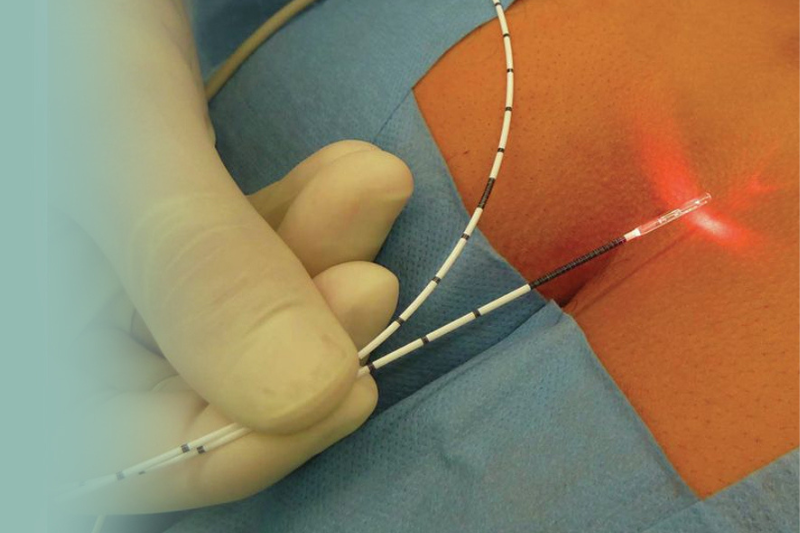
SiLaC (Sinus Laser Closure) / FiLaC applied to pilonidal disease uses a radially emitting diode laser fibre inserted into the pilonidal sinus tract through the external opening — delivering laser energy to destroy the sinus epithelium from within as the probe is withdrawn. The tracts collapse and obliterate. Midline pits are excised separately with small punch biopsies.
- Advantages: No open wound; same-day discharge; minimal post-operative pain; very rapid return to activity (2–5 days)
- Success rate: 70–85% primary healing for simple pilonidal disease; lower for complex or recurrent disease
- Best candidates: Simple pilonidal sinus with 1–2 lateral openings; primary (not recurrent) disease; patients who cannot afford prolonged wound recovery
Wide Excision with Primary Closure — For Simple Disease
All pilonidal pits and sinuses are excised as an ellipse down to the presacral fascia; wound closed primarily in the midline. Simple and fast, but high recurrence rate (up to 30%) due to midline scar tension in the deep natal cleft — not the preferred technique for anything beyond minimal disease.
Karydakis Flap — Standard Flap Technique
The Karydakis procedure excises the pilonidal disease off-midline and advances a full-thickness skin flap from one side to close the defect — moving the suture line away from the natal cleft midline. Key principle: removing the deep natal cleft by flattening it eliminates the hair-trapping mechanism and dramatically reduces recurrence. Recurrence rate: 3–5% (significantly better than midline closure). The preferred technique for moderate pilonidal disease at SurgiPartner partner hospitals in Hyderabad.
Limberg Rhomboid Flap and Cleft Lift (Bascom)
More extensive reconstructive flap techniques for complex or recurrent pilonidal disease with wide tissue excision requirements. The Limberg flap transposes a rhomboid-shaped flap of skin and subcutaneous tissue to cover the defect; the cleft lift (Bascom procedure) excises the deep natal cleft asymmetrically and reconstructs a flatter, shallower cleft. Both provide the lowest recurrence rates for complex disease.
Frequently Asked Questions — Pilonidal Sinus Treatment Hyderabad
Why Choose SurgiPartner?
Choosing SurgiPartner means choosing advanced surgical expertise supported by compassionate and patient-focused care. We ensure safe procedures, clear communication, and a smooth treatment journey from consultation to complete recovery.
01.
Experienced Surgeons
We use modern minimally invasive and laser-based procedures that reduce pain, bleeding, and hospital stay. These advanced techniques promote faster healing and improved patient comfort.
02.
Advanced Minimally Invasive & Laser Techniques
We use minimally invasive laparoscopic methods for reduced scarring, less pain, and quicker recovery compared to open surgery.
03.
Personalized Treatment Plans
Each treatment plan is tailored according to disease severity, medical history, and lifestyle needs. This personalized approach helps deliver better outcomes and faster recovery.
04.
Pain-Free & Fast Recovery
Our care continues even after surgery with guided recovery plans and regular follow-ups. This ensures proper healing, early issue detection, and lasting comfort.
Book Your Consultation
Take the first step toward a pain-free, active life with SurgiPartner Advanced Pilonidal Sinus Treatment. Our experts are here to provide precise, safe, and lasting relief.
Live free from pain and discomfort that’s the SurgiPartner promise.
What Our Patients Say

Posted on GoogleTrustindex verifies that the original source of the review is Google. I am thoroughly impressed with the SurgiPartner model, which delivers integrated, end-to-end patient support across the healthcare continuum—from initial consultations to treatment and surgical interventions, where necessary. I recently availed their Care Buddy service for a consultation, and the experience was highly seamless, efficient, and professionally managed. The structured Care Buddy support, combined with well-aligned financial assistance processes, significantly enhances the overall patient journey. This holistic and patient-centric approach effectively streamlines access to quality healthcare, making it more efficient and convenient in today’s dynamic environment.Posted on GoogleTrustindex verifies that the original source of the review is Google. I’m really impressed with the SurgiPartner concept. They provide end-to-end patient support—from doctor consultations to treatment and even surgery when required. I personally used their Care Buddy service for a consultation, and it was a smooth and positive experience. The Care Buddy assistance, along with support in financial processes, makes healthcare much more convenient, especially in today’s fast-paced lifestyle.Posted on GoogleTrustindex verifies that the original source of the review is Google. My Brother Arun Kumar and krishna from Bangalore. We are travelled to Hyderabad for LASIK surgery, and today we successfully underwent the procedure at American Laser Eye Hospital. The surgery went very smoothly and I am feeling very good after the procedure. The hospital environment is very clean and well maintained. All the staff and doctors are very polite, supportive, and professional. A special thanks to SurgiPartner CareBuddy for guiding and helping me throughout the entire process. From the beginning till the end of the day, they were with us at every step and provided excellent support. Overall, I had a very good experience and I highly recommend American Laser Eye Hospital for LASIK surgery with SurgiPartner support.Posted on GoogleTrustindex verifies that the original source of the review is Google. Really impressed with the concept of SurgiPartner. They offer complete patient support from doctor consultation to treatment and surgery if needed. I personally took a consultation through their Care buddy, and it was a great experience. The care buddy system and help with financial processes make healthcare much easier, especially in today’s busy world.Posted on GoogleTrustindex verifies that the original source of the review is Google. My name is Arun Kumar and I am from Bangalore. I traveled to Hyderabad for LASIK surgery, and today I successfully underwent the procedure at American Laser Eye Hospital. The surgery went very smoothly and I am feeling very good after the procedure. The hospital environment is very clean and well maintained. All the staff and doctors are very polite, supportive, and professional. A special thanks to SurgiPartner CareBuddy for guiding and helping me throughout the entire process. From the beginning till the end of the day, they were with us at every step and provided excellent support. Overall, I had a very good experience and I highly recommend American Laser Eye Hospital for LASIK surgery with SurgiPartner supportPosted on GoogleTrustindex verifies that the original source of the review is Google. Thank you for the support and service provided by SurgiPartner. The overall experience was smooth and the team was very helpful.Posted on GoogleTrustindex verifies that the original source of the review is Google. Staff is very good and nice receiving. They are very humble and their response is very good. Thank youPosted on GoogleTrustindex verifies that the original source of the review is Google. I want to thank Surgipartner for all the help and support during my LASIK surgery. From the beginning till the end, the team was very proactive with follow-ups and guided me clearly through every step, which made the whole experience easy and stress-free. I would especially like to appreciate CareBuddy Raju and Coordinator Anusha for their outstanding support. They were always in touch with both the hospital staff and me, helped reduce waiting time, and made sure everything went smoothly. Their care, quick responses, and constant guidance really made a big difference. Overall, I had a very positive experience and truly appreciate the support provided by Surgipartner.Verified by TrustindexTrustindex verified badge is the Universal Symbol of Trust. Only the greatest companies can get the verified badge who has a review score above 4.5, based on customer reviews over the past 12 months. Read more
How SurgiPartner Supports You — From First Call to Full Recovery
Follow your step-by-step guide to a successful surgery and recovery, with our expert team supporting you all the way.
Book FREE Consultation
Fill in your details and we'll call you back to confirm your slot.