Get Back to Pain-Free Movement with SurgiPartner Advanced Meniscus Tear Treatment
Stabilize the Knee. Relieve Pain. Return to an Active Lifestyle
Meniscus Tear Treatment in Hyderabad — Arthroscopic Repair & Meniscectomy
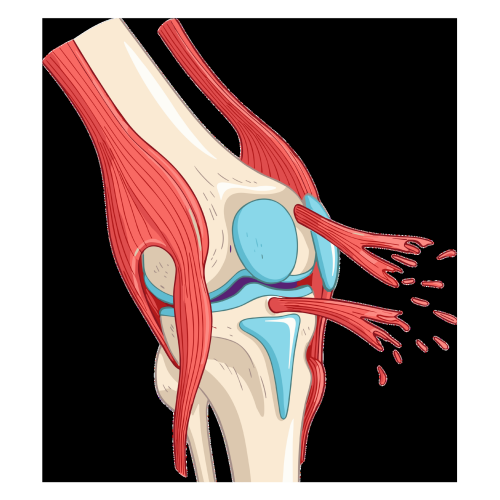
Meniscus tears are among the most common knee injuries, occurring in both athletes and older adults. The treatment decision — repair or partial removal — significantly affects long-term knee health. SurgiPartner connects patients in Hyderabad with specialist knee arthroscopists who prioritise meniscal preservation through repair wherever possible
What Is the Meniscus and Why Is It Important?
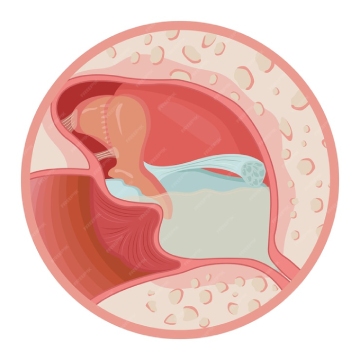
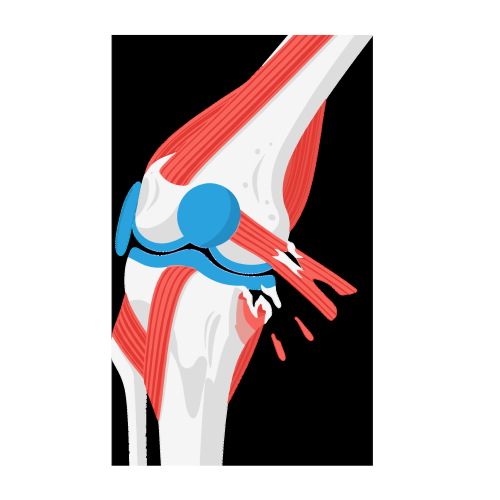
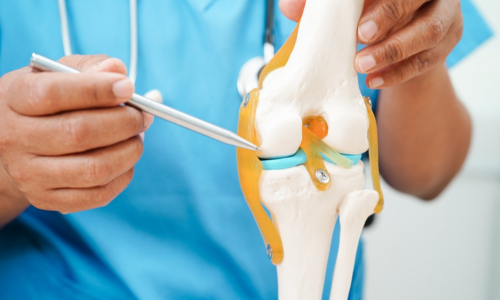
Each knee has two menisci — the medial meniscus (inner side) and the lateral meniscus (outer side). These crescent-shaped fibrocartilaginous structures sit between the femoral condyles and the tibial plateau. Their functions are critical and multiple: they distribute load by increasing contact area (reducing peak stress on articular cartilage by 50–70%), provide shock absorption, enhance knee stability (especially in ACL-deficient knees), and contribute to joint lubrication and proprioception.
The medical and surgical community has developed a profound appreciation for the importance of meniscal preservation over the past 20 years. Following the landmark finding that total meniscectomy dramatically accelerates knee arthritis, the philosophy has shifted decisively toward meniscal repair wherever possible — removing only what cannot be saved.
Types of Meniscal Tears — Classification
| Tear Pattern | Description | Repair Potential | Common Cause |
|---|---|---|---|
| Vertical longitudinal tear | Tear running along the circumference of the meniscus | High (if in vascular zone) | Sports injury, ACL tear |
| Bucket handle tear | Large longitudinal tear displacing the inner rim like a bucket handle | High if acute; repair priority | Young athletes; ACL tear |
| Radial tear | Tear extending from inner rim outward, across the hoop fibres | Low to moderate | Degenerative; twisting |
| Horizontal (cleavage) tear | Horizontal plane tear separating the meniscus into top and bottom leaves | Low | Degenerative (40+) |
| Complex/degenerative tear | Multiple planes involved; often with degenerate tissue | Low; partial meniscectomy | Age-related degeneration |
| Root tear | Tear at the meniscal attachment to bone — functional equivalent of meniscectomy | High if acute — repair essential | Sudden squat; twisting |
Meniscal Vascularity — Why It Determines Treatment
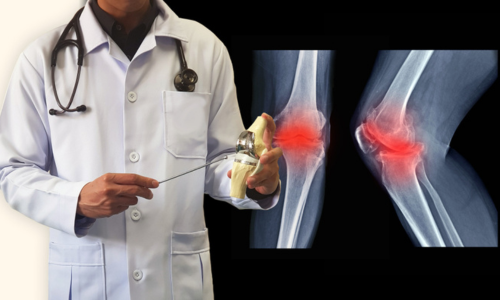
The meniscus receives blood supply only in its outer 25–30% (the “red zone”). Tears in the vascular red zone have healing potential and are amenable to repair. Tears in the inner avascular “white zone” have no blood supply and cannot heal — they require partial meniscectomy (trimming of the torn portion). The “red-white zone” (middle third) has intermediate healing potential and repair is attempted in younger patients. This vascular anatomy dictates whether a tear can be repaired or must be trimmed.
Symptoms of Meniscal Tears
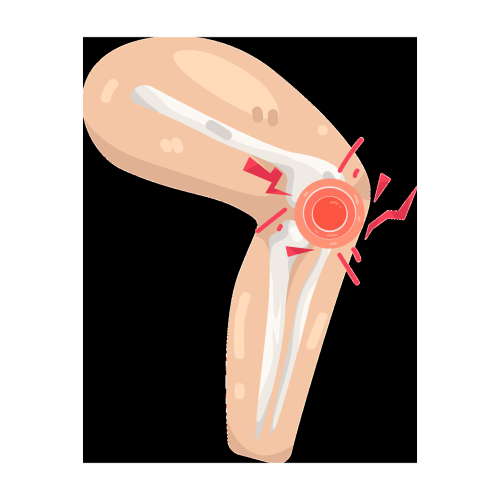
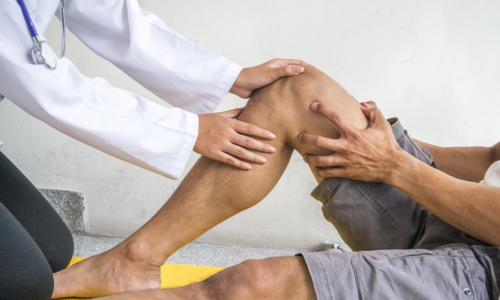
- Joint line pain — tenderness on palpation of the medial or lateral joint line of the knee
- Swelling — moderate knee effusion developing hours after injury (slower than ACL haemarthrosis)
- Mechanical symptoms — clicking, catching, or locking of the knee during movement. A locked knee (inability to fully extend) suggests a displaced bucket handle tear requiring urgent surgery
- Pain with deep squatting — particularly at the end of range (McMurray’s test positive)
- Giving way — instability, particularly combined with ACL tear
Treatment Options for Meniscal Tears
Conservative Management
Small, stable, peripheral tears in the vascular zone may heal without surgery with: RICE (rest, ice, compression, elevation), physiotherapy, and activity modification for 6–12 weeks. Degenerative tears in older patients often respond well to conservative management including physiotherapy and intra-articular injections, with surgery reserved for persistent mechanical symptoms.
Arthroscopic Partial Meniscectomy
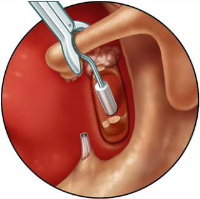
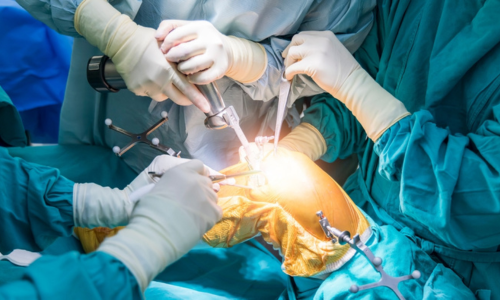
Removal of only the unstable, torn portion of the meniscus while preserving as much normal meniscal tissue as possible. Using a shaver and punch inserted arthroscopically, the torn fragment is removed and the remaining meniscus is contoured to a stable margin. Recovery is rapid — return to walking in 1–2 days, light work in 1 week, and sport in 4–6 weeks. Avoidance of removing healthy meniscus is critically important.
Arthroscopic Meniscal Repair
Tear repair is performed using all-inside suture devices, inside-out, or outside-in suture techniques depending on tear location and pattern. The torn edges are freshened (rasped) to stimulate bleeding and healing, then sutured to bring the edges together. Repair is preferred for: acute tears in young active patients, vertical/longitudinal tears in the red zone, bucket handle tears, root tears, and tears associated with ACL reconstruction (the vascularity stimulated by ACL surgery enhances meniscal healing).
Recovery after meniscal repair requires 6–8 weeks of protected weight bearing to allow the repair to heal, followed by a structured physiotherapy programme. Return to sport takes 4–6 months — significantly longer than meniscectomy, but the long-term benefit of preserving the meniscus justifies this.
Frequently Asked Questions — Meniscus Tear Hyderabad
Recovery timelines differ significantly between the two procedures. After partial meniscectomy: walking the same day, light work in 1 week, sport in 4–6 weeks. After meniscal repair: protected weight bearing for 6–8 weeks, light work in 4–6 weeks, sport in 4–6 months. The longer recovery after repair reflects the time needed for biological healing of the repaired tissue. SurgiPartner's physiotherapy team provides structured rehabilitation protocols for both procedures.
Why Choose SurgiPartner?
Choosing SurgiPartner means choosing expertise, advanced care, and long-term joint health.
01.
Experienced Hand & Orthopedic Surgeons
Our specialists have extensive experience in treating meniscus tears and complex knee injuries.
02.
Advanced Arthroscopic Technology
We use modern arthroscopy systems for precise diagnosis and repair.
03.
Personalized Treatment Plans
Each patient receives a tailored treatment and physiotherapy program.
04.
Pain-Controlled & Faster Recovery
Most patients resume daily activities within weeks with guided rehabilitation.
Book Your Consultation
Take the first step toward pain-free knee movement with SurgiPartner best and advanced meniscus tear treatment. Our experts are here to guide you through safe, effective knee care.
Strong knees. Confident movement.
View SurgiPartner on Google

Posted on Google
 saikiran challa
Trustindex verifies that the original source of the review is Google.
I am thoroughly impressed with the SurgiPartner model, which delivers integrated, end-to-end patient support across the healthcare continuum—from initial consultations to treatment and surgical interventions, where necessary. I recently availed their Care Buddy service for a consultation, and the experience was highly seamless, efficient, and professionally managed. The structured Care Buddy support, combined with well-aligned financial assistance processes, significantly enhances the overall patient journey. This holistic and patient-centric approach effectively streamlines access to quality healthcare, making it more efficient and convenient in today’s dynamic environment.Posted on Google vasantha kumari buggalaI’m really impressed with the SurgiPartner concept. They provide end-to-end patient support—from doctor consultations to treatment and even surgery when required. I personally used their Care Buddy service for a consultation, and it was a smooth and positive experience. The Care Buddy assistance, along with support in financial processes, makes healthcare much more convenient, especially in today’s fast-paced lifestyle.Posted on Google
 krishna nayakMy Brother Arun Kumar and krishna from Bangalore. We are travelled to Hyderabad for LASIK surgery, and today we successfully underwent the procedure at American Laser Eye Hospital. The surgery went very smoothly and I am feeling very good after the procedure. The hospital environment is very clean and well maintained. All the staff and doctors are very polite, supportive, and professional. A special thanks to SurgiPartner CareBuddy for guiding and helping me throughout the entire process. From the beginning till the end of the day, they were with us at every step and provided excellent support. Overall, I had a very good experience and I highly recommend American Laser Eye Hospital for LASIK surgery with SurgiPartner support.Posted on Google
 ManaswiReally impressed with the concept of SurgiPartner. They offer complete patient support from doctor consultation to treatment and surgery if needed. I personally took a consultation through their Care buddy, and it was a great experience. The care buddy system and help with financial processes make healthcare much easier, especially in today’s busy world.Posted on Google
 Arun NayakMy name is Arun Kumar and I am from Bangalore. I traveled to Hyderabad for LASIK surgery, and today I successfully underwent the procedure at American Laser Eye Hospital. The surgery went very smoothly and I am feeling very good after the procedure. The hospital environment is very clean and well maintained. All the staff and doctors are very polite, supportive, and professional. A special thanks to SurgiPartner CareBuddy for guiding and helping me throughout the entire process. From the beginning till the end of the day, they were with us at every step and provided excellent support. Overall, I had a very good experience and I highly recommend American Laser Eye Hospital for LASIK surgery with SurgiPartner supportPosted on Google
 Shankar S ShankruThank you for the support and service provided by SurgiPartner. The overall experience was smooth and the team was very helpful.Posted on Google
 Thejasree KStaff is very good and nice receiving. They are very humble and their response is very good. Thank youPosted on Google
 Srihari ReddyI want to thank Surgipartner for all the help and support during my LASIK surgery. From the beginning till the end, the team was very proactive with follow-ups and guided me clearly through every step, which made the whole experience easy and stress-free. I would especially like to appreciate CareBuddy Raju and Coordinator Anusha for their outstanding support. They were always in touch with both the hospital staff and me, helped reduce waiting time, and made sure everything went smoothly. Their care, quick responses, and constant guidance really made a big difference. Overall, I had a very positive experience and truly appreciate the support provided by Surgipartner.Verified by TrustindexTrustindex verified badge is the Universal Symbol of Trust. Only the greatest companies can get the verified badge who has a review score above 4.5, based on customer reviews over the past 12 months. Read more
How SurgiPartner Supports You — From First Call to Full Recovery
Follow your step-by-step guide to a successful surgery and recovery, with our expert team supporting you all the way.
Find Doctor & Hospital Support
Fill in your details and we'll call you back to confirm your slot.