Piles Treatment in Hyderabad — Laser Surgery
Get expert piles treatment in Hyderabad with laser and same-day discharge options. SurgiPartner offers free consultation, a clear written cost estimate, cashless insurance and free doorstep pickup. Call +91 9030053009 to know your exact cost.
Piles (haemorrhoids) are one of the most common anorectal conditions in India, affecting an estimated 75% of people at some point in their lifetime, with approximately 10 million new cases annually. Despite their prevalence, many patients in Hyderabad suffer in silence for months or years due to embarrassment — delaying treatment that is now more comfortable, effective, and faster-recovering than ever before with modern laser and minimally invasive techniques. SurgiPartner connects patients in Hyderabad with colorectal specialists for comfortable, confidential piles treatment.
What Are Piles? — Anatomy and Pathophysiology
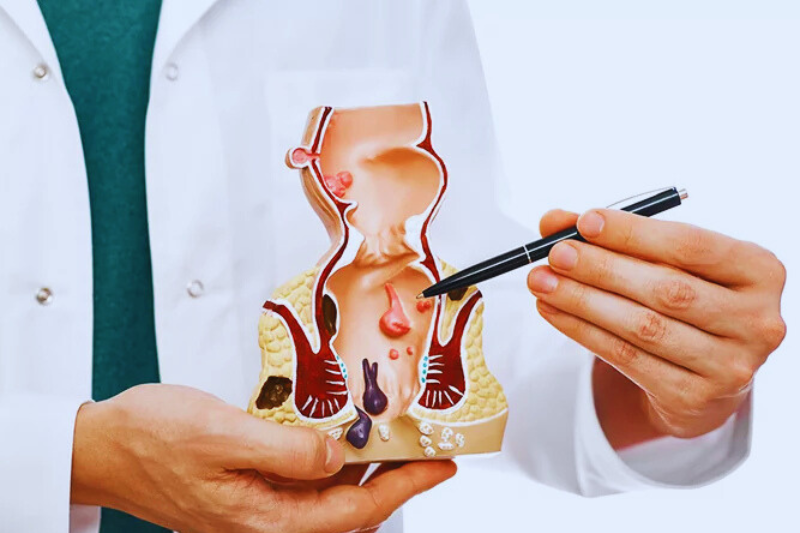
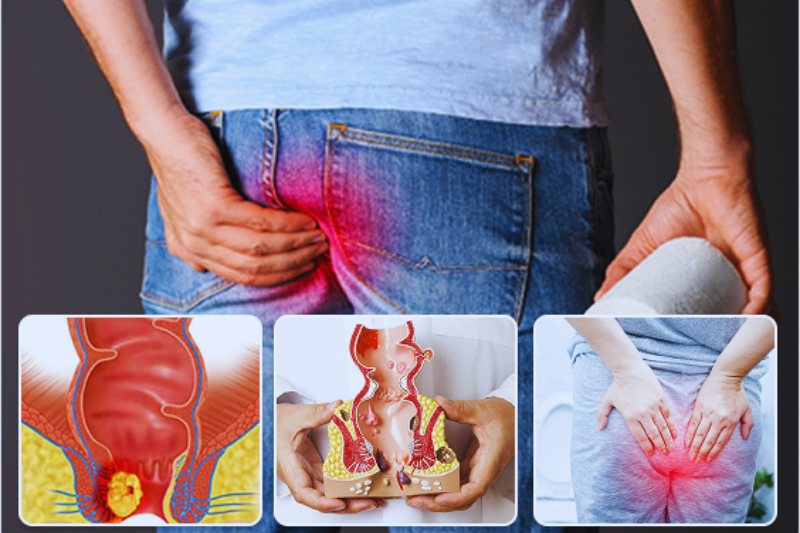
The anal canal contains three groups of vascular cushions — specialised submucosal structures at the 3, 7, and 11 o’clock positions that contain arteriovenous communications, smooth muscle, and elastic connective tissue. These cushions contribute to anal continence by swelling to fill the anal canal at rest and deflating during defecation. Haemorrhoids represent the pathological enlargement and prolapse of these cushions — caused by persistent straining, chronic constipation, high intra-abdominal pressure (obesity, pregnancy), and hereditary weakness of the supporting connective tissue.
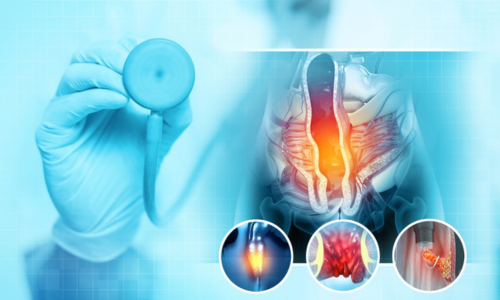

Internal vs External Haemorrhoids
| Feature | Internal Haemorrhoids | External Haemorrhoids |
|---|---|---|
| Location | Above the dentate line — inside the anal canal; lined by rectal mucosa; not sensitive to pain | Below the dentate line — at or outside the anal verge; covered by sensitive anal skin; very painful |
| Symptoms | Bright red rectal bleeding (painless); prolapse; mucous discharge; pruritus ani | Perianal swelling; pain (especially with thrombosis); itching; difficulty with hygiene |
| Pain | Usually painless unless prolapsed and thrombosed | Can be very painful — particularly acutely thrombosed external haemorrhoid |
| Treatment | Graded by degree of prolapse (Goligher Grades I–IV) | Conservative; thrombectomy for acute thrombosis within 72 hours |
Goligher Grading of Internal Haemorrhoids
| Grade | Description | Recommended Treatment |
|---|---|---|
| Grade I | Haemorrhoids bleed but do not prolapse; confined to anal canal; seen only on anoscopy/proctoscopy | Dietary modification (high fibre, increased fluids); sitz baths; topical agents; rubber band ligation |
| Grade II | Prolapse on straining but reduce spontaneously on relaxation | Rubber band ligation; sclerotherapy; infrared coagulation; laser treatment |
| Grade III | Prolapse on straining but require manual reduction | Laser haemorrhoidoplasty; MIPH (stapled haemorrhoidopexy); haemorrhoidectomy |
| Grade IV | Permanently prolapsed; cannot be reduced; may include gangrenous, strangulated, or thrombosed haemorrhoids | Haemorrhoidectomy (Milligan–Morgan or Ferguson); emergency haemorrhoidectomy if strangulated |
Piles surgery in nearby areas
We also coordinate surgical care across these Hyderabad neighbourhoods.
Modern Piles Treatments — Full Options
Conservative Management (All Grades as First Line)
High-fibre diet (30g fibre per day from fruits, vegetables, legumes, and whole grains); increased water intake (2.5–3 litres daily); avoidance of straining at stool; regular exercise; sitz baths (soaking in warm water for 10–15 minutes, 2–3 times daily); topical anaesthetic/steroid preparations for symptom relief. Conservative management resolves or controls Grade I–II haemorrhoids in many patients and is the essential foundation of treatment at all grades.
Laser Haemorrhoidoplasty (LHP) — The Modern Preferred Technique
Laser haemorrhoidoplasty uses a radially emitting laser fibre (diode laser 980nm or 1470nm) inserted into the haemorrhoidal pedicle through a small introducer needle — no incisions, no stitches. The laser energy causes shrinkage of the haemorrhoidal tissue through submucosal coagulation while preserving the overlying mucosa intact. Suitable for Grade I–III haemorrhoids. Performed under local or spinal anaesthesia as a day-care procedure.
- Minimal post-operative pain — no open wound; no sutures; topical anaesthetic sufficient for most patients
- Same-day discharge — virtually all patients go home the same day within 2–4 hours
- Return to work — most patients return to normal activities within 1–2 days
- Success rate — 85–95% symptom resolution at 1 year for Grade I–III haemorrhoids
MIPH — Minimally Invasive Procedure for Haemorrhoids (Stapled Haemorrhoidopexy)
MIPH (also known as PPH — Procedure for Prolapse and Haemorrhoids; or stapled haemorrhoidopexy) uses a circular stapling device to excise a donut-shaped ring of rectal mucosa above the haemorrhoidal cushions — lifting and repositioning the prolapsed haemorrhoids back into the anal canal, while simultaneously interrupting their blood supply causing them to shrink. Performed under spinal or general anaesthesia; same-day or overnight discharge.
- Suitable for Grade III and selected Grade IV circumferential haemorrhoids
- No perianal wounds — the staple line is above the dentate line (non-sensitive zone)
- Significantly less post-operative pain than conventional haemorrhoidectomy
- Faster return to work (5–7 days vs 2–4 weeks for haemorrhoidectomy)
- Higher recurrence rate compared to haemorrhoidectomy at 5+ years — NICE recommends discussing this before surgery
Conventional Haemorrhoidectomy — Milligan–Morgan (Open) and Ferguson (Closed)
The gold standard for definitive treatment of Grade III–IV haemorrhoids. The haemorrhoidal pedicle is ligated at its base and excised. Milligan–Morgan leaves the wound open to heal by secondary intention; Ferguson technique closes the wound primarily. Haemorrhoidectomy provides the lowest long-term recurrence rate of any technique but is associated with the most post-operative pain (managed with a multimodal analgesia protocol at SurgiPartner partner hospitals). Return to work: 2–4 weeks.
Rubber Band Ligation (RBL)
A small rubber band is placed at the base of the internal haemorrhoid using an anoscope-guided applicator — strangulating the haemorrhoid’s blood supply; it falls off within 7–10 days. Effective for Grade I–II haemorrhoids; requires 2–3 sessions for multiple haemorrhoids. Office-based procedure under no anaesthesia; mild discomfort for 24–48 hours. Complication: significant post-banding pain, haemorrhage (rare), and pelvic sepsis (rare but serious).
Frequently Asked Questions — Piles Treatment Hyderabad
No — and this is critically important. While haemorrhoids are the most common cause of rectal bleeding, particularly bright red blood on toilet paper or dripping into the toilet bowl, rectal bleeding can also result from: anal fissure (painful bleeding), colorectal polyps, colorectal cancer, inflammatory bowel disease (Crohn's disease, ulcerative colitis), diverticular disease, angiodysplasia, and infective colitis. Any rectal bleeding should be clinically evaluated — particularly in patients over 40, those with a change in bowel habit, weight loss, abdominal pain, or a family history of colorectal cancer. Do not assume rectal bleeding is haemorrhoids without medical assessment. At SurgiPartner Hyderabad, all patients presenting with rectal bleeding undergo proctoscopy and clinical assessment before any treatment — and colonoscopy is recommended for those over 40 or with concerning features. Call +91 9030053009.
These three common anorectal conditions are frequently confused by patients. Piles (haemorrhoids) are swollen vascular cushions in the anal canal — causing painless bright red bleeding, prolapse, and mucous discharge. An anal fissure is a small tear or crack in the skin of the anal canal — causing severe pain during and after bowel movements with bright red blood, often associated with constipation. An anal fistula is an abnormal tunnel or tract connecting the anal canal or rectum to the skin around the anus — causing persistent discharge of pus and fluid from a perianal opening, often with a history of previous perianal abscess. Each condition has distinct symptoms, causes, and treatments. It is common for patients to have more than one condition simultaneously — all three conditions are assessed at SurgiPartner partner clinics in Hyderabad. Call +91 9030053009 for a confidential assessment.
Yes — surgical treatment of haemorrhoids (piles surgery) including laser haemorrhoidoplasty, MIPH/PPH, and conventional haemorrhoidectomy is covered under most health insurance plans in India when medically indicated (Grade II or above, or Grade I with failed conservative management). Rubber band ligation performed as an office procedure under local anaesthesia may be covered under outpatient benefits depending on the policy. SurgiPartner's insurance team verifies specific procedure coverage and handles all pre-authorisation at partner hospitals in Hyderabad. Call +91 9030053009 to confirm your coverage and book a private consultation with a colorectal specialist.
Modern piles surgery in Hyderabad, especially laser treatment, is nearly painless. It is done under anaesthesia, so you feel no pain during the procedure, and laser causes far less post-operative discomfort than traditional surgery.
Surgery is usually advised for grade 3 and grade 4 piles, or when bleeding, pain or prolapse do not improve with medicines and lifestyle changes.
Why Choose SurgiPartner?
Choosing SurgiPartner means choosing comfort, technology, and care. Our advanced Laser Piles Treatment offers painless, scar-free, and quick recovery solutions helping patients get back to normal life without discomfort.
01.
Expert Proctologists & Surgeons
Our experienced specialists have successfully treated thousands of patients with piles, fissures, and fistulas, ensuring safe and lasting results.
02.
Advanced Laser Treatment Technology
We use FDA-approved laser systems that ensure a bloodless, stitch-free, and painless procedure with minimal risk of recurrence.
03.
Personalized Treatment Plans
Every case is different - we customize treatment plans based on the severity and condition to ensure optimal healing and comfort.
04.
Quick, Pain-Free Recovery
Most patients are discharged the same day and resume normal activities within 24 hours with continuous post-treatment support and follow-up.
Request a Consultation
Take the first step toward pain-free living with SurgiPartner Advanced Laser Piles Treatment. Our specialists are here to provide safe, effective, and compassionate care.
Relief and comfort start here – that’s the SurgiPartner promise.
View SurgiPartner on Google

Posted on Google
 saikiran challa
Trustindex verifies that the original source of the review is Google.
I am thoroughly impressed with the SurgiPartner model, which delivers integrated, end-to-end patient support across the healthcare continuum—from initial consultations to treatment and surgical interventions, where necessary. I recently availed their Care Buddy service for a consultation, and the experience was highly seamless, efficient, and professionally managed. The structured Care Buddy support, combined with well-aligned financial assistance processes, significantly enhances the overall patient journey. This holistic and patient-centric approach effectively streamlines access to quality healthcare, making it more efficient and convenient in today’s dynamic environment.Posted on Google vasantha kumari buggalaI’m really impressed with the SurgiPartner concept. They provide end-to-end patient support—from doctor consultations to treatment and even surgery when required. I personally used their Care Buddy service for a consultation, and it was a smooth and positive experience. The Care Buddy assistance, along with support in financial processes, makes healthcare much more convenient, especially in today’s fast-paced lifestyle.Posted on Google
 krishna nayakMy Brother Arun Kumar and krishna from Bangalore. We are travelled to Hyderabad for LASIK surgery, and today we successfully underwent the procedure at American Laser Eye Hospital. The surgery went very smoothly and I am feeling very good after the procedure. The hospital environment is very clean and well maintained. All the staff and doctors are very polite, supportive, and professional. A special thanks to SurgiPartner CareBuddy for guiding and helping me throughout the entire process. From the beginning till the end of the day, they were with us at every step and provided excellent support. Overall, I had a very good experience and I highly recommend American Laser Eye Hospital for LASIK surgery with SurgiPartner support.Posted on Google
 ManaswiReally impressed with the concept of SurgiPartner. They offer complete patient support from doctor consultation to treatment and surgery if needed. I personally took a consultation through their Care buddy, and it was a great experience. The care buddy system and help with financial processes make healthcare much easier, especially in today’s busy world.Posted on Google
 Arun NayakMy name is Arun Kumar and I am from Bangalore. I traveled to Hyderabad for LASIK surgery, and today I successfully underwent the procedure at American Laser Eye Hospital. The surgery went very smoothly and I am feeling very good after the procedure. The hospital environment is very clean and well maintained. All the staff and doctors are very polite, supportive, and professional. A special thanks to SurgiPartner CareBuddy for guiding and helping me throughout the entire process. From the beginning till the end of the day, they were with us at every step and provided excellent support. Overall, I had a very good experience and I highly recommend American Laser Eye Hospital for LASIK surgery with SurgiPartner supportPosted on Google
 Shankar S ShankruThank you for the support and service provided by SurgiPartner. The overall experience was smooth and the team was very helpful.Posted on Google
 Thejasree KStaff is very good and nice receiving. They are very humble and their response is very good. Thank youPosted on Google
 Srihari ReddyI want to thank Surgipartner for all the help and support during my LASIK surgery. From the beginning till the end, the team was very proactive with follow-ups and guided me clearly through every step, which made the whole experience easy and stress-free. I would especially like to appreciate CareBuddy Raju and Coordinator Anusha for their outstanding support. They were always in touch with both the hospital staff and me, helped reduce waiting time, and made sure everything went smoothly. Their care, quick responses, and constant guidance really made a big difference. Overall, I had a very positive experience and truly appreciate the support provided by Surgipartner.Verified by TrustindexTrustindex verified badge is the Universal Symbol of Trust. Only the greatest companies can get the verified badge who has a review score above 4.5, based on customer reviews over the past 12 months. Read more
How SurgiPartner Supports You — From First Call to Full Recovery
Follow your step-by-step guide to a successful surgery and recovery, with our expert team supporting you all the way.
Find Doctor & Hospital Support
Fill in your details and we'll call you back to confirm your slot.