
Safe Reconstruction • Natural Appearance • Lifelong Functional Improvement
Restore Facial Harmony & Confidence with SurgiPartner Advanced Cleft Lip Surgery
Advanced Cleft Lip Surgery in Hyderabad
Cleft lip — a congenital separation in the upper lip caused by failure of facial structures to fuse completely during foetal development between the 4th and 7th week of pregnancy — is one of the most common birth defects worldwide, occurring in approximately 1 in 700 births. In India, approximately 35,000 children are born with cleft lip and/or cleft palate annually. Despite its prevalence, cleft lip is highly correctable through surgery, achieving excellent functional and aesthetic outcomes with modern techniques. SurgiPartner connects families in Hyderabad with experienced paediatric plastic surgeons for complete cleft care — from initial diagnosis through surgery, speech therapy, and orthodontic management.


What Is Cleft Lip? What Is Cleft Palate?
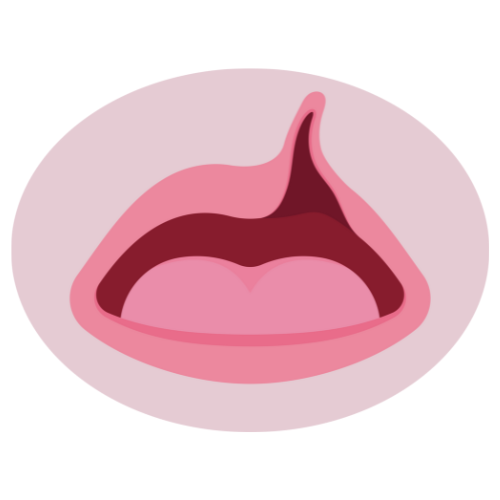
A cleft lip is a congenital opening or gap in the upper lip, ranging from a small notch in the lip margin to a complete split extending from the lip through the gum (alveolus) into the nose. It results from failure of the medial nasal and maxillary processes to fuse during early embryonic facial development.
A cleft palate is a congenital opening in the roof of the mouth (palate), which may involve only the soft palate (velum), both the hard and soft palate, or extend through the alveolus to join a cleft lip. It results from failure of the palatal shelves to fuse at the midline during the 6th–12th weeks of gestation.
Cleft lip and palate can occur separately or together (combined cleft lip and palate), on one side (unilateral) or both sides (bilateral). Each combination requires a specific surgical plan. SurgiPartner’s craniofacial surgeons assess every child individually and develop a personalised surgical timeline tailored to their exact cleft anatomy.
Classification of Cleft Lip
| Type | Description | Surgical Complexity |
|---|---|---|
| Incomplete unilateral cleft lip | Cleft on one side that does not extend to the nostril floor; variable depth | Moderate; excellent outcomes |
| Complete unilateral cleft lip | Full-thickness cleft on one side extending through the lip into the nostril floor; often with cleft alveolus (gum) | Significant; requires nasal repair alongside lip repair |
| Incomplete bilateral cleft lip | Bilateral clefts not reaching the nostrils; central premaxilla present | Moderate complexity; bilateral symmetry essential |
| Complete bilateral cleft lip | Full bilateral clefts with prolabium (isolated central lip segment) and protruding premaxilla; almost always with cleft palate | Most complex; two-stage repair often required; specialised centre essential |
Timing of Cleft Lip Repair
The Rule of Tens guides optimal timing for cleft lip repair: the infant should weigh at least 10 pounds (4.5kg), have a haemoglobin of at least 10g/dL, and be at least 10 weeks of age. This corresponds to approximately 3–6 months of age for most Indian infants. Surgery at this age allows adequate tissue volume for repair while the lip tissue has not been irreversibly distorted by untreated cleft mechanics.
Pre-surgical nasoalveolar moulding (PNAM) — a specialised technique using custom nasal stents and lip taping, started in the neonatal period — gradually reshapes the alveolar segments and nasal cartilages before surgery, significantly improving surgical outcomes for complete cleft lip by approximating the cleft edges and correcting nasal deformity before repair.
What Causes Cleft Lip and Palate? — Risk Factors
Cleft lip and palate are multifactorial — caused by a combination of genetic susceptibility and environmental exposures during the critical first trimester. Established risk factors include:
- Family history: Risk increases significantly if a parent or sibling has a cleft — the recurrence risk is approximately 4% for first-degree relatives without a syndrome
- Folate deficiency during the first 12 weeks of pregnancy — daily folic acid supplementation before and during early pregnancy significantly reduces cleft risk
- Maternal smoking and alcohol use during the first trimester
- Certain medications: Anti-epileptic drugs (phenytoin, valproate), retinoids (isotretinoin), corticosteroids, and methotrexate taken during early pregnancy
- Maternal diabetes — particularly uncontrolled pre-gestational diabetes
- Genetic syndromes: Van der Woude syndrome, 22q11.2 deletion (DiGeorge), Stickler syndrome, and others account for approximately 30% of cleft palate cases
In most cases (approximately 70%), no single identifiable cause is found — the cleft is described as non-syndromic. Genetic counselling is recommended for all families after the birth of an affected child to understand recurrence risk in future pregnancies.
Surgical Techniques
Millard Rotation-Advancement (Most Widely Used)
The Millard technique uses two flaps — a rotation flap from the medial lip element and an advancement flap from the lateral element — to close the cleft while recreating the natural Cupid’s bow of the upper lip and creating a well-positioned philtral column. The scar follows the natural philtral ridge, making it nearly invisible within natural lip anatomy. The orbicularis oris muscle is meticulously reconstructed to restore normal lip function and symmetry.
Pre-Surgical Nasoalveolar Moulding (NAM) — What Is It?
NAM (Nasoalveolar Moulding) is a non-surgical preparation technique performed in the 6–10 weeks before cleft lip repair in selected patients with wide clefts or bilateral clefts. A customised intraoral plastic appliance (similar to a dental plate) is fitted to the baby’s gum and adjusted weekly. It gradually moulds the alveolar segments into better alignment, stretches the nasal cartilages, and reduces the width of the lip gap — making lip surgery technically easier, allowing a more tension-free closure, and producing superior nasal symmetry results. NAM is offered selectively at SurgiPartner for cases where its benefits justify the weekly clinic visits required.
Multi-Disciplinary Cleft Team at SurgiPartner Hyderabad
Optimal cleft outcomes require coordinated care across multiple specialties throughout childhood and adolescence. SurgiPartner’s cleft multidisciplinary team (MDT) meets regularly and includes:
- Craniofacial / Plastic Surgeon — surgical reconstruction at all stages
- Speech-Language Pathologist — speech assessment, therapy, and VPI management
- Paediatric ENT Surgeon — ear tube insertion (grommets) and hearing management
- Audiologist — hearing screening and monitoring (cleft palate significantly increases otitis media risk)
- Orthodontist — dental arch alignment, pre-bone graft orthodontics
- Paediatric Dentist — dental health, cleft tooth management
- Geneticist — syndrome identification, family counselling, recurrence risk assessment
- Psychologist — child and family psychological support throughout treatment
- Cleft Nurse Coordinator — your single point of contact, coordinating all appointments and care
This integrated team approach — which follows international standards from ACPA (American Cleft Palate-Craniofacial Association) — ensures every child receives the right treatment at the right time, with seamlessly coordinated care from every specialty.
Adult Cleft Surgery — It Is Never Too Late
A significant number of adults in India carry unrepaired or inadequately repaired cleft deformities — having grown up without access to specialist care. SurgiPartner’s craniofacial surgeons have extensive experience in adult cleft repair and revision, including: adult primary lip repair, secondary lip and nasal revision (cleft rhinoplasty), alveolar bone grafting in adults, palatoplasty and pharyngoplasty for speech improvement, and orthognathic surgery for jaw realignment. Adults seeking cleft repair should know that while timing in childhood is ideal, excellent functional and aesthetic results are consistently achievable in adults. The emotional and social transformation following adult cleft correction is often profound.
Frequently Asked Questions — Cleft Lip Surgery Hyderabad
Why Choose SurgiPartner for Cleft Lip Surgery?
Choosing SurgiPartner means choosing expert reconstructive care with compassion and precision.
01.
Highly Experienced Reconstructive Surgeons
Specialists trained in pediatric plastic and craniofacial surgery.
02.
Advanced Surgical Techniques
Modern methods focused on minimal scarring and natural appearance.
03.
Multidisciplinary Child Care
Coordinated support from pediatricians, speech therapists, and dentists.
04.
Long-Term Follow-Up & Support
Guided care through growth, speech development, and dental planning.
Book Your Consultation
Take the first step toward relief from abdominal pain with SurgiPartner Advanced Appendectomy Surgery.
Live free from pain and discomfort that’s the SurgiPartner promise.
Cleft Lip Surgery – Parent Experiences
“The results were beautiful, and my baby feeds normally now.”
Your Personalized Path to Wellness
Follow your step-by-step guide to a successful surgery and recovery, with our expert team supporting you all the way.
Book FREE Consultation
Fill in your details and we'll call you back to confirm your slot.