Minimally Invasive Sinus Care • Long-Term Relief • Faster Recovery
Breathe Freely Again with SurgiPartner Advanced FESS Surgery (Sinus Endoscopy)
FESS Surgery in Hyderabad — Functional Endoscopic Sinus Surgery for Sinusitis
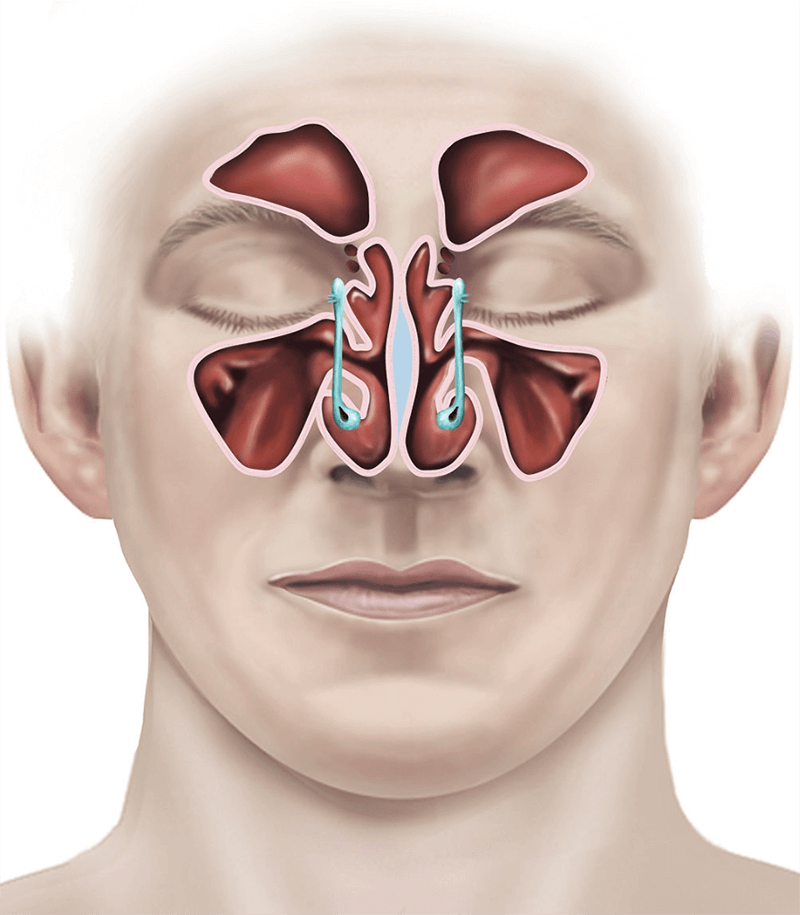
Functional Endoscopic Sinus Surgery (FESS) is the internationally established, minimally invasive surgical standard for chronic rhinosinusitis, nasal polyposis, and anatomical sinus obstruction. Performed entirely through the nostrils using a rigid endoscope — no external incisions, no facial cuts, no nasal packing in most cases — FESS restores natural sinus drainage pathways under direct magnified visualisation. SurgiPartner connects patients in Hyderabad with ENT surgeons experienced in FESS, image-guided sinus surgery, and combined sinus and nasal procedures.


What Does FESS Treat? Complete Indications
- Chronic rhinosinusitis (CRS) without polyps — bilateral sinus disease lasting 12+ weeks despite medical therapy; the most common indication for FESS
- Chronic rhinosinusitis with nasal polyps (CRSwNP) — polypoid disease causing bilateral nasal obstruction, loss of smell, and bilateral sinus opacification on CT
- Recurrent acute rhinosinusitis — four or more separate episodes per year in a patient with anatomical drainage obstruction on CT
- Allergic fungal sinusitis (AFS) — a specific form of chronic sinusitis caused by hypersensitivity to inhaled fungi; characterised by characteristic CT findings, dense allergic mucin, and positive fungal cultures
- Sinus mucocele — an expanding cyst from obstructed sinus causing erosion of surrounding bone; requires surgical marsupialisation via FESS
- Anatomical causes of obstruction — concha bullosa (pneumatised middle turbinate), paradoxical middle turbinate, Haller cells (infraorbital ethmoidal cells) — identified on CT and corrected at FESS
- Orbital or intracranial complications — subperiosteal orbital abscess secondary to ethmoid sinusitis; intracranial extension requiring combined ENT and neurosurgical approach
- Biopsy of sinus tumours — endoscopic biopsy and occasionally resection of sinonasal tumours
Pre-operative Assessment — What Is Required Before FESS?
A CT scan of the paranasal sinuses (non-contrast, 1mm axial cuts, coronal and sagittal reconstructions) is mandatory before FESS — it is the surgeon’s roadmap. The CT identifies the extent of sinus disease, critical anatomical landmarks (skull base height, orbital wall position, anterior ethmoidal artery location), anatomical variants, and the specific sinuses requiring surgery. Nasal endoscopy complements CT by providing direct mucosal assessment. Allergy testing is recommended in patients with suspected allergic rhinitis driving chronic sinusitis.


FESS Procedure — Step by Step
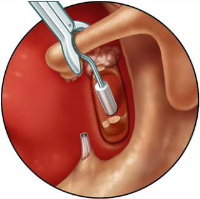
FESS is performed under general anaesthesia. The patient is positioned supine with the head slightly elevated. The nose is decongested with topical vasoconstrictors to reduce bleeding. A rigid 0° or 30° endoscope is inserted through the nostril, providing a magnified, high-definition view of the nasal passages, middle meatus, and sinus drainage pathways displayed on a monitor.
Working through the endoscope alongside specialised instruments, the surgeon systematically opens the obstructed sinuses in a medial-to-lateral, anterior-to-posterior sequence — uncinectomy (removing the uncinate process), maxillary antrostomy (widening the maxillary sinus natural opening), anterior ethmoidectomy, posterior ethmoidectomy, sphenoidotomy, and frontal sinusotomy as required based on the CT and clinical findings. Nasal polyps are removed with microdebrider or forceps. Thickened mucosa is preserved where possible — true mucosal disease is drained, not stripped.
Image-guided navigation (CT-based or electromagnetic neuronavigation) provides real-time 3D instrument tracking relative to the CT anatomy — particularly valuable in revision cases, extensive disease, and when operating near critical structures such as the skull base, optic nerve, and carotid artery.
Balloon Sinuplasty — Minimally Invasive Alternative for Selected Cases
Balloon sinuplasty is a technique where a small catheter with a balloon is advanced into the sinus ostium and inflated to dilate the natural drainage opening without removing any tissue. It is suitable for isolated maxillary, frontal, or sphenoid sinusitis without significant polyp burden or anatomical obstruction requiring tissue removal. Advantages include reduced bleeding, potential for office-based performance under local anaesthesia, and rapid recovery. It is not a replacement for FESS in patients with polyps, extensive ethmoid disease, or anatomical variants requiring surgical correction.
Frequently Asked Questions — FESS Surgery Hyderabad
Why Choose SurgiPartner for FESS Surgery?
SurgiPartner combines advanced sinus care with personalized patient support for superior outcomes.
01.
Experienced ENT Specialists
Highly trained surgeons with extensive sinus surgery expertise.
02.
Advanced Endoscopic & Image-Guided Techniques
Improved precision, safety, and surgical success.
03.
Minimally Invasive Approach
No external cuts, reduced pain, and faster healing.
04.
Complete Care Journey
Consultation, surgery, and post-operative follow-ups handled seamlessly.
Book Your Consultation
Take the first step toward relief from abdominal pain with SurgiPartner Advanced Appendectomy Surgery.
Live free from pain and discomfort that’s the SurgiPartner promise.
What Our Patients Say

Posted on Google
 saikiran challa
Trustindex verifies that the original source of the review is Google.
I am thoroughly impressed with the SurgiPartner model, which delivers integrated, end-to-end patient support across the healthcare continuum—from initial consultations to treatment and surgical interventions, where necessary. I recently availed their Care Buddy service for a consultation, and the experience was highly seamless, efficient, and professionally managed. The structured Care Buddy support, combined with well-aligned financial assistance processes, significantly enhances the overall patient journey. This holistic and patient-centric approach effectively streamlines access to quality healthcare, making it more efficient and convenient in today’s dynamic environment.Posted on Google vasantha kumari buggalaI’m really impressed with the SurgiPartner concept. They provide end-to-end patient support—from doctor consultations to treatment and even surgery when required. I personally used their Care Buddy service for a consultation, and it was a smooth and positive experience. The Care Buddy assistance, along with support in financial processes, makes healthcare much more convenient, especially in today’s fast-paced lifestyle.Posted on Google
 krishna nayakMy Brother Arun Kumar and krishna from Bangalore. We are travelled to Hyderabad for LASIK surgery, and today we successfully underwent the procedure at American Laser Eye Hospital. The surgery went very smoothly and I am feeling very good after the procedure. The hospital environment is very clean and well maintained. All the staff and doctors are very polite, supportive, and professional. A special thanks to SurgiPartner CareBuddy for guiding and helping me throughout the entire process. From the beginning till the end of the day, they were with us at every step and provided excellent support. Overall, I had a very good experience and I highly recommend American Laser Eye Hospital for LASIK surgery with SurgiPartner support.Posted on Google
 ManaswiReally impressed with the concept of SurgiPartner. They offer complete patient support from doctor consultation to treatment and surgery if needed. I personally took a consultation through their Care buddy, and it was a great experience. The care buddy system and help with financial processes make healthcare much easier, especially in today’s busy world.Posted on Google
 Arun NayakMy name is Arun Kumar and I am from Bangalore. I traveled to Hyderabad for LASIK surgery, and today I successfully underwent the procedure at American Laser Eye Hospital. The surgery went very smoothly and I am feeling very good after the procedure. The hospital environment is very clean and well maintained. All the staff and doctors are very polite, supportive, and professional. A special thanks to SurgiPartner CareBuddy for guiding and helping me throughout the entire process. From the beginning till the end of the day, they were with us at every step and provided excellent support. Overall, I had a very good experience and I highly recommend American Laser Eye Hospital for LASIK surgery with SurgiPartner supportPosted on Google
 Shankar S ShankruThank you for the support and service provided by SurgiPartner. The overall experience was smooth and the team was very helpful.Posted on Google
 Thejasree KStaff is very good and nice receiving. They are very humble and their response is very good. Thank youPosted on Google
 Srihari ReddyI want to thank Surgipartner for all the help and support during my LASIK surgery. From the beginning till the end, the team was very proactive with follow-ups and guided me clearly through every step, which made the whole experience easy and stress-free. I would especially like to appreciate CareBuddy Raju and Coordinator Anusha for their outstanding support. They were always in touch with both the hospital staff and me, helped reduce waiting time, and made sure everything went smoothly. Their care, quick responses, and constant guidance really made a big difference. Overall, I had a very positive experience and truly appreciate the support provided by Surgipartner.Verified by TrustindexTrustindex verified badge is the Universal Symbol of Trust. Only the greatest companies can get the verified badge who has a review score above 4.5, based on customer reviews over the past 12 months. Read more
How SurgiPartner Supports You — From First Call to Full Recovery
Follow your step-by-step guide to a successful surgery and recovery, with our expert team supporting you all the way.
Book FREE Consultation
Fill in your details and we'll call you back to confirm your slot.