ACL Tear: Why It Happens, How to Treat It, and Getting Back to Life
The moment it happened, you knew something was wrong.
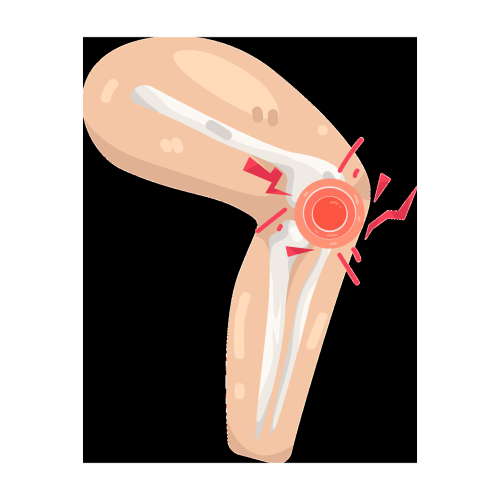
Maybe you heard a pop during sports. Maybe your knee gave out unexpectedly. Maybe the pain wasn’t even immediate, but the swelling appeared within hours.
An ACL tear. Three letters that can feel like the end of the world if you’re an athlete or someone who loves staying active.
But here’s what we want you to know right now: An ACL tear isn’t the end. Thousands of people—including professional athletes—have torn their ACL and come back stronger than before.
In this guide, we’ll explain exactly what an ACL tear is, why it happens, what your treatment options are, what surgery really involves, and most importantly, how to get back to the activities you love.
Understanding Your ACL: The Stabilizer You Never Thought About
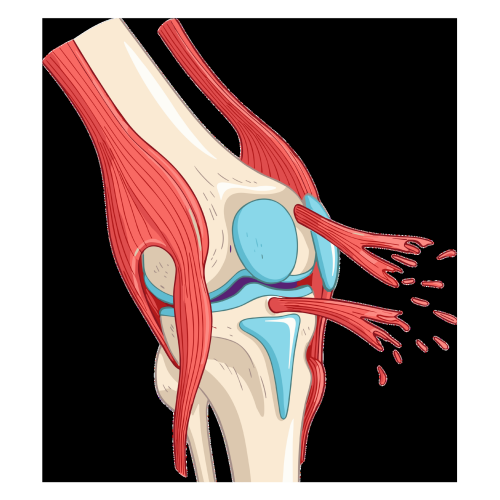
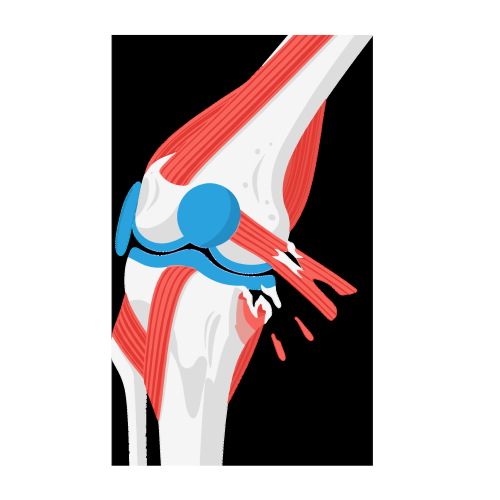
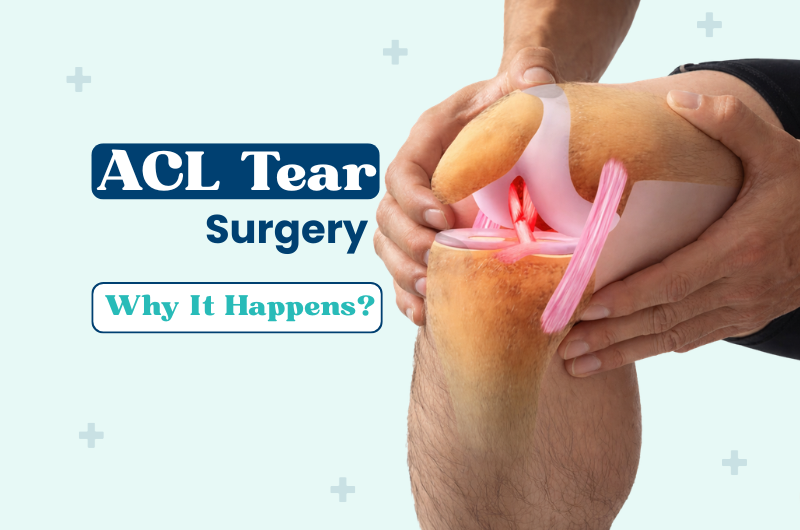
Your ACL (Anterior Cruciate Ligament) is one of four major ligaments in your knee. Think of ligaments as tough bands of tissue that hold your knee together and keep it stable. Your ACL specifically prevents your shinbone from sliding forward in front of your thighbone. It’s essential for:- 1. Quick directional changes (running, cutting, pivoting)
- 2. Landing safely from jumps
- 3. Twisting movements
- 4. General knee stability
How Do ACL Tears Happen? The Most Common Scenarios
ACL tears rarely happen from a simple fall. Instead, they usually occur from:1. Sports-Related Injuries (70% of cases)
- a. Sudden stopping while running at full speed
- b. Landing awkwardly from a jump
- c. Quick pivoting or cutting movements
- d. Direct contact to the outer knee while your foot is planted
- e. Common in: Basketball, football, soccer, skiing, tennis
2. Non-Sports Injuries
- a. Car accidents
- b. Falls from height
- c. Direct blow to the knee
- d. Overextension of the knee (bending backward)
- a. Meniscus tears (cartilage)
- b. MCL or PCL tears (other ligaments)
- c. Knee bone bruises
3. Risk Factors You Should Know
- a. Age 15-25 and 40-50 (peak injury periods)
- b. Women are 4x more likely than men to suffer ACL tears
- c. Poor muscle strength (especially hamstrings)
- d. Previous ACL injury in the other knee
- e. Certain activities (pivoting sports)
- f. Muscle imbalances
Immediately After the Injury: What to Do in the First Hours
If you suspect an ACL tear, immediate action matters.1. First Aid Protocol (R.I.C.E.)
- a. Rest – Stop the activity immediately. No “playing through it.”
- b. Ice – Apply ice for 15-20 minutes every 2-3 hours for the first 48 hours (prevents swelling)
- c. Compression – Wrap your knee with an elastic bandage (reduces swelling)
- d. Elevation – Keep your leg raised above heart level (gravity helps reduce fluid buildup)
2. When to Seek Medical Attention
Seek immediate evaluation if you experience:- Sudden knee swelling (often within 2-4 hours)
- Severe pain
- Feeling of knee instability or “giving way”
- Inability to bear weight on the leg
- Visible deformity
Diagnosis: How Doctors Confirm an ACL Tear
1. Physical Examination
Your doctor will perform tests like the Lachman test or anterior drawer test—these assess whether your tibia (shinbone) slides forward abnormally.2. Imaging Studies
- a. X-rays – Rule out bone fractures
- b. MRI – Confirms ACL tear and shows other damage (meniscus, other ligaments)
Treatment Options: Surgery vs. Non-Surgical Management
Not every ACL tear requires surgery. Your treatment depends on:- a. Your age and activity level
- b. How completely the ligament is torn
- c. Whether other structures are damaged
- d. Your goals (return to sports vs. daily function)
Option 1: Non-Surgical Management
Suitable for:- a. Partial tears (not complete rupture)
- b. Sedentary people willing to modify activities
- c. Older patients with low activity demands
- a. 3-6 weeks of rest and protection
- b. Physical therapy focusing on hamstring/quadriceps strengthening
- c. Wearing a knee brace during activities
- d. Avoiding pivoting sports indefinitely
Option 2: ACL Reconstruction Surgery
Recommended for:- a. Active individuals wanting to return to sports
- b. People experiencing repeated knee instability
- c. Complete ACL tears in athletes under age 50
- d. Those with combined injuries (ACL + meniscus tear)
ACL Reconstruction Surgery: What Actually Happens
If you’re considering or scheduled for ACL surgery, understanding what happens reduces anxiety significantly.1. Pre-Surgery Preparation (2-4 weeks before)
Your surgeon will:- a. Confirm the diagnosis with MRI
- b. Assess your overall knee health
- c. Create a personalized surgical plan
- d. Perform blood work and pre-operative tests
- e. Discuss the graft options (see below)
2. The Graft Question: What Replaces Your ACL?
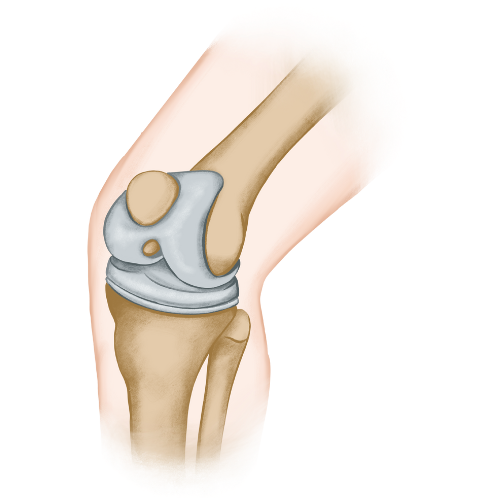
Your ACL can’t be simply stitched back together. Surgeons must replace it with a “graft”—new tissue from another source. Option A: Patellar Tendon Graft (Most Common)- 1. Uses tissue from your kneecap tendon
- 2. High strength, reliable
- 3. Recovery takes slightly longer due to kneecap site
- 4. Best for people under 40
- 1. Uses tissue from hamstring muscle
- 2. Less pain at surgery site
- 3. Faster return to running
- 4. Good for all ages
- 5. Becoming increasingly popular
- 1. Uses tissue from a donor (cadaver)
- 2. Slightly higher re-tear risk
- 3. Less pain during recovery
- 4. Good option for revision surgery
3. The Actual Surgery (1.5-2 hours)
- 1. Anesthesia – You’re put to sleep (general anesthesia)
- 2. Arthroscopy – Your surgeon inserts a camera (arthroscope) through a small incision to see inside your knee
- 3. Ligament Removal – The torn ACL is carefully removed
- 4. Graft Placement – The graft is positioned where your ACL was
- 5. Fixation – The graft is secured with screws, anchors, or loops
- 6. Closure – Small incisions are closed with dissolving stitches
Recovery Timeline: What Happens Week by Week
A. Week 1-2: Immediately After Surgery
- 1. Pain and swelling are expected
- 2. Knee is bandaged and may have a brace or immobilizer
- 3. You’ll use crutches (weight-bearing progress depends on your surgeon’s plan)
- 4. Physical therapy begins with gentle exercises
- 5. Pain management: Ice, elevation, prescribed pain medication
B. Week 3-6: The Swelling Phase
- 1. Swelling gradually decreases
- 2. Range of motion improves with PT
- 3. You progress from crutches to walking with a brace
- 4. Most people return to desk work
- 5. Avoid pivoting, twisting, or high-impact activities
C. Week 6-12: The Strengthening Phase
- 1. You’re walking normally (without crutches)
- 2. Physical therapy becomes more challenging
- 3. Quad and hamstring strength building accelerates
- 4. Balance and proprioception training begins
- 5. Pain is minimal but flexibility is still limited
D. Month 4-6: Return to Function
- 1. Most daily activities are pain-free
- 2. You can swim, bike, elliptical
- 3. Walking on uneven surfaces becomes normal
- 4. You might drive again (check with your surgeon)
- 5. Light jogging might be possible (with PT clearance)
E. Month 6-12: Athletic Training
- 1. Gradual return to sport-specific training (with PT guidance)
- 2. Plyometrics (jumping, cutting, agility)
- 3. Sport-specific drills
- 4. Return to full practice (6-9 months)
- 5. Return to full competition (9-12 months)
Physical Therapy: The Real Key to Recovery
Surgery fixes the structural damage. Physical therapy rebuilds your strength and confidence. Expect 3-4 sessions per week for 6 months. Yes, it’s commitment. But it’s worth it.Phases of Physical Therapy
Phase 1 (Weeks 0-6): Protect and Restore- a. Protect the healing graft
- b. Restore range of motion
- c. Reduce swelling
- d. Quad sets, hamstring curls, passive range of motion exercises
- a. Active range of motion exercises
- b. Strengthen quads, hamstrings, glutes
- c. Balance training (single-leg standing)
- d. Stationary biking
- e. Walking progression
- a. Agility ladder drills
- b. Lateral movements
- c. Jump training (controlled)
- d. Sport-specific movements
- e. Running progression (straight-line running first)
- a. Complex movements and cutting
- b. Full-speed pivoting
- c. Sport-specific simulations
- d. Gradual return to competition
Cost of ACL Surgery in Hyderabad
ACL reconstruction typically costs ₹1,50,000 to ₹3,00,000, depending on:- a. Graft type chosen
- b. Hospital and surgeon reputation
- c. Whether other repairs are needed (meniscus, other ligaments)
- d. Pre- and post-operative care included
1. What’s Included
- a. Surgeon consultation and planning
- b. Anesthesia
- c. Hospital stay (usually 1 night)
- d. Surgery and equipment
- e. Initial post-operative bracing and support
- f. Follow-up visits (typically 4-6 over 3 months)
2. What Might Be Extra
- a. Physical therapy sessions (often separate)
- b. Additional imaging (follow-up MRI)
- c. Knee brace for sports (custom braces: ₹10,000-25,000)
Return to Sports: The Question Everyone Asks
Timeline by Activity
- 1. Driving – 2-3 months (with surgeon approval)
- 2. Swimming – 3-4 months
- 3. Cycling – 4-5 months
- 4. Running (straight-line) – 4-6 months
- 5. Cutting and pivoting sports – 6-9 months
- 6. Full sports competition – 9-12 months
The Confidence Question
Many people are physically ready before they’re psychologically ready. This is normal. Your PT will help you rebuild confidence gradually. Protective knee bracing during sports (6-12 months after return) reduces re-injury risk.Prevention: Protecting Your ACL in the Future
If you have two knees, protect both:- 1. Strengthening exercises – Strong hamstrings reduce ACL injury risk by 50%
- 2. Flexibility training – Especially hamstrings and hip flexors
- 3. Proper technique – Learn correct jumping and landing mechanics
- 4. Appropriate footwear – Sport-specific shoes provide stability
- 5. Gradual training progression – Avoid sudden increases in activity
- 6. Knee braces – Consider preventive bracing in high-risk sports
Moving Forward: Your Next Steps
An ACL tear is a significant injury, but it’s not the end of your story. Thousands of people have rebuilt their strength, confidence, and ability to do what they love. Recovery requires:- a. A skilled surgeon with ACL experience
- b. Commitment to physical therapy
- c. Patience with the process
- d. Support from family and friends
- e. A mindset focused on gradual progress
What to Look For in Your Surgeon
- a. Orthopedic surgeon with 10+ years of ACL reconstruction experience
- b. Board certification
- c. Experience with your specific activity/sport level
- d. Clear explanation of options
- e. Availability for follow-up support
Frequently Asked Questions About LASIK
Will I ever be 100% again?
Most people reach 95%+ functional capacity. Professional athletes regularly return to elite levels. Your outcome depends on your commitment to rehabilitation.
What happens if I don't have surgery?
Your knee will be chronically unstable. The graft can’t heal on its own because ligaments have poor blood supply. You’ll likely need surgery eventually—better to do it sooner when the knee is healthier.
Can an ACL tear heal on its own?
No. Unlike muscles, ligaments can’t reattach themselves.
What's the re-tear risk?
With proper surgery and rehabilitation: 3-5% in first 5 years. Without rehabilitation or with premature return to sports: 20-30%.
Is ACL surgery successful?
Yes. Success rates are 90%+ with proper rehabilitation. Most people return to their pre-injury activity level.
Why Surgipatner
✔Right Doctor Guidance
✔ Best Hospitals in Your Budget
✔ Free Consultation
✔ Complete Surgery Support
What Our Patients & Partners Say

Posted onTrustindex verifies that the original source of the review is Google. I am thoroughly impressed with the SurgiPartner model, which delivers integrated, end-to-end patient support across the healthcare continuum—from initial consultations to treatment and surgical interventions, where necessary. I recently availed their Care Buddy service for a consultation, and the experience was highly seamless, efficient, and professionally managed. The structured Care Buddy support, combined with well-aligned financial assistance processes, significantly enhances the overall patient journey. This holistic and patient-centric approach effectively streamlines access to quality healthcare, making it more efficient and convenient in today’s dynamic environment.Posted onTrustindex verifies that the original source of the review is Google. I’m really impressed with the SurgiPartner concept. They provide end-to-end patient support—from doctor consultations to treatment and even surgery when required. I personally used their Care Buddy service for a consultation, and it was a smooth and positive experience. The Care Buddy assistance, along with support in financial processes, makes healthcare much more convenient, especially in today’s fast-paced lifestyle.Posted onTrustindex verifies that the original source of the review is Google. My Brother Arun Kumar and krishna from Bangalore. We are travelled to Hyderabad for LASIK surgery, and today we successfully underwent the procedure at American Laser Eye Hospital. The surgery went very smoothly and I am feeling very good after the procedure. The hospital environment is very clean and well maintained. All the staff and doctors are very polite, supportive, and professional. A special thanks to SurgiPartner CareBuddy for guiding and helping me throughout the entire process. From the beginning till the end of the day, they were with us at every step and provided excellent support. Overall, I had a very good experience and I highly recommend American Laser Eye Hospital for LASIK surgery with SurgiPartner support.Posted onTrustindex verifies that the original source of the review is Google. Really impressed with the concept of SurgiPartner. They offer complete patient support from doctor consultation to treatment and surgery if needed. I personally took a consultation through their Care buddy, and it was a great experience. The care buddy system and help with financial processes make healthcare much easier, especially in today’s busy world.Posted onTrustindex verifies that the original source of the review is Google. My name is Arun Kumar and I am from Bangalore. I traveled to Hyderabad for LASIK surgery, and today I successfully underwent the procedure at American Laser Eye Hospital. The surgery went very smoothly and I am feeling very good after the procedure. The hospital environment is very clean and well maintained. All the staff and doctors are very polite, supportive, and professional. A special thanks to SurgiPartner CareBuddy for guiding and helping me throughout the entire process. From the beginning till the end of the day, they were with us at every step and provided excellent support. Overall, I had a very good experience and I highly recommend American Laser Eye Hospital for LASIK surgery with SurgiPartner supportPosted onTrustindex verifies that the original source of the review is Google. Thank you for the support and service provided by SurgiPartner. The overall experience was smooth and the team was very helpful.Posted onTrustindex verifies that the original source of the review is Google. Staff is very good and nice receiving. They are very humble and their response is very good. Thank youPosted onTrustindex verifies that the original source of the review is Google. I want to thank Surgipartner for all the help and support during my LASIK surgery. From the beginning till the end, the team was very proactive with follow-ups and guided me clearly through every step, which made the whole experience easy and stress-free. I would especially like to appreciate CareBuddy Raju and Coordinator Anusha for their outstanding support. They were always in touch with both the hospital staff and me, helped reduce waiting time, and made sure everything went smoothly. Their care, quick responses, and constant guidance really made a big difference. Overall, I had a very positive experience and truly appreciate the support provided by Surgipartner.Verified by TrustindexTrustindex verified badge is the Universal Symbol of Trust. Only the greatest companies can get the verified badge who has a review score above 4.5, based on customer reviews over the past 12 months. Read more