
Say Goodbye to Uterine Fibroids with SurgiPartner Advanced Gynecological Care

Pain-free, Precise, and Personalized Treatment for Uterine Fibroids

Expert Gynecologists
0 +
Successful Procedures
0 +
Cities
0 +

Uterine Fibroids Treatment

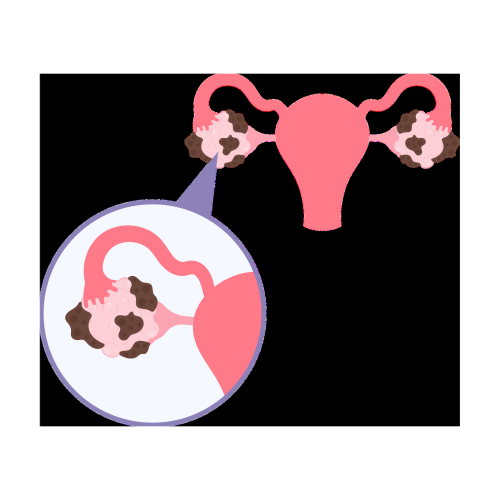
Uterine fibroids — benign (non-cancerous) muscular tumours that grow in the wall of the uterus — are the most common gynaecological condition among women of reproductive age in India, affecting an estimated 20–40% of women over the age of 35. In Hyderabad, SurgiPartner connects women with experienced gynaecologists and laparoscopic surgeons for comprehensive fibroid management — from watchful waiting and medical therapy to minimally invasive laparoscopic myomectomy and hysterectomy. Call +91 9030053009 for a free, confidential consultation today.

🌸 SurgiPartner Women’s Care: All gynaecology consultations at SurgiPartner partner hospitals in Hyderabad are conducted by female gynaecologists in a private, confidential setting. Your Care Buddy — also female — accompanies you to every appointment.
Best Gynecologist in Hyderabad

Uterine Fibroids Treatment

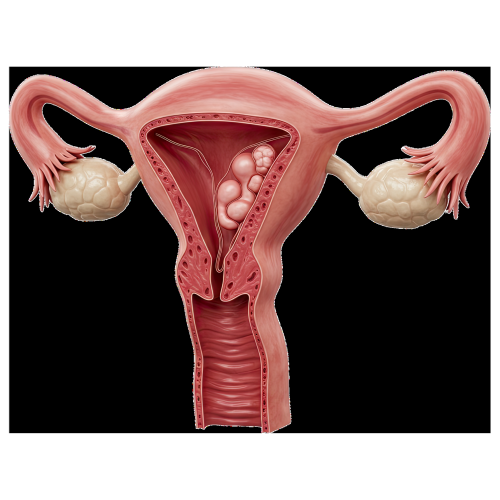
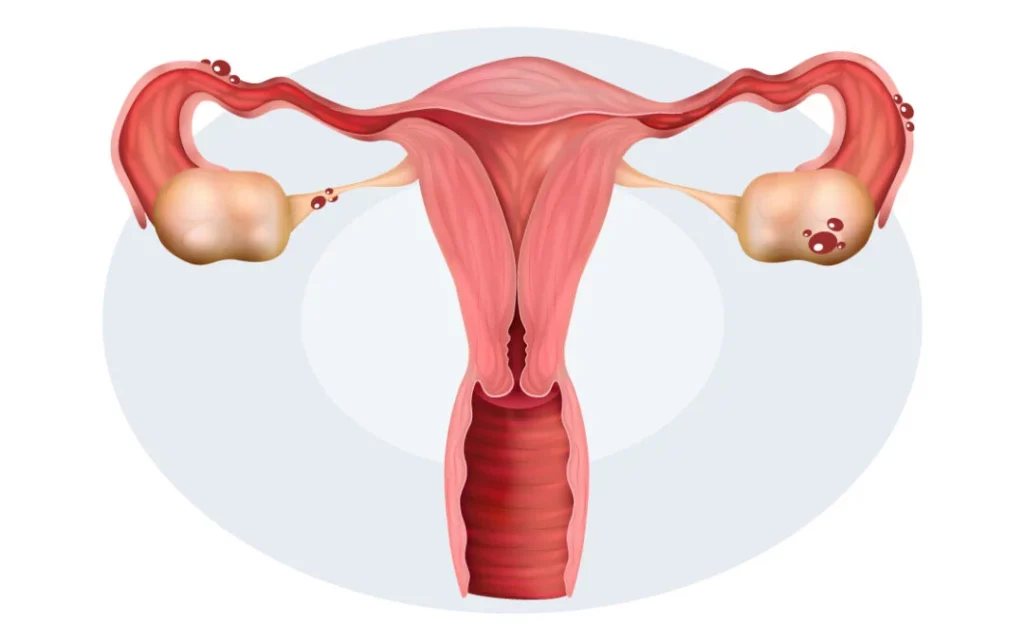
Fibroids (also called leiomyomas or myomas) are smooth muscle tumours arising from the myometrium (uterine muscle layer). They are almost always benign — malignant transformation to leiomyosarcoma is extremely rare (less than 1 in 1,000 cases). Their clinical significance depends entirely on their size, number, location, and proximity to the uterine cavity and fallopian tubes.

By Location — The Most Important Classification

Type Location Key Clinical Impact
Submucosal Beneath the endometrial lining — bulge into the uterine cavity Most symptomatic type; causes heavy menstrual bleeding, anaemia, recurrent pregnancy loss, and infertility — even when small
Intramural Within the muscular wall of the uterus — most common type Causes pelvic pressure, bulk symptoms, heavy bleeding when large; moderate fertility impact depending on size and proximity to cavity
Subserosal On the outer surface of the uterus — projecting outward Causes pelvic pressure, urinary frequency, constipation; least impact on bleeding and fertility unless very large
Pedunculated Attached by a stalk — can be submucosal (into cavity) or subserosal (outward) Submucosal pedunculated fibroids can prolapse through the cervix; subserosal can twist (torsion), causing acute pain
Cervical Within the cervical canal or cervical stroma Can obstruct the cervical os — causing menstrual outflow obstruction; may complicate delivery in pregnancy

Symptoms of Uterine Fibroids

Approximately 50% of women with fibroids are asymptomatic — fibroids discovered incidentally on ultrasound in these women may not require treatment. When fibroids cause symptoms, they include:

  • Heavy menstrual bleeding (menorrhagia) — the most common symptom; menstrual blood loss exceeding 80mL per cycle; often with clots; leading to iron deficiency anaemia, fatigue, and reduced quality of life
  • Prolonged periods — menstrual cycles lasting more than 7 days; often with intermenstrual spotting
  • Pelvic pressure and pain — a feeling of heaviness or fullness in the lower abdomen; chronic pelvic pain or dysmenorrhoea (painful periods)
  • Urinary symptoms — urinary frequency and urgency from bladder compression; rarely urinary obstruction from very large fibroids
  • Bowel symptoms — constipation or difficult defecation from posterior fibroid pressure on the rectum
  • Abdominal distension — visibly enlarged abdomen from a large fibroid uterus; some women present having noticed a “lump” in the lower abdomen
  • Reproductive complications — recurrent pregnancy loss (miscarriage), difficulty conceiving, preterm labour, and foetal malpresentation in pregnancy
  • Acute pain — from red degeneration (rapid fibroid growth typically in pregnancy), torsion of a pedunculated fibroid, or prolapse of a submucosal fibroid through the cervix

Diagnosis — Investigations Required

  • Pelvic ultrasound (TVS) — transvaginal ultrasound is the first-line investigation; maps fibroid number, size, location (FIGO classification), uterine volume, and endometrial thickness
  • MRI pelvis — the gold standard for fibroid mapping before myomectomy; provides precise 3D location, relationship to endometrial cavity and serosa, and distinguishes fibroids from adenomyosis
  • Saline infusion sonohysterography (SIS) — instils saline into the uterine cavity during ultrasound to visualise submucosal fibroids and their intracavitary extent
  • Hysteroscopy — direct visualisation of the uterine cavity; allows concurrent treatment of submucosal fibroids (hysteroscopic myomectomy)
  • Blood tests — full blood count (assess anaemia severity); serum ferritin; thyroid function (exclude thyroid disease as cause of menorrhagia); CA-125 (if ovarian pathology also suspected)

Uterine Fibroids Treatment — Complete Options

1. Watchful Waiting

Asymptomatic fibroids discovered incidentally in women approaching menopause often require no treatment — fibroids shrink naturally after menopause as oestrogen levels fall. Annual ultrasound monitoring confirms stability. Treatment is deferred until menopause in suitable candidates.

2. Medical Management

Tranexamic acid and NSAIDs — reduce menstrual blood loss and dysmenorrhoea symptomatically without affecting fibroid size. First-line for mild-moderate menorrhagia.

Combined oral contraceptive pill (COCP) — regulates menstrual cycle and reduces bleeding; does not shrink fibroids but manages symptoms effectively in women also requiring contraception.

Levonorgestrel-releasing intrauterine system (LNG-IUS / Mirena) — highly effective at reducing menstrual blood loss (by up to 90%); suitable when uterine cavity is not significantly distorted by fibroids.

GnRH agonists (leuprolide, goserelin, nafarelin) — create a temporary menopausal state, reducing oestrogen and causing fibroid shrinkage of 30–50% over 3 months. Used pre-operatively to reduce fibroid size and vascularity, reducing intraoperative blood loss. Not suitable for long-term use (bone loss). Always a bridge to surgery, not definitive treatment.

Ulipristal acetate (selective progesterone receptor modulator) — reduces fibroid size and controls bleeding; used in Europe as a pre-operative or intermittent treatment for symptomatic fibroids in premenopausal women.

3. Myomectomy — Fibroid Removal with Uterine Preservation

Myomectomy removes fibroids while preserving the uterus — the preferred surgical option for women who wish to retain fertility or their uterus. The approach depends on fibroid location, size, and number:

  • Laparoscopic myomectomy — the gold standard for subserosal and intramural fibroids. 3–4 small keyhole incisions; the fibroid is enucleated from the myometrium using laparoscopic instruments and a power morcellator or removed in contained bags; uterus repaired laparoscopically. Advantages: minimal blood loss, 1–2 day hospital stay, rapid return to activity. Most commonly performed fibroid surgery at SurgiPartner partner hospitals in Hyderabad.
  • Hysteroscopic myomectomy — for submucosal fibroids (FIGO type 0, 1, 2) only. A resectoscope is passed through the cervix into the uterine cavity; fibroid is resected with electrosurgical loop or coblation under direct vision. No incisions, day-care procedure, fastest recovery. Immediately improves fertility and menstrual bleeding in suitable candidates.
  • Open (abdominal) myomectomy — for very large fibroids (>15cm), multiple fibroids (>8–10), or when laparoscopic approach is not feasible. Laparotomy incision; fibroid(s) removed; uterus repaired in layers. Higher blood loss; 3–4 day hospital stay; 4–6 week recovery.

4. Uterine Fibroid Embolisation (UFE)

UFE is a minimally invasive radiology procedure where tiny particles are injected through a catheter into the uterine arteries, blocking blood supply to the fibroids and causing them to shrink. Suitable for women who want to avoid surgery and do not wish to become pregnant. Not recommended for women planning pregnancy due to uncertain effects on uterine blood supply.

5. Hysterectomy — Definitive Treatment

Removal of the uterus provides definitive, permanent cure of fibroid symptoms — fibroids cannot recur after hysterectomy. Recommended for women who have completed their family, have significant symptoms unresponsive to other treatments, and prefer a permanent solution. Can be performed laparoscopically (TLH), vaginally (VH), or as open surgery depending on uterine size and patient factors.

💡 Fertility-first approach: For women who wish to preserve fertility, SurgiPartner’s gynaecology partners in Hyderabad always explore myomectomy before recommending hysterectomy. Our female gynaecologists provide personalised counselling on the most appropriate approach for your specific fibroid type, size, and reproductive goals. Call +91 9030053009.

Frequently Asked Questions — Uterine Fibroids Treatment Hyderabad

Why Choose SurgiPartner?

At SurgiPartner, we combine medical expertise with cutting-edge surgical technology to treat uterine fibroids effectively  ensuring comfort, safety, and faster recovery.

01.

Experienced Gynecologists & Laparoscopic Surgeons

Our specialists have extensive experience in diagnosing and treating uterine fibroids using advanced medical and minimally invasive surgical techniques.

02.

Advanced Laparoscopic & Non-Surgical Options

We offer laparoscopic myomectomy, hysteroscopic removal, and medical management, depending on your condition ensuring minimal pain and quick recovery.

03.

Personalized & Fertility-Safe Treatments

Our doctors focus on preserving fertility and restoring uterine health, tailoring every treatment plan to your individual goals and reproductive needs.

04.

Quick Recovery & Expert Postoperative Care

Experience short hospital stays, faster healing, and continuous follow-up care for long-term relief and wellness.

Book Your Consultation

Take the first step toward a pain-free and healthy life with SurgiPartner’s expert fibroid treatment. Whether your fibroids are small or large, single or multiple  we ensure safe, effective, and long-lasting solutions.
Regain comfort, confidence, and control – that’s the SurgiPartner promise.

Freedom from Fibroids, Confidence Restored

At SurgiPartner, we’ve helped countless women overcome uterine fibroids through advanced, minimally invasive treatments that restore health, comfort, and confidence.

Ravi Kumar

After years of discomfort and heavy bleeding, I finally feel like myself again. The doctors were kind, supportive, and guided me through every step.

Anusha R

SurgiPartner team explained everything so clearly. My procedure was smooth, recovery was quick, and I’m completely pain-free now!

Fatima Hussain

I was scared of surgery, but the minimally invasive approach changed everything. I went home the next day and was back to work within a week.

Arjun Patel

The doctors treated me with so much care and respect. My health and confidence are back - I’m truly grateful to SurgiPartner.

Divya Mehta

SurgiPartner laparoscopic treatment was quick and painless. I recovered faster than I imagined!
Your Personalized Path to Wellness

Follow your step-by-step guide to a successful surgery and recovery, with our expert team supporting you all the way.

Medical Services
Expert Case Assessment Today
We review your medical history, understand your specific condition, and consult with specialists to map out your path.
Best-In-Class Doctor Match 48 hours
We connect you with the top-rated surgeon for your specific ailment and explain your treatment plan clearly.
Insurance & Financial Support
We handle your insurance claims directly and create a transparent financial plan so there are no surprises.
Seamless Admission Management
We handle all hospital paperwork, admission formalities, and pre-surgery testing for you.
On-Ground Surgery Support
Our 'Care Buddy' is physically present at the hospital on surgery day to ensure everything runs smoothly.
Bedside Recovery Support
We don't leave. We stay by your side at the hospital until the moment you are discharged.
3-Month Recovery Tracking
We don't stop at discharge. We monitor your recovery and coordinate with your doctor for 3 months post-surgery.

Book FREE Consultation

Fill in your details and we'll call you back to confirm your slot.

Appointment Requested! 🎉

Our team will call you within 2 hours to confirm your slot. Thank you!

Popular Diseases

Other Diseases

Scroll to Top